
Car subscription services have transformed the way Australians access vehicles. Instead of committing to long-term leases or outright purchases, customers can subscribe to a vehicle for weeks, months, or even longer. This flexibility is particularly attractive during peak demand periods — holidays, seasonal project ramp-ups, or sudden spikes in mobility needs.
But how do providers ensure that fleets remain available, pricing stays competitive, and logistics run smoothly when demand surges? In this article, we’ll explore the strategies subscription services use to cope with these challenges, with a focus on the Australian market and insights from providers like Trend Rentals.
Understanding Peak Demand in Car Subscriptions
Holidays and Travel Seasons
- Christmas and New Year: Families often need larger vehicles for road trips.
- Easter and School Holidays: SUVs and people movers see spikes in demand.
- Long Weekends: Short-term subscriptions rise sharply.
Project Ramp-Ups
- Construction Projects: Tradespeople may require vans or utes for a few months.
- Corporate Events: Businesses need fleets for staff transport.
- Film & Media Productions: Require diverse vehicles for short bursts.
Unpredictable Surges
- Natural disasters or sudden infrastructure projects can create urgent demand for utility vehicles.

Fleet Availability: Meeting the Surge
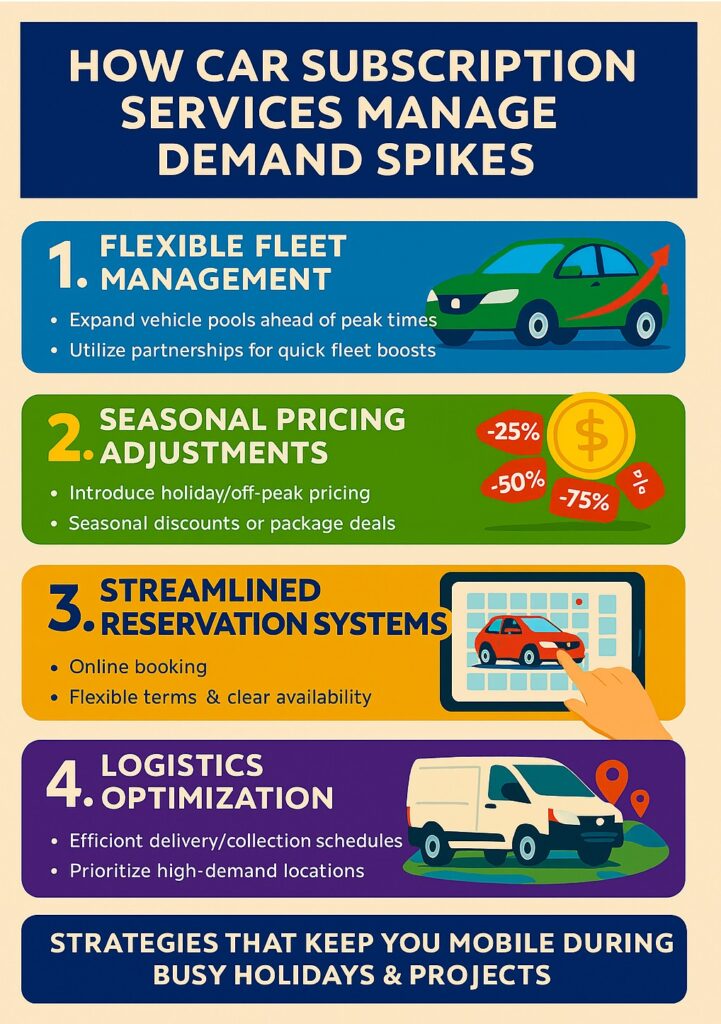
Dynamic Fleet Allocation
Providers like Trend Rentals use predictive analytics to anticipate demand. By analysing booking patterns, they can pre-position vehicles in high-demand areas.
Partnerships and Supplier Networks
Subscription companies often partner with dealerships and rental agencies to temporarily expand their fleets. This ensures customers aren’t left stranded during peak times.
Vehicle Diversity
Maintaining a balanced fleet mix — from compact cars to vans — allows providers to cater to varied customer needs. For example, tradies may need vans during project ramp-ups, while families prefer SUVs during holidays.

Pricing Strategies During Peak Demand
Surge Pricing Models
Similar to airlines and ride-sharing, car subscription services may adjust prices during high-demand periods. This helps balance supply and demand.
Seasonal Discounts
To encourage early bookings, providers often offer holiday packages or long-term discounts. For instance, booking a van for a 3-month project may come with reduced weekly rates.
Transparent Pricing
Unlike traditional rentals, subscription services emphasise all-inclusive pricing (insurance, servicing, roadside assistance). This transparency builds trust, even when prices rise slightly during peak times.

Logistics: The Backbone of Peak Demand Management
Vehicle Relocation
Fleet managers strategically move vehicles between cities or depots to match demand. For example, more SUVs may be shifted to coastal towns before summer holidays.
Flexible Pickup and Drop-Off
Services like Trend Rentals offer doorstep delivery or multiple pickup points, reducing bottlenecks at central depots.
Technology Integration
- Real-time tracking ensures vehicles are where they’re needed.
- Mobile apps streamline reservations, extensions, and returns.

Case Study: Holiday Season in Australia
During the December–January holiday period, demand for SUVs and vans can spike by over 40%. Providers prepare by:
- Expanding fleets through dealer partnerships.
- Offering early-bird discounts.
- Relocating vehicles to tourist hotspots like the Gold Coast and Great Ocean Road.
Trend Rentals often publishes guides to help customers choose the right vehicle for these trips, ensuring smoother planning.

Case Study: Project Ramp-Ups
When a major construction project begins, tradies may need dozens of vans and utes. Subscription services respond by:
- Offering bulk subscription packages.
- Providing flexible terms (e.g., 3–6 months).
- Ensuring maintenance support to minimise downtime.
This flexibility is a key differentiator compared to traditional leasing.
Challenges and Future Outlook
Challenges
- Fleet Shortages: Global supply chain issues can limit vehicle availability.
- Rising Costs: Insurance and fuel fluctuations affect pricing.
- Customer Expectations: People expect instant availability, which isn’t always possible.
Future Solutions
- Electric Vehicle Fleets: More eco-friendly options during peak demand.
- AI-Driven Forecasting: Smarter demand prediction.
- Subscription Tiers: Premium tiers guaranteeing availability during holidays.
Why Car Subscriptions Are the Future
Car subscriptions are uniquely positioned to handle peak demand because of their flexibility, scalability, and customer-centric approach. Unlike ownership or leasing, subscriptions adapt to life’s changing needs — whether that’s a family holiday or a six-month project.
For Australians, services like Trend Rentals provide peace of mind, knowing that vehicles will be available when they’re needed most.
Conclusion
Peak demand periods are inevitable, but car subscription services have developed robust strategies to cope. Through fleet management, pricing adjustments, and logistics optimisation, they ensure customers remain mobile during holidays, project ramp-ups, and unexpected surges.
As the industry evolves, expect even more innovative solutions — from electric fleets to AI-driven logistics — making car subscriptions the most adaptable mobility solution for modern Australians.