
In today’s dynamic business environment, industries like mining, construction, resource services and remote site operations face fluctuating demand, unpredictable schedules, and a need for agile transport solutions. As a result, short-term vehicle hire has emerged as a critical strategic tool for organisations and individuals alike — especially for seasonal projects and Fly-In Fly-Out (FIFO) workforces. Whether you’re managing a crew rotation, responding to project peaks, or need compliant transport without long-term commitments, understanding the value of short-term vehicle hire is vital.
This in-depth guide explores the key reasons behind its rising importance, how it stacks up against owning or long-term rental, and why both operators and workers are increasingly turning to providers like Trend Rentals for flexible, reliable vehicle solutions.
We’ll cover:
- What short-term vehicle hire is
- Operational benefits in seasonal and FIFO contexts
- Financial and cash-flow advantages
- Compliance and safety considerations
- Best practices for hiring and planning
Let’s dive in.
1. What Is Short-Term Vehicle Hire?
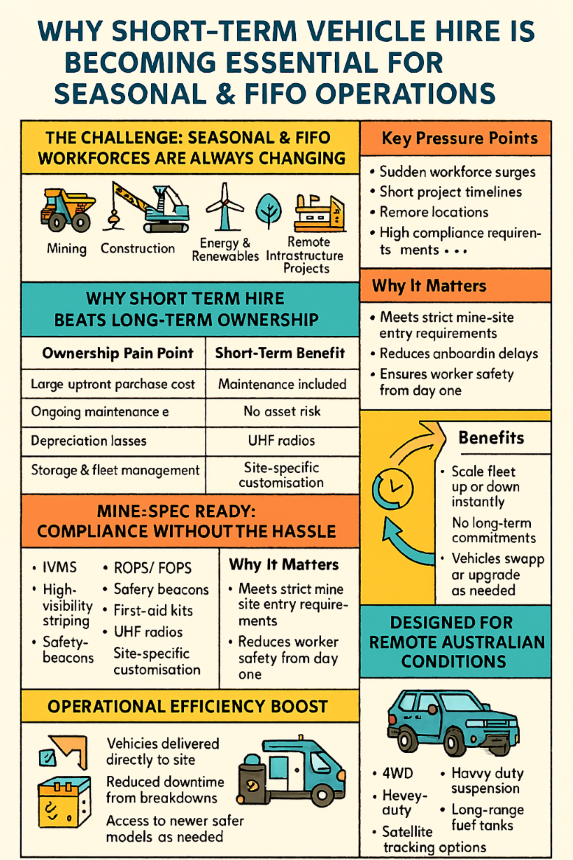
“Short-term vehicle hire” refers to the rental of cars, utes, 4WDs, vans, or specialised vehicles for a brief period — typically from a single day up to several weeks — without locking into extended contracts. Unlike long-term fleet leases or ownership, short-term hire is ideal for temporary needs, emergency cover, project spikes, or dynamic workforce requirements.
Trend Rentals offers a range of short-term hire vehicles to suit every situation — from site spec 4WDs and utes to passenger transport, all with flexible pickup and drop-off options and tailored agreements.

2. The Link Between Seasonal Operations and Vehicle Demand
Many industries experience seasonal peaks where vehicle demand rises sharply — think harvesting seasons, peak construction periods, or short-term contracts in remote regions. During these times:
- Work crews increase in size
- Equipment and tools must be transported efficiently
- Project timelines become compressed
Buying a whole fleet just for a few weeks or months doesn’t make financial sense — that’s where short-term hire shines.

A Cost-Effective Answer to Fluctuating Needs
Rather than tying up capital in vehicles that sit idle outside peak periods, businesses can hire only what they need, when they need it. This model:
- Converts capital expenditure into predictable operating costs
- Reduces depreciation risk
- Avoids maintenance overheads and compliance complexities
For seasonal operators, this spells flexibility, predictability, and strategic resource use.
3. Why FIFO Operations Thrive with Short-Term Vehicle Hire
FIFO operations — where workers fly into remote sites for rotational rosters — are inherently transient. Roster changes, varying workforce sizes, and remote site conditions mean that vehicle requirements can shift quickly and unpredictably. Here’s why short-term hire is essential for FIFO:
a. Matching Vehicle Availability to Workforce Rotations
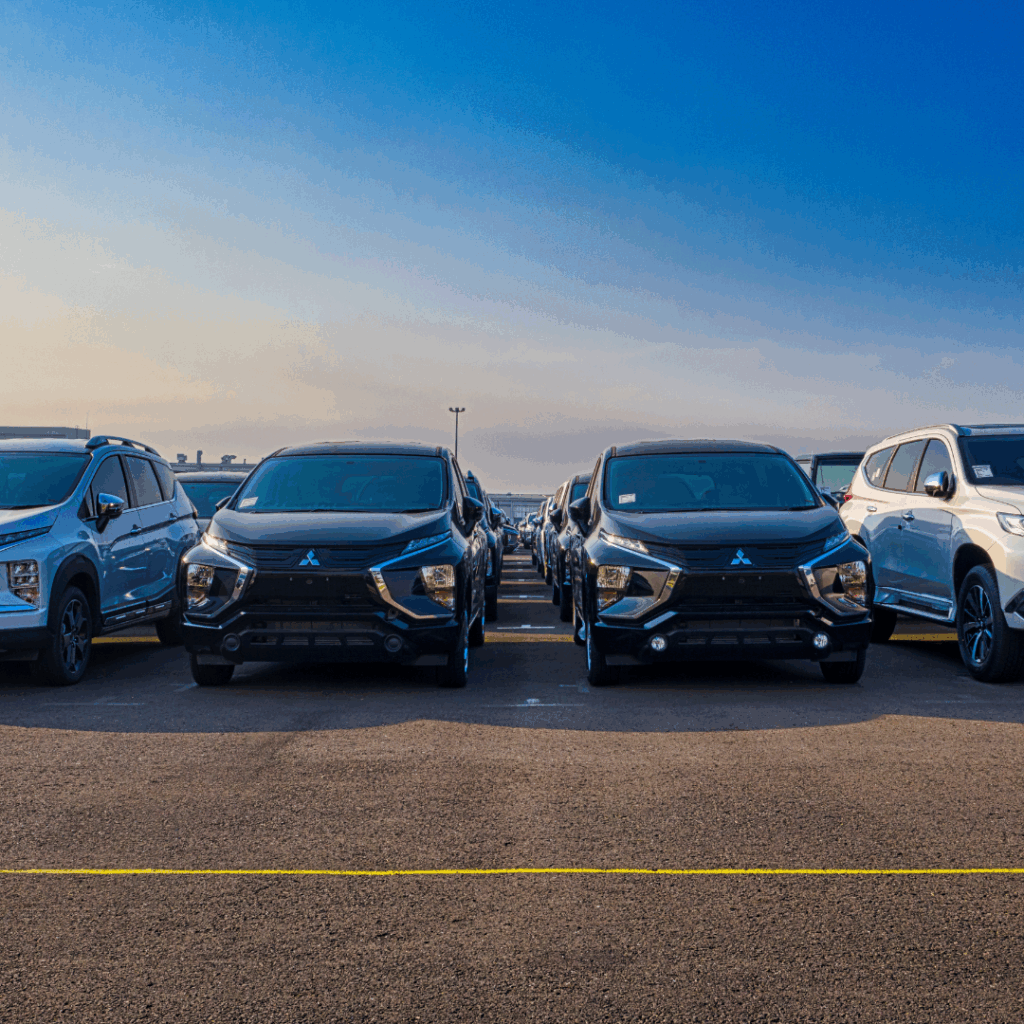
FIFO workers may need vehicles for travel between airports, accommodation, camps, and work sites. Instead of owning a private vehicle that might be unused for long periods, short-term hire means:
- Vehicle hire aligns with roster durations
- Workers avoid personal ownership costs
- Logistics become cheaper and simpler
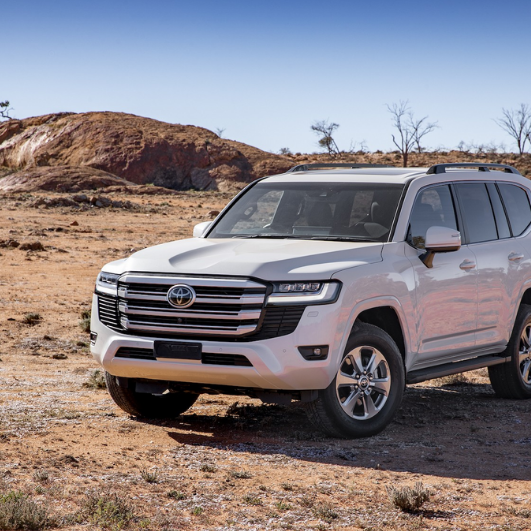
In fact, many FIFO workers prefer hiring mine-spec vehicles or 4WDs near transport hubs for convenience and flexibility.
b. Adjustable Fleet Size for Changing Rosters
Rather than committing to a fixed fleet, companies and contractors can adjust hire volumes to match FIFO schedules — adding vehicles for peak rotations and returning them during quieter weeks. This reduces idle assets and lowers overall costs.
c. No Ownership Burden for Transient Workers
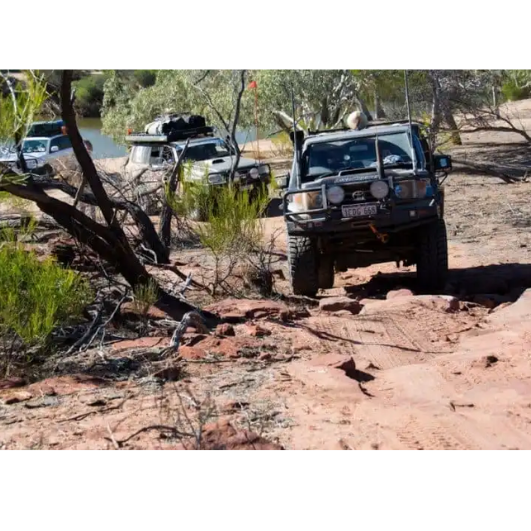
Owning a vehicle while living a FIFO lifestyle can be impractical — especially if workers live interstate or overseas. Short-term hire eliminates:
- Long-term insurance costs
- Storage or logistics issues
- Depreciation and resale concerns
FIFO workers can hire vehicles near airports or depots, use them while on and off shift, and simply return them when not needed.

4. Financial Advantages of Short-Term Hire for Businesses
Short-term vehicle hire isn’t just about convenience — it’s sound financial strategy.
a. Predictable Operating Costs
Rental agreements lock in rates for the short term, meaning no surprise repair bills or unexpected servicing costs. This makes budgeting easier during tight project cycles.
b. Zero Capital Outlay
Unlike purchasing vehicles outright — which ties up capital in depreciating assets — hiring turns costs into manageable operating expenses. This frees up cash flow for core business activities like payroll, materials, and technology upgrades.
c. No Depreciation or Resale Risk
Vehicle depreciation — especially for heavy-use site and mine spec vehicles — can be substantial. Short-term hire eliminates this entirely, as the provider retains the asset.
d. Maintenance and Support Included
Providers like Trend Rentals often package maintenance and roadside support with hire agreements, reducing downtime and the need to manage an internal service team. Predictable, hassle-free support keeps operations running smoothly.
5. Operational Benefits Beyond Cost Savings
Short-term hire helps with much more than the financial bottom line — it enhances operational efficiency too.
a. Immediate Availability
When unexpected needs arise — such as last-minute staff increases or vehicle breakdowns — short-term hire means you can access vehicles quickly, sometimes even within 24 hours.
b. Nationwide Fleet Access
Whether you’re operating near Brisbane, Adelaide, Perth or remote sites, short-term hire providers can deliver vehicles close to your worksite or travel hub, reducing downtime and logistical headaches.
c. Access to Diverse Vehicle Types
From compact cars for FIFO worker transport to rugged site spec 4WDs and utes, short-term hire offers a selection tailored to different tasks and terrain conditions. This flexibility means you’re always using the right vehicle for the job.
d. Compliance and Safety Assurance
Many industries — mining in particular — have strict vehicle compliance standards. Short-term hire providers often supply vehicles that already meet safety and regulatory requirements, saving your team time and effort in ensuring site access.
6. Comparing Short-Term Hire with Ownership and Long-Term Lease
Understanding when to choose short-term hire hinges on your operational needs. Here’s how it compares:
Short-Term Hire vs Vehicle Ownership
| Feature | Short-Term Hire | Vehicle Ownership |
|---|---|---|
| Capital Cost | None | High upfront |
| Depreciation | None | Significant loss over time |
| Maintenance | Included (often) | Owner responsible |
| Flexibility | High | Low |
| Scalability | Easy | Difficult |
| Compliance | Handled by provider | Owner responsible |
Short-term hire is ideal for dynamic, temporary, or variable needs, whereas ownership might suit stable, long-term daily operations.
Short-Term Hire vs Long-Term Lease
Long-term leases offer lower rates for fixed multi-month terms, but lack the flexibility that short-term arrangements provide. For unpredictable workforce schedules or project spikes, short-term hire reduces commitment risk and improves agility.
7. Real-World Scenarios Where Short-Term Hire Excels
a. Seasonal Construction Projects
Construction often has peak seasons where extra vehicles are needed temporarily. Short-term hire lets you scale your fleet up for busy months and reduce it during slower periods — ensuring cost-effective mobility without idle assets.
b. Emergency Cover for Fleet Breakdowns
If your own fleet experiences unexpected breakdowns, hiring short-term vehicles acts as a safety net. Rapid access to replacements prevents operational delays and protects project timelines — something every project manager appreciates.
c. Site Compliance Changes
Some projects may suddenly require specific safety modifications (e.g., for mine site compliance). Hiring vehicles pre-fitted and compliant saves time and administrative effort — meaning no last-minute retrofits or gear changes.
8. Best Practices for Effective Short-Term Vehicle Hire
To get the most value from your hire agreements, consider the following tips:
a. Plan Ahead — But Stay Flexible
Even for short-term needs, booking early improves availability — especially during peak seasons. But keep flexibility in your terms to adjust if project timelines shift.
b. Choose a Provider with Support Infrastructure
Working with a provider that offers nationwide coverage, roadside assistance, and maintenance support ensures fewer disruptions and better uptime.
c. Match Vehicles to Your Operational Needs
Don’t overhire — choose vehicles based on task requirements. For rugged terrain or compliance needs, select mine spec 4WDs or site-spec utes instead of generic models.
d. Build Predictable Costs into Budgets
Factor hire rates into project forecasts rather than treating them as emergency expenses. This helps with financial planning and cost control.
9. Spotlights: Trend Rentals’ Short-Term Hire Solutions
At Trend Rentals, short-term vehicle hire isn’t just about access — it’s about strategic flexibility and operational support.
They offer:
- A diverse fleet for every requirement — from everyday cars and SUVs to specialised mine spec vehicles and people movers.
- Flexible pickup and drop-off locations across Australia.
- Tailored hire agreements to match your project and roster needs.
- Compliance-ready site spec vehicles for FIFO and remote-site entry.
Trend Rentals helps businesses and workers solve mobility challenges with minimal fuss — meaning your operations stay nimble and responsive.
10. Future Trends: Why Short-Term Hire Will Continue to Grow
The shift toward project-based roles, tighter capital management, and demand for agile logistics means short-term vehicle hire will keep growing. As industries become more lean and dynamic, providers who deliver flexible, compliant, and supported solutions will lead the way.
Whether you’re managing seasonal workforce rotas, planning FIFO logistics, or preparing for sudden project peaks, short-term vehicle hire offers a smart, scalable solution — and it’s fast becoming industry standard.
With the right approach and a reliable partner like Trend Rentals, you can ensure your fleet strategy is both cost-effective and future-ready.
Conclusion
Short-term vehicle hire has transcended its reputation as just a convenience — it’s now a strategic necessity for seasonal operations and FIFO arrangements. By providing flexibility, cost predictability, compliance assurance, and operational agility, it allows organisations and workers to focus on what they do best without the burden of vehicle ownership or long-term leases.
Whether you’re scaling up for peak demand, onboarding a FIFO crew, or addressing unexpected transport needs, short-term hire delivers practical benefits that traditional ownership models simply can’t match.
Partner with a trusted provider like Trend Rentals to unlock these advantages and keep your operations efficient, compliant, and ready for whatever comes next.