
Passing a mine site vehicle audit first time is crucial for contractors, operators, and fleet managers working in Australia’s high–risk resource industry. Vehicle audits ensure compliance with safety regulations, protect workers, and guarantee seamless site access — and failing an audit can cost time, money and operational credibility.
In this comprehensive guide we’ll cover:
- What a mine site vehicle audit is
- Why audits matter for safety and compliance
- Key components auditors check
- Step-by-step preparation strategies
- Documentation & recordkeeping tips
- Common fail points and how to avoid them
- Post-audit actions and continuous compliance
- Real-world examples and best practices
Plus internal interlinks to relevant Trend Rentals resources to help you prepare your fleet with confidence and precision.
1. What Is a Mine Site Vehicle Audit?
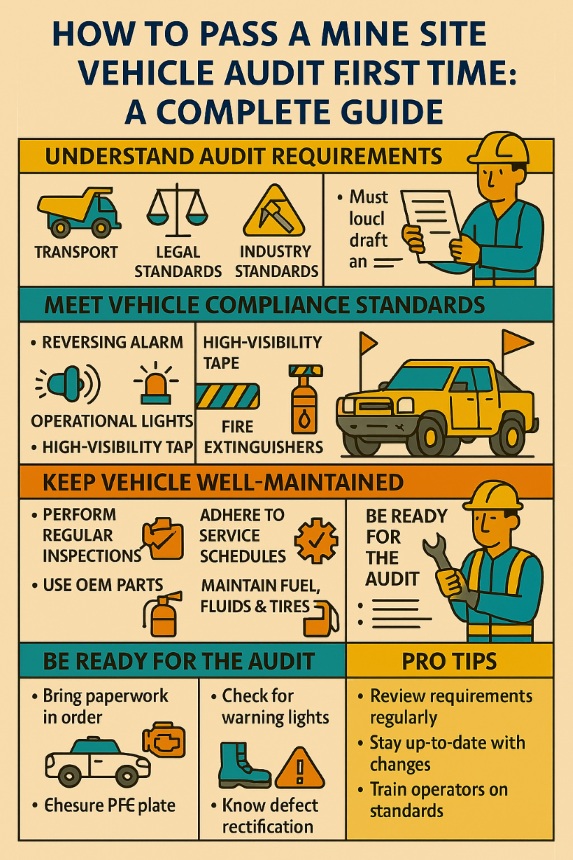
A mine site vehicle audit is an inspection conducted by mine operators or compliance authorities to ensure all vehicles entering or working on a mine site meet regulatory, safety, and operational standards.
These audits assess:
- Vehicle safety features
- Maintenance history
- Compliance with site-specific standards
- Documentation and certifications
A successful audit verifies that vehicles are fit-for-purpose, safe, and compliant with industry requirements.
Learn more about the importance of compliance: How Compliance Requirements Change Mid-Project and How to Stay Legal

2. Why Passing a Vehicle Audit Matters
Failing a mine site vehicle audit has serious consequences, including:
2.1. Loss of Site Access
Vehicles that fail audits are denied entry, slowing project timelines and reducing productivity.
2.2. Increased Costs
Re-inspection fees, vehicle repair costs and potential downtime charges can add up fast.
2.3. Safety Risks
Non-compliant vehicles endanger workers and may expose operators to fines or legal action.
2.4. Reputation Impact
Contractors and operators with poor audit outcomes risk losing future contracts or site privileges.
This guide is designed to help you avoid these pitfalls and ensure your fleet is consistently audit-ready.
3. Understanding Mine Site Standards & Requirements
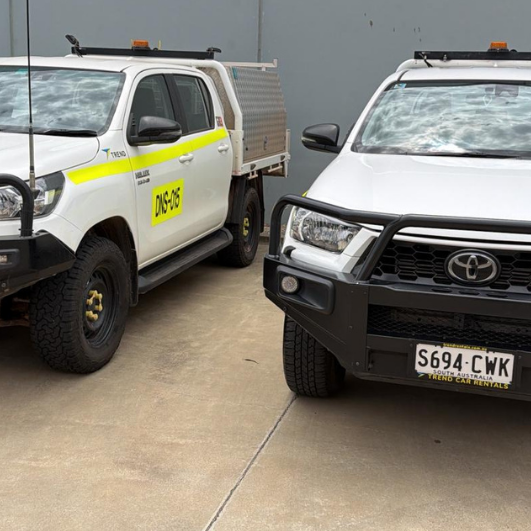
Every mine site has unique specifications, but there are common expectations across most Australian operations:
3.1. Regulatory Framework
Australian mine sites often align with:
- National Model Work Health and Safety (WHS) laws
- State safety legislation
- Site-specific safety management systems
- Industry best practices
3.2. Vehicle Standards
Audits typically assess:
- Braking systems
- Electrical safety
- Seat belts & restraints
- Load restraints
- Lighting & visibility
- Fire suppression systems
- Compliance signage
3.3. Site-Specific Requirements
Certain sites may require:
- Mine-spec vehicle compliance logs
- Additional safety equipment
- Specific maintenance intervals
- Hazard mitigation devices
To understand mine-specific needs, check out: Mine-Spec Vehicle Hire for FIFO Workers

4. Step-by-Step Audit Preparation Checklist
Preparation is the foundation of passing your audit first time. Use this structured approach.

4.1. Understand the Audit Scope
Before anything else:
✔ Contact the mine site safety team
✔ Request audit criteria and documentation lists
✔ Clarify whether the audit is:
- Compliance-only
- Safety & fit-for-purpose
- Full mechanical inspection
Ask about pass/fail thresholds and scoring models.
4.2. Gather Comprehensive Documentation
Auditors will review records such as:
- Maintenance logs
- Service history & certificates
- Previous audit reports
- Compliance certificates
- Vehicle modification records
- Safety inspection checklists
Ensure all documents are complete, accurate, and dated.
4.3. Conduct Pre-Audit Internal Inspections
Execute a detailed internal audit using your own team or consultants:
Vehicle Safety Checklist
✔ Brakes & tyres
✔ Electrical systems
✔ Lighting
✔ Seat belts
✔ Windshields and windows
✔ Load restraints
✔ Fire extinguisher & emergency gear
Mechanical Performance
✔ Engine performance
✔ Transmission
✔ Suspension
✔ Fluids (oil, coolant, brake fluid)
Use detailed checklists to track issues and corrective actions.
4.4. Fix Defects Before External Audit
Identify non-conformances early:
- Replace worn brake pads and tyres
- Correct wiring issues
- Repair body damage
- Replace expired safety equipment
Treat defect correction as a priority, not an afterthought.
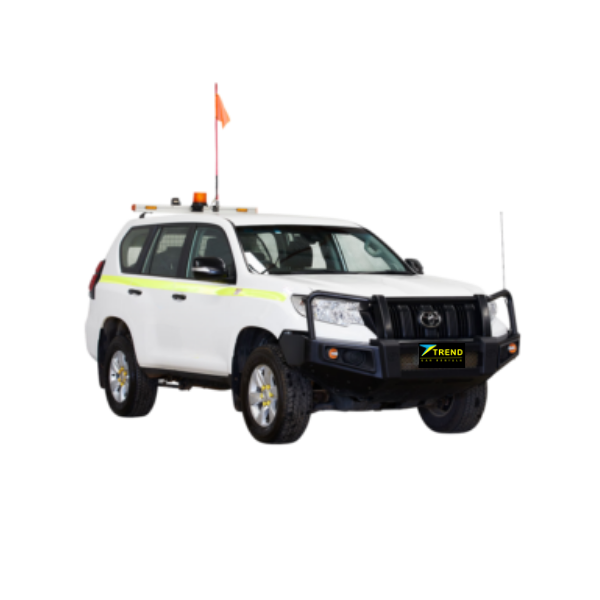
4.5. Confirm Compliance Gear is Installed and Functional
Common compliance equipment includes:
- First aid kits
- Fire extinguishers
- Warning signage
- Reverse alarms
- High visibility markings
Double-check expiry dates and functionality.
5. Documentation & Recordkeeping Best Practices
Documentation is the proof auditors want to see. Organise records by:
- Vehicle registration number
- Inspection date
- Inspector name
- Results and corrective actions
Use digital logs where possible to enhance accessibility and accuracy.
5.1. Maintenance Records
Service records should show:
- Regular intervals
- Component replacements
- Service provider details
5.2. Modification Approvals
If custom modifications were made, include:
- Engineering approvals
- Compliance certificates
- Safety assessments
This ensures transparency and accountability.
6. Audits: What Auditors Look For (In Detail)
Understanding auditor expectations helps you prepare more effectively.
6.1. Safety Features & Functionality
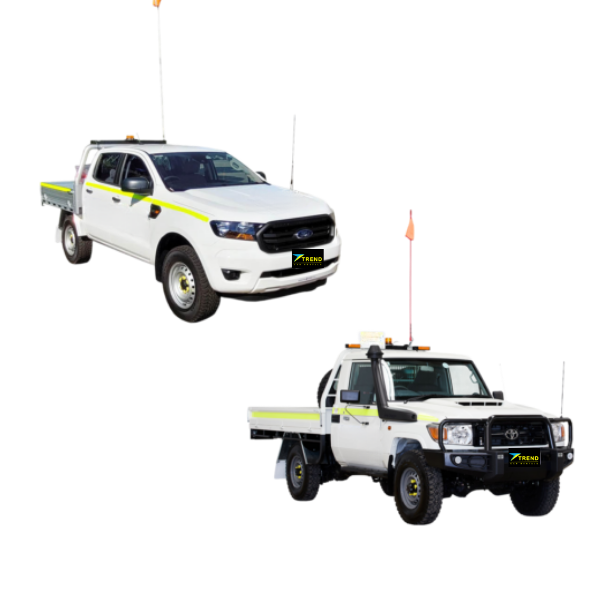
Auditors check if vehicles are safe to operate under site conditions:
- Brakes hold under load
- Lights function in all modes
- Seat belts are intact and compliant
6.2. Compliance with Standards
Audits confirm:
- Regulatory requirements are met
- Site-specific standards are followed
- Documentation is current
6.3. Fit-For-Purpose Evaluation
Vehicles must match the operational need:
- Terrain (off-road vs sealed)
- Load requirements
- Passenger capacity
Learn how to prepare vehicles for extreme conditions here: Seasonal Fleet Prep: Winter & Wet Weather Vehicle Readiness
6.4. Defect Reporting & Close-Outs
Auditors may identify minor or major defects.
✔ Minor defects require a corrective action plan
✔ Major defects can result in immediate audit failure
A fast corrective process is key to re-audit success.
7. Common Audit Fail Points & Solutions
Knowing where others fail helps you focus on critical areas.

7.1. Faulty Brakes & Tyres
Problem: Worn brake pads or tyres below tread limits
Solution: Pre-audit testing, documented replacements
7.2. Missing or Expired Safety Equipment
Problem: Fire extinguishers out of date, missing first aid kits
Solution: Regular inventory checks
7.3. Poor Recordkeeping
Problem: Incomplete service histories
Solution: Digital tracking and consistent filing
7.4. Non-Compliance Modifications
Problem: Unapproved vehicle customisations
Solution: Engineering sign-off and documentation
8. Preparing Your Team for the Audit
Vehicle readiness depends equally on your people.

8.1. Driver Awareness
Operators must understand:
- Vehicle limitations
- Safety systems
- Audit expectations
8.2. Pre-Start Checks
Institute daily pre-start vehicle checks.
✔ Lights
✔ Fluids
✔ Brakes
✔ Warning indicators
Document pre-start results.
8.3. Dedicated Fleet Compliance Officer
Assign a point of contact to manage:
- Audit preparation
- Corrective actions
- Documentation updates
This improves consistency and reduces oversight.
9. During the Audit: What to Expect
An audit might involve:
- Physical inspection
- Document review
- Vehicle test runs
- Auditor questions
Team members present should be able to:
- Locate records quickly
- Explain maintenance processes
- Describe compliance measures
A confident and organised team makes a strong impression.
10. After the Audit: What Comes Next
Upon audit completion, you may receive:
✔ Pass with no issues
✔ Pass with recommendations
✔ Fail with corrective actions required
10.1. If You Pass
Celebrate, but don’t become complacent.
✔ Schedule next service
✔ Update records
✔ Plan ongoing checks
10.2. If You Get Non-Conformances
Document corrective actions with:
- Task owner
- Deadline
- Verification method
10.3. Re-Audit
If required, address issues immediately and request a re-audit.
11. Advanced Tools for Audit Preparation
Technical and digital tools can simplify compliance:
11.1. Fleet Management Software
Tracks:
- Inspections
- Service history
- Audit readiness
11.2. Telematics & Alerts
Used to monitor:
- Vehicle performance
- Fault codes
- Driver behaviour
12. Pro Tips to Pass First Time Every Time
Here are industry-tested strategies:
12.1. Start Early
Begin audit prep weeks or months ahead.
12.2. Use Standardised Checklists
Consistency reduces oversight.
12.3. Train for Audits
Run mock audit scenarios.
12.4. Partner with Experts
Use experienced maintenance teams.
13. How Vehicle Hire Partners Can Help
If you lack compliant vehicles, working with a reputable hire partner like Trend Rentals can make preparation easier. They provide:
✔ Audit-ready, well-maintained vehicles
✔ Documentation support
✔ Flexible hire terms for remote sites
✔ Compliance with mine-specific needs
14. Case Studies: Audit Success Examples
14.1. Remote FIFO Contractor
A regional provider prepared for its first major audit by:
- Updating records
- Conducting internal inspections
- Addressing deficiencies
Result: Passed first time with zero defects.
14.2. Large Site Logistics Operator
By investing in a vehicle compliance officer and digital tracking:
Result: Significant reduction in audit prep time and audit failures.
15. Final Checklist: Audit-Ready Vehicles
Use this essential checklist:
✔ Current maintenance records
✔ Safety equipment verified
✔ Modifications documented
✔ Tyre and brake checks passed
✔ Electrical systems validated
✔ Compliance documentation organised
✔ Team trained and ready
Passing your mine site vehicle audit first time is achievable with planning, discipline, and the right systems in place.
Conclusion
Mine site vehicle audits aren’t just regulatory hurdles — they are safety checkpoints that protect your crew, your project and your operation. With the right preparation, documentation, inspections and training, you can pass your audit first time and maintain that standard indefinitely.
If you need audit-ready vehicles or flexible fleet solutions, learn more about the options available at Trend Rentals — from site-spec 4WDs to long-term hire solutions that keep your fleet compliant and ready.