In Australia’s booming mining industry, national contractors increasingly operate across multiple states — particularly in New South Wales (NSW), South Australia (SA) and Queensland (QLD). Each jurisdiction has its own safety legislation, environmental regulations, certification standards and operational compliance frameworks. This creates an added layer of complexity for fleets, equipment and support systems.
For contractors working across state lines, managing multi-state mine spec compliance is no longer optional — it’s essential for safety, legal standing, tender success and project delivery. Get it wrong, and you risk fines, work stoppages, reputational damage, insurance issues and serious safety incidents.
This blog will walk through:
- Why mine spec compliance is uniquely challenging across NSW, SA & QLD
- Key regulatory frameworks and differences between states
- What contractors must know to keep fleets and plant compliant
- Best practices for managing compliance across multiple jurisdictions
- How Trend Rentals can support compliant equipment hire and documentation
Whether you’re an established national operator or scaling regionally, this guide will help you stay ahead of compliance risk in 2026 and beyond.
Why Multi-State Mine Spec Compliance Matters
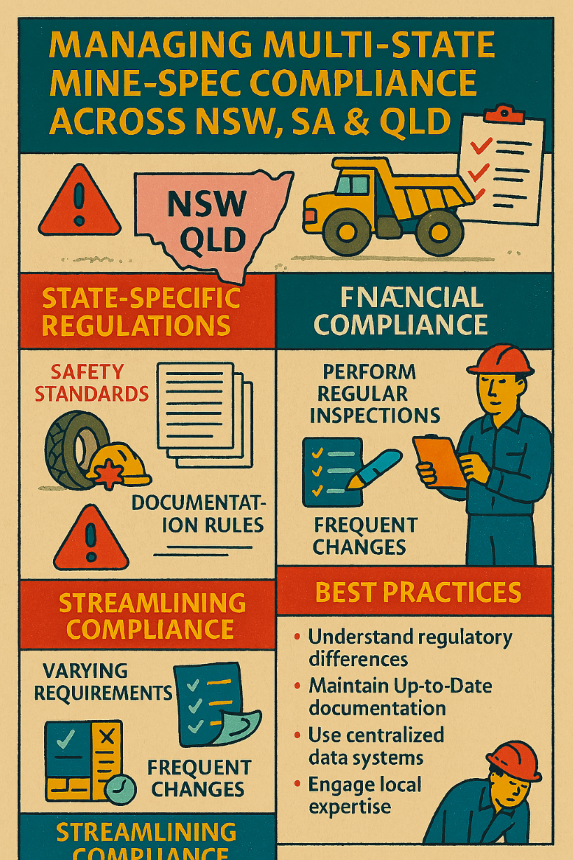
Mining jurisdictions in Australia share the same goal: protect workers, the environment, communities and assets. But each state enforces compliance differently — from certification requirements to inspection protocols and enforcement practices.
For national contractors, this means:
- A single fleet of vehicles may be compliant in one state but not another
- Documentation and reporting expectations vary
- Enforcement agencies may audit independently
- Tender evaluations increasingly include state-specific compliance criteria
Meeting these obligations consistently — without duplication, error or oversight — is a competitive advantage.
The Regulatory Landscape: NSW, SA & QLD
New South Wales (NSW)
NSW’s mining sector is one of the most active in the country. The regulatory environment is governed primarily by:
- Work Health and Safety (Mines) Regulations
- Department of Mines, Industry Regulation and Safety (DMIRS)
- Mines Safety and Inspection Act
NSW has specific requirements for:
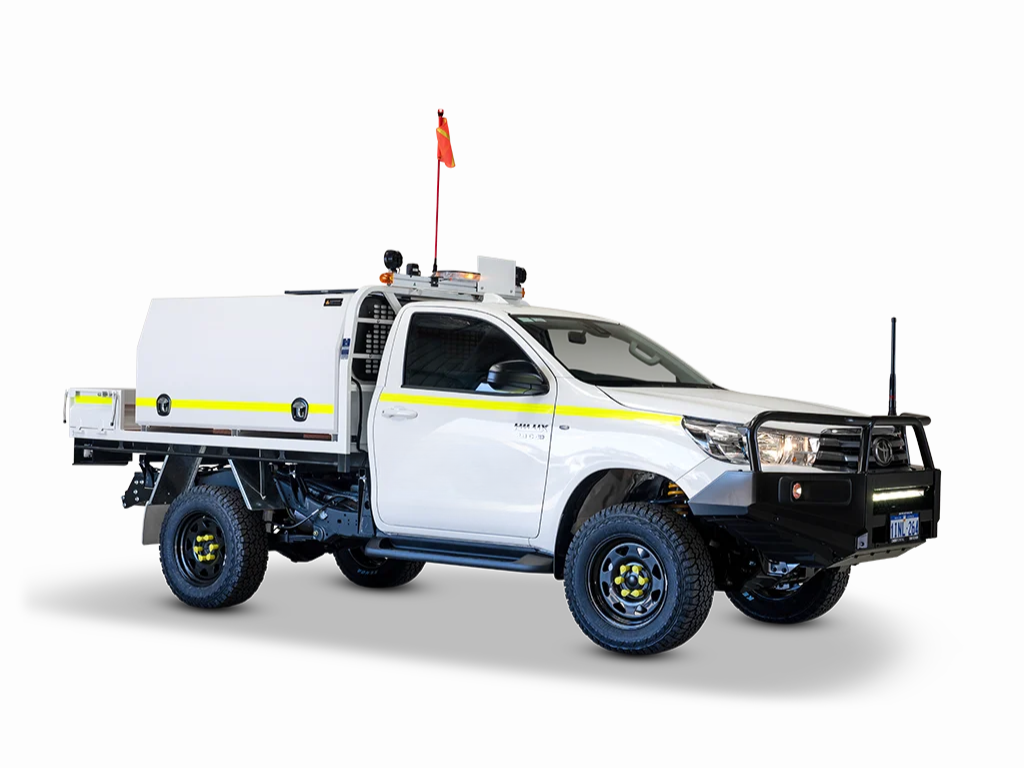
- Vehicle standards on mine sites
- Plant inspection intervals
- Operator competencies
- Documentation hierarchy
Contractors must maintain rigorous inspection and certification records — and be prepared for frequent site audits.
👉 Trend Rentals provides vehicles with full inspection documentation ready for NSW mine-spec compliance.
South Australia (SA)
SA’s mining code is administered by the Department for Energy and Mining (DEM). Key compliance areas include:
- WHS regulations applicable to mines
- Licensing requirements tailored to SA’s mining regime
- Emission and environmental standards unique to SA codes
SA prioritises environmental performance and documentation stewardship. Even minor lapses in record-keeping can raise flags with auditors.
Trend Rentals’ compliance support — such as inspection logs, checklists and documentation templates — helps SA contractors maintain audit-ready records.
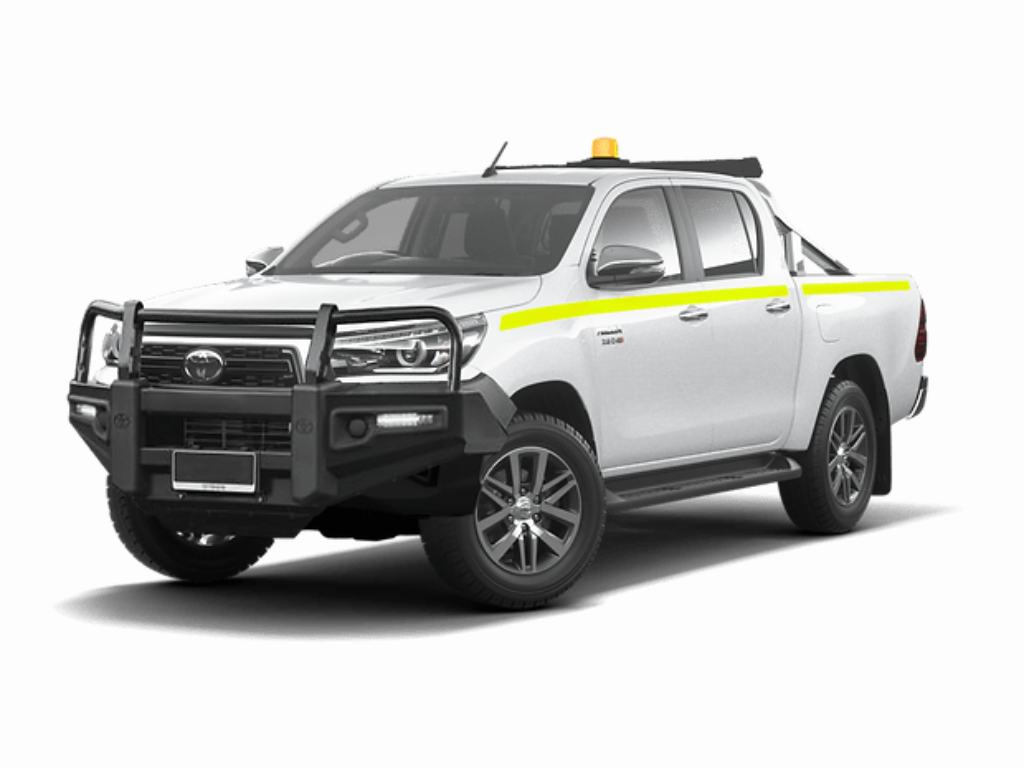
Queensland (QLD)
QLD’s mining compliance framework is defined by:
- Mining and Quarrying Safety and Health Act
- Queensland Work Health and Safety Act
- Department of Resources enforcement protocols
QLD is known for strict progressive rehabilitation and operational health requirements that intersect with fleet compliance, such as emissions monitoring and plant safety features.
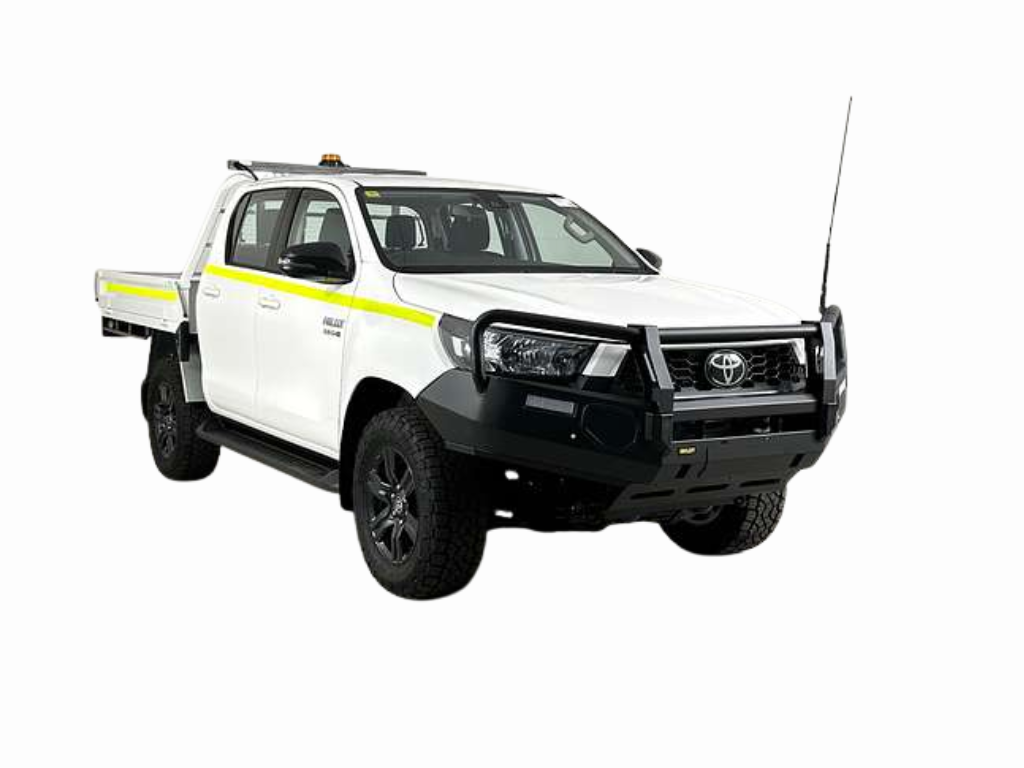
With Trend Rentals’ documented inspection and service histories, QLD mine spec requirements can be confidently managed.
Key Compliance Requirements for Mine Spec Fleets
Although regulations differ somewhat between states, there are common pillars of mine spec compliance that contractors must master:
1. Vehicle and Plant Inspection Schedules
Each state prescribes inspection intervals for vehicles, heavy equipment and high-risk mobile plant. These schedules must be:
- Followed precisely
- Logged with timestamps
- Available for audit
Without documented inspections, vehicles may be barred from site or trigger enforcement action.
2. Certification and Documentation Standards
Every jurisdiction demands compliance documentation that proves:
- Vehicles conform to regulatory specs
- Modifications are approved and logged
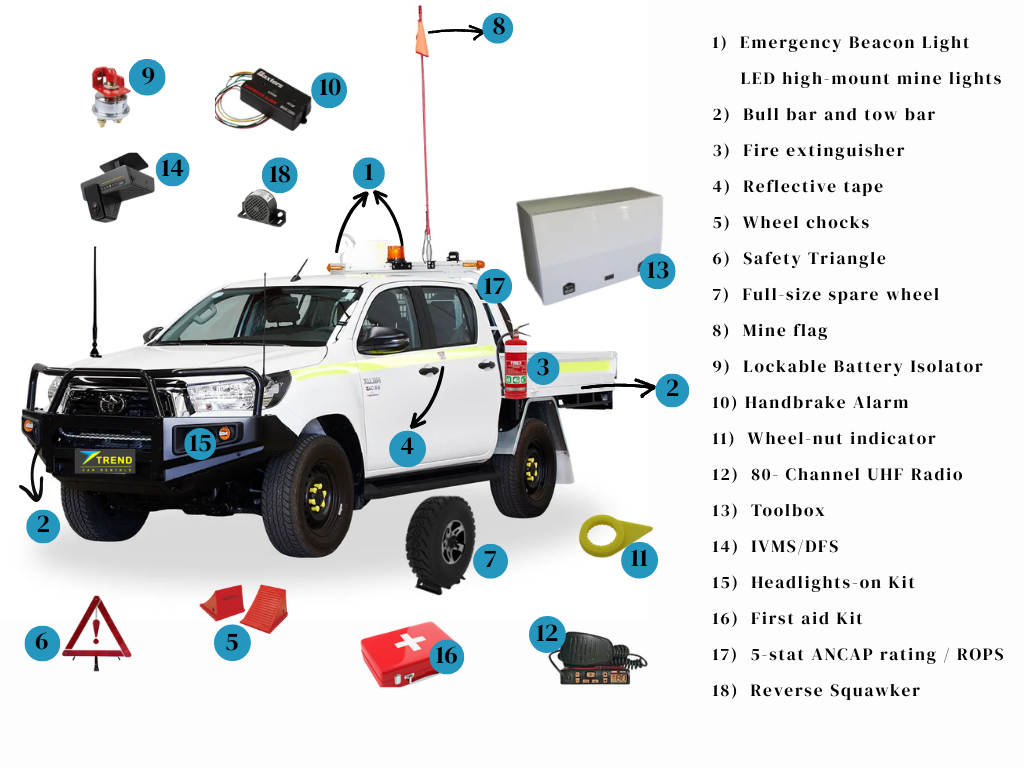
- Safety upgrades (e.g., ROPS, FOPS, fire suppression) are certified
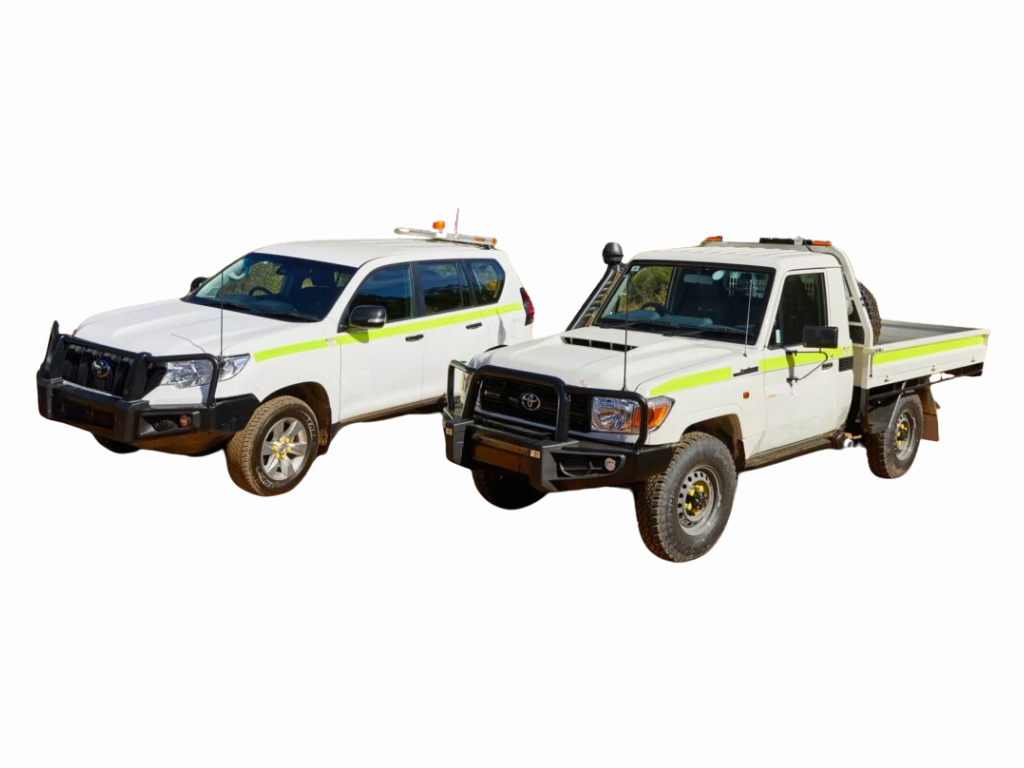
Trend Rentals supplies compliant vehicles that include up-to-date inspection records, servicing history and certification evidence.

3. Operator Competency and Licensing
Vehicles may be compliant, but operators must be appropriately licensed and trained. Across NSW, SA and QLD, competency standards vary for:
- Heavy vehicle operation
- Mobile plant handling
- Traffic management
- Site-specific induction requirements
Keeping operator records coordinated across states is essential — and often audited.

4. Maintenance History and Service Records
Jurisdictions expect detailed maintenance records, including:
- Scheduled servicing
- Remedial repairs
- Part replacements
- Defect resolution
These records protect site safety and support tender credibility.
5. State-Specific Modifications and Environmental Standards
Some jurisdictions impose unique specifications, such as:
- Emission limits
- Exhaust treatment
- Noise control devices
- Dust suppression fittings
- Waste management equipment
These may not be mandated in all states — but contractors working nationally must meet the highest applicable standard to avoid non-compliance.

Common Multi-State Compliance Challenges
National operators often encounter specific pain points when managing multi-state compliance:
❗ 1. Documentation Fragmentation
Records stored in spreadsheets or paper files make audits difficult. Without a centralised system, compliance data becomes scattered and unreliable.
💡 Solution: Use a document management system that tracks compliance across states and makes records readily retrievable.
❗ 2. Conflicting Inspection Standards
NSW might require one set of inspection intervals, while SA demands stricter safety modifications. Without clarity, vehicles can be pulled from site due to mismatched standards.
💡 Solution: Maintain a compliance library with state-by-state requirements and map your fleet against them.
❗ 3. Misaligned Operator Credentials
An operator licensed for heavy vehicles in one state may require additional certification in another — particularly for mine spec competencies.
💡 Solution: Centralise operator records and validate competency before deployment.
❗ 4. Enforcement Variability
The way inspectors audit, interpret standards or demand evidence can vary by jurisdiction — leaving contractors uncertain about expectations.
💡 Solution: Prepare audit packages that anticipate differing enforcement approaches.
Best Practices for Managing Multi-State Compliance
Successful national contractors use proactive systems to stay compliant, minimise risk and streamline operations across NSW, SA & QLD.
Here’s how:
✅ 1. Define a Unified Compliance Framework
Instead of treating compliance as a state-by-state burden, establish a unified internal standard that meets or exceeds the strictest requirement in each jurisdiction. This becomes your standard operating procedure (SOP) for the entire fleet.
This framework should include:
- Inspection schedules
- Documentation templates
- Audit readiness protocols
- Operator licensing standards
- Maintenance policies
Trend Rentals’ support materials can be adapted into your SOPs.
✅ 2. Centralise Compliance Records
A single, central compliance repository — ideally digital and cloud-based — ensures that all states’ inspection reports, certificates and service records are accessible 24/7. This eliminates the risk of missing paperwork during surprise audits.
Contractors can use third-party compliance software or a custom system integrated with fleet management.
✅ 3. Conduct Regular Internal Audits
Don’t wait for government inspectors. Run monthly or quarterly internal audits to check that:
- Certifications are current
- Inspection intervals are adhered to
- Operator credentials are valid
- Records are complete and legible
This proactive approach avoids enforcement actions and reinforces accountability.
✅ 4. Use Compliance-Ready Hire Vehicles
One routine compliance blunder is assuming all hire vehicles are compliant. Instead, verify that every vehicle meets mine specs and that documentation is available.
Trend Rentals offers compliant vehicles tailored for worksite usage with supporting documentation for inspections, servicing and certification — making multi-state compliance easier.
✅ 5. Standardise Operator Training & Verification
Operators working on mine sites in different states must have:
- Valid state licences
- Site-specific inductions
- Mine-spec competency cards (if required)
- Refresher training logs
These should be pulled into a central training database.
✅ 6. Align Maintenance Backlog With Compliance Demands
It’s common for maintenance backlogs to become compliance liabilities — especially when vehicles are shifted between states. Prioritise scheduled servicing, and don’t allow vehicles to enter mines without complete documentation.
✅ 7. Stay Informed on Regulatory Updates
Regulations aren’t static. Subscribe to mining safety bulletins in NSW, SA & QLD. Changes can occur in:
- Inspection frequencies
- Safety technology requirements
- Environmental standards
- Operator training models
Early awareness allows planning rather than reaction.
How Trend Rentals Supports Multi-State Compliance
Trend Rentals understands that national contractors face unique challenges when operating in NSW, SA and QLD. Our services are designed to make multi-state compliance simpler:
🔹 1. Compliance-Assured Vehicle Fleet
All vehicles available for hire are:
✔ Serviced to manufacturer and regulatory standards
✔ Inspected with documented certificates
✔ Maintained with traceable logs
✔ Ready for mine-spec deployment
Explore our mine spec vehicle options.
🔹 2. Inspection Documentation & Support
We provide the paperwork you need for compliance checks, including:
- Safety inspection certificates
- Maintenance records
- Service histories
- Compliance checklists
These are easily integrated into your central compliance system.
🔹 3. Flexible Hire Terms Across States
Whether you need short-term hire for a QLD project or long-term deployment in NSW, Trend Rentals supports tailored hire periods that align with project timelines — without compromising compliance.
🔹 4. Pre-Hire Compliance Checks
Before dispatch, we verify that:
- Certificate expiry dates are current
- Safety tags are attached
- Service records are complete
- Vehicle specifications match mine-spec requirements
This reduces the compliance burden on your team.
🔹 5. Dedicated Support & Advice
Our team can help you:
✔ Understand compliance documentation
✔ Choose the right vehicles for each state
✔ Prepare audit packs
✔ Coordinate renewals and inspections
Case Studies: Managing Compliance Across NSW, SA & QLD
Real examples illustrate how compliance works in practice:
Case Study 1 — NSW to QLD Mine Expansion
A national contractor mobilised from NSW (iron ore) to QLD (coal). Before mobilisation, they:
- Reviewed differences in inspection intervals
- Mapped operator licences against QLD requirements
- Used Trend Rentals for hire vehicles with full documentation
Outcome:
✔ Smooth transition
✔ No enforcement issues
✔ Complete audit readiness
Case Study 2 — SA Mineral Exploration Program
A contractor operating in SA faced a surprise audit related to environmental compliance on vehicles. Because their fleet was documented and supported by verification logs from Trend Rentals:
- The audit was completed in under 2 hours
- No penalties were issued
- Compliance practices were commended
Tools & Templates for Multi-State Compliance Management
To help you stay compliant, consider building or adopting:
📋 Centralised Inspection Log
Tracks state, vehicle ID, date, inspector name, certification expiry.
🧑✈️ Operator Competency Register
Contains licences, training dates, renewals and site authorisations.
🔧 Maintenance Tracker
Records service events, part replacements and backlog items.
🗂 Compliance Audit Pack Template
A document bundle ready for inspection teams — includes all certificates and vehicle records.
Trend Rentals’ support materials can help you build these.
Common Questions About Multi-State Compliance
Q: Can a vehicle compliant in NSW be used in QLD without modification?
A: Often yes, if it meets or exceeds the strictest standard. But always verify environmental requirements and inspection intervals, as some states demand additional checks.
Q: Are mine-spec compliance documents standard across states?
A: No — each state has unique expectations. Standardise your own framework based on the most rigorous requirements and apply that uniformly to avoid gaps.
Q: How often do inspections need to be repeated?
A: It varies by state and vehicle class. A central compliance schedule with reminders helps avoid lapses.
Final Thoughts
Managing mine spec compliance across Western Australia, South Australia and Queensland is demanding — but with the right systems and partners, it becomes manageable and strategic. National contractors who prioritise compliance reduce risk, win more tenders, avoid penalties and build stronger safety cultures.
Key takeaways:
- Centralise your records
- Standardise your processes
- Use compliance-ready hire vehicles
- Train and verify operators rigorously
- Stay informed on regulatory updates
Trend Rentals is here to support your multi-state compliance journey with reliable equipment, documentation and expert advice.