
Large infrastructure and construction projects across Australia rely heavily on mobility. From engineers travelling between work zones to supervisors transporting equipment and safety teams conducting inspections, the right fleet mix plays a critical role in keeping projects running efficiently.
Temporary project offices—often established near construction zones, mines, or infrastructure corridors—must carefully select a fleet of vehicles that matches their operational needs. Choosing the right mix of utes, SUVs, vans, and mine-spec vehicles ensures workers can move safely, transport equipment, and access remote or challenging terrain.
Companies like Trend Rentals regularly support these projects by providing flexible fleet solutions tailored to each stage of development. In this guide, we explore how project managers determine the ideal vehicle mix based on workforce size, terrain, logistics needs, and project phase.
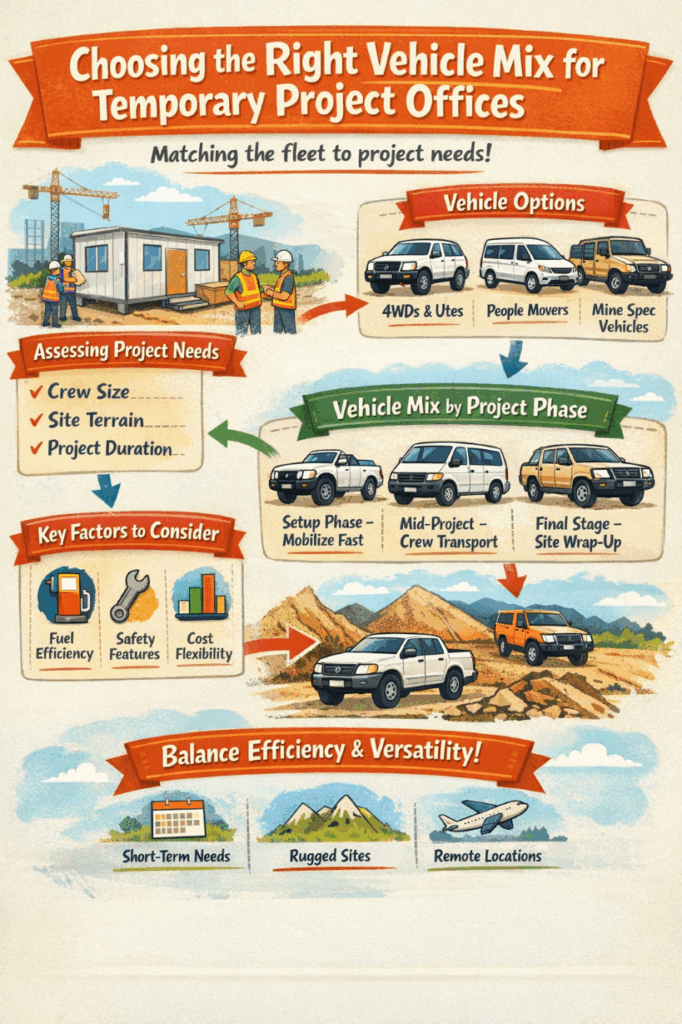
Why Fleet Planning Matters for Temporary Project Offices
Construction and infrastructure projects are dynamic environments. Workforce numbers fluctuate, site locations change, and operational requirements evolve as projects progress.
A poorly planned fleet can lead to:
- Delays in staff reaching work zones
- Inefficient transport of equipment
- Higher operating costs
- Safety compliance issues
- Reduced productivity
The right fleet mix ensures:
- Efficient transportation for crews and managers
- Safe access to remote or rugged areas
- Proper vehicle compliance with site requirements
- Scalable transport capacity as projects grow
Temporary project offices must therefore treat fleet planning as a strategic decision rather than an afterthought.

Key Factors That Determine the Right Fleet Mix
Before selecting vehicles, project managers typically analyse several operational factors.
1. Workforce Size
The number of employees working on-site directly influences the number and type of vehicles required.
For example:
Small teams (10–20 staff):
- 2–3 dual cab utes
- 1 SUV
- 1 service van
Medium teams (20–60 staff):
- 6–10 utes
- 2–4 SUVs
- 2 vans
- 1–2 mine-spec vehicles
Large projects (60+ staff):
- 15+ vehicles including utes, SUVs, vans and specialised vehicles
As workforce size increases, transport needs diversify, requiring vehicles for logistics, supervision, inspections, and equipment transport.

2. Project Location and Terrain
Australia’s construction projects often operate in varied environments including:
- Urban infrastructure sites
- Regional highways
- Mining corridors
- Remote renewable energy projects
Terrain plays a major role in vehicle selection.
Urban projects
Regional infrastructure
Remote or mining environments
- mine-spec 4WD vehicles
- off-road capable utes
Vehicles must be able to safely access work zones, particularly when roads are unsealed or terrain is rough.

3. Project Phase
Different stages of a project require different types of vehicles.
Infrastructure projects typically move through these phases:
- Planning and surveying
- Early construction
- Peak construction
- Commissioning and maintenance
Each phase influences the fleet mix.

Vehicle Requirements by Project Phase
1. Planning and Survey Phase
During early stages, teams are smaller and primarily include:
- engineers
- surveyors
- environmental consultants
- project managers
Mobility needs are focused on site inspections and assessments.
Typical vehicle mix
- 2–3 SUVs
- 1–2 dual cab utes
- 1 mine-spec vehicle if remote
SUVs are popular in this phase because they offer:
- comfortable long-distance travel
- fuel efficiency
- space for equipment
- good off-road capability
Dual cab utes may also be used for transporting surveying gear or small tools.

2. Early Construction Phase
Once groundwork begins, workforce numbers increase. Site supervisors, safety teams, and logistics personnel start working on location.
Fleet needs expand to include vehicles that can transport tools and materials.
Typical fleet mix
- 4–6 dual cab utes
- 2–3 SUVs
- 1 service van
- 1–2 mine-spec vehicles
Dual cab utes become the backbone of the fleet due to their versatility.
Advantages of utes include:
- payload capacity
- towing ability
- off-road capability
- space for tools and equipment
They are particularly valuable for supervisors moving between work zones.
3. Peak Construction Phase
During peak activity, hundreds of workers may be involved across multiple work zones.
This phase demands the largest and most diverse fleet mix.
Typical fleet mix
- 10–15 dual cab utes
- 4–6 SUVs
- 3–5 vans
- 3–6 mine-spec vehicles
Vehicles serve multiple roles including:
- crew transport
- equipment delivery
- safety inspections
- engineering supervision
- logistics coordination
At this stage, fleet efficiency becomes critical to maintaining productivity.
Companies often rely on flexible vehicle hire providers such as Trend Rentals to scale fleets quickly without long-term ownership costs.
4. Commissioning and Maintenance Phase
Once construction is nearing completion, workforce numbers decline again.
Fleet requirements reduce to vehicles needed for:
- maintenance crews
- inspection teams
- final engineering checks
Typical mix:
- 2–4 utes
- 1–2 SUVs
- 1 service van
Reducing fleet size helps minimise project operating costs as activity winds down.
Understanding the Core Vehicle Types Used in Infrastructure Projects
Selecting the right mix requires understanding the role of each vehicle type.
Dual Cab Utes
Dual cab utes are the most commonly used vehicle on construction sites.
Key advantages:
- high payload capacity
- ability to tow trailers or equipment
- seating for multiple workers
- off-road capability
Popular models used in fleets often include:
- Toyota Hilux
- Ford Ranger
- Isuzu D-Max
These vehicles serve as multi-purpose workhorses for supervisors, engineers, and field technicians.
SUVs
SUVs are often assigned to:
- project managers
- engineers
- environmental consultants
- visiting stakeholders
They offer:
- comfortable long-distance travel
- improved safety features
- better fuel efficiency than heavy vehicles
- moderate off-road capability
SUVs are ideal for projects that require frequent travel between offices and sites.
Commercial Vans
Vans are essential for transporting equipment, tools, and specialised gear.
Typical uses include:
- electrical contractor vehicles
- mechanical service teams
- equipment transport
- mobile workshops
Advantages include:
- large cargo capacity
- secure storage
- organised tool transport
For many infrastructure projects, vans function as mobile service units.
Mine-Spec Vehicles
Mine-spec vehicles are required for projects operating on:
- mining sites
- major resource projects
- remote infrastructure developments
These vehicles include specialised safety features such as:
- safety beacons
- roll-over protection
- UHF radios
- fire extinguishers
- first aid kits
- safety flags
They ensure compliance with strict site safety requirements.
Many companies rely on providers like Trend Rentals to supply compliant mine-spec fleets.
Fleet Allocation Based on Job Roles
Temporary project offices often assign vehicles based on employee roles.
Typical allocations include:
Project managers
Site supervisors
Engineering teams
- SUVs or utes
Safety officers
- mine-spec vehicles
Service crews
- vans or utes
This structured allocation ensures workers always have the appropriate vehicle for their responsibilities.
Logistics and Equipment Transport
Fleet planning must also account for transporting tools and equipment.
Examples include:
- surveying equipment
- generators
- safety barriers
- traffic control gear
- electrical tools
Vehicles must provide sufficient cargo capacity while maintaining safe weight limits.
Dual cab utes with trays or canopies are often configured specifically for tool storage.
Cost Efficiency in Fleet Planning
Owning a large fleet for temporary projects can be expensive and inefficient.
Costs include:
- vehicle purchase
- depreciation
- insurance
- maintenance
- compliance upgrades
Instead, many construction companies choose long-term rental fleets.
Benefits include:
- scalable fleet size
- no large upfront investment
- maintenance included
- easier vehicle upgrades
Flexible rental options allow project offices to adjust fleet size as workforce needs change.
Compliance and Safety Requirements
Infrastructure and mining projects must comply with strict safety regulations.
Vehicle requirements may include:
- 4WD capability
- mine-spec safety equipment
- GPS tracking
- driver fatigue management systems
Temporary project offices must ensure every vehicle meets these standards before entering site areas.
Reliable fleet providers ensure vehicles meet compliance requirements from day one.
Sustainability Considerations for Modern Projects
Many construction companies are now incorporating sustainability goals into their fleet planning.
This includes:
- using fuel-efficient vehicles
- incorporating hybrid or electric vehicles where possible
- reducing idle time
- optimising transport routes
Sustainable fleet strategies help reduce project carbon footprints while lowering fuel costs.
Technology and Fleet Management
Modern fleet management technology helps project offices track vehicle usage and efficiency.
Common tools include:
- GPS tracking
- vehicle telematics
- driver behaviour monitoring
- maintenance alerts
These systems allow project managers to optimise vehicle usage and reduce downtime.
Why Flexible Vehicle Hire is Ideal for Temporary Project Offices
Temporary infrastructure projects have constantly changing needs. Fleet sizes can double or halve within months depending on project activity.
Vehicle hire solutions offer advantages such as:
- rapid fleet scaling
- access to specialised vehicles
- predictable costs
- simplified compliance
Rental providers can also deliver vehicles directly to project sites, reducing logistics challenges.
How Fleet Specialists Help Projects Choose the Right Mix
Fleet specialists work closely with project managers to determine the best vehicle strategy.
They typically evaluate:
- project duration
- workforce size
- site terrain
- compliance requirements
- logistics needs
Based on this analysis, they recommend a customised vehicle mix tailored to the project.
Companies like Trend Rentals regularly assist construction companies in planning efficient fleets for major infrastructure projects across Australia.
Final Thoughts
Choosing the right vehicle mix is a critical part of running a successful construction or infrastructure project. Temporary project offices must carefully balance workforce mobility, equipment transport, safety compliance, and cost efficiency.
By analysing workforce size, project phase, terrain, and operational requirements, project managers can create a fleet that supports productivity and keeps teams moving safely across worksites.
From versatile dual cab utes to specialised mine-spec vehicles, each vehicle plays a vital role in keeping large projects running smoothly. With the support of experienced fleet providers and flexible rental solutions, project offices can scale their vehicle fleets efficiently throughout every stage of the project lifecycle.