Choosing how to acquire vehicles for your business is no longer a simple decision. In 2026, Australian companies—especially in construction, mining, infrastructure, and field services—must weigh renting vs leasing vs buying vehicles based on cost, flexibility, compliance, and operational efficiency.
With rising interest rates, evolving compliance requirements, and increased demand for mine spec vehicles, making the right decision can significantly impact your bottom line.
In this guide, we break down the true cost of renting, leasing, and buying vehicles in Australia, helping you choose the best strategy for your business.
Understanding Your Options
Before diving into costs, it’s important to understand the three core options:
1. Renting Vehicles (Short & Long-Term Hire)
Vehicle rental involves paying a fixed rate for short-term or long-term use without ownership.
Businesses increasingly rely on fleet hire solutions to avoid upfront costs and maintain flexibility.
👉 Internal link suggestion:
Explore flexible options with long-term hire solutions
2. Leasing Vehicles
Leasing is a medium-to-long-term agreement (typically 2–5 years) where businesses pay monthly instalments but don’t own the vehicle unless a payout is made.
3. Buying Vehicles
Buying involves full ownership—either outright or via finance—with full responsibility for maintenance, depreciation, and compliance.
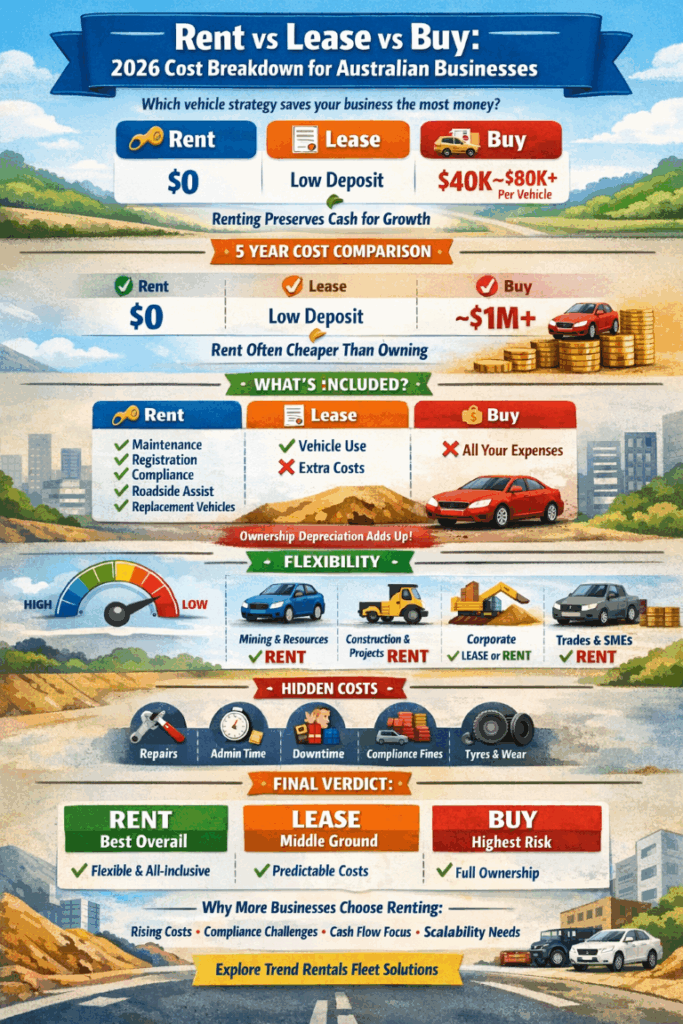
2026 Cost Breakdown: Rent vs Lease vs Buy
Let’s break down the real costs Australian businesses face in 2026.
Upfront Costs
- Renting: $0 upfront
- Leasing: Low upfront (deposit may apply)
- Buying: High capital investment (often $40K–$80K+ per vehicle)
For businesses managing multiple vehicles, buying can tie up hundreds of thousands in capital.
As highlighted by Trend Rentals, hiring removes the need for large upfront investments and frees up cash for growth.
Ongoing Costs
Renting:
- Fixed, predictable payments
- Maintenance usually included
- No surprise repair costs
Leasing:
- Monthly repayments
- Maintenance often separate
- Potential excess wear charges
Buying:
- Loan repayments (if financed)
- Servicing, tyres, repairs
- Insurance, registration
Owning a fleet introduces hidden costs that many businesses underestimate.
Depreciation
One of the biggest financial drawbacks of ownership.
- Vehicles can lose 15–25% value in the first year
- Ongoing depreciation reduces asset value annually
With renting:
- No depreciation risk
- Provider absorbs the loss
Trend Rentals highlights that businesses avoid depreciation entirely when hiring vehicles.

Maintenance & Repairs
Renting:
- Included in most agreements
- Replacement vehicles often provided
Leasing:
- Usually paid separately
- Can increase total cost significantly
Buying:
- Full responsibility
- Unexpected breakdown costs
For businesses operating in remote areas, downtime is costly. Rental providers often include servicing and replacement vehicles to minimise disruption.

Compliance Costs (Critical in Australia)
For industries like mining and construction, compliance is non-negotiable.
Buying vehicles means:
- Paying for mine-spec modifications
- Keeping up with changing regulations
- Managing inspections and documentation
Hiring vehicles:
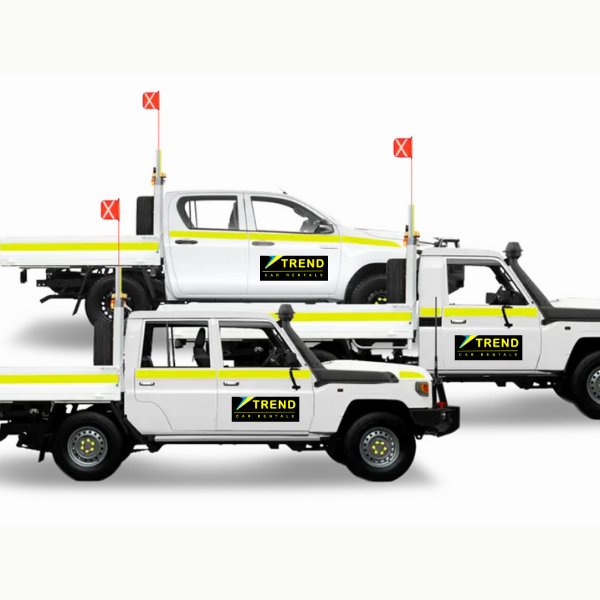
- Comes fully compliant and site-ready
- Includes documentation and safety equipment
- Reduces admin burden
Trend Rentals ensures vehicles meet Australian safety standards and site requirements before deployment.

Flexibility & Scalability
Renting:
- Scale fleet up or down instantly
- Ideal for project-based work
Leasing:
- Fixed contracts
- Limited flexibility
Buying:
- No flexibility
- Idle vehicles during downtime
For industries with fluctuating demand, renting offers unmatched adaptability.

Real-World Example: Fleet Cost Comparison
Let’s compare a fleet of 10 mine-spec vehicles over 24 months:
Buying:
- Purchase: ~$700,000
- Modifications: ~$150,000
- Maintenance: ~$100,000
- Total: ~$950,000+
Leasing:
- Monthly payments: ~$12,000
- Maintenance: ~$80,000
- Total: ~$368,000+
Renting:
- Monthly hire (all inclusive): ~$15,000
- Total: ~$360,000 (approx.)
💡 Renting often delivers similar or lower total cost than leasing, without long-term commitment or risk.

When Renting Makes the Most Sense
Renting is ideal when your business needs:
1. Project-Based Flexibility
Scale your fleet as projects start and finish.
2. No Capital Investment
Preserve cash flow for core operations.
3. Compliance Without Hassle
Avoid managing evolving regulations.
4. Reduced Downtime
Access maintained, reliable vehicles.
Trend Rentals emphasises that hiring ensures vehicles are site-ready, compliant, and reliable, reducing operational risk.

When Leasing Might Work
Leasing can suit businesses that:
- Want predictable long-term costs
- Use vehicles consistently
- Don’t need high flexibility
However, it lacks the adaptability of rental solutions.

When Buying Makes Sense
Buying may be suitable if:
- Vehicles are used long-term (5+ years)
- You have strong cash reserves
- Compliance requirements are minimal
But in high-compliance industries, ownership becomes complex and costly.

Industry-Specific Insights (Australia 2026)
Mining & Resources
- Strict compliance requirements
- Remote operations
- High vehicle wear
👉 Renting is often the best option due to compliance and maintenance demands.
Construction & Infrastructure
- Project-based timelines
- Changing workforce size
👉 Rental fleets allow scaling without long-term risk.
Government & Civil Projects
- Budget constraints
- Temporary contracts
👉 Renting avoids long-term asset ownership.

Trades & SMEs
- Limited capital
- Need reliability
👉 Renting reduces upfront costs and simplifies operations.
Hidden Costs Businesses Often Miss
Many companies underestimate the true cost of owning or leasing:
- Downtime from breakdowns
- Admin time managing fleet
- Compliance penalties
- Storage and logistics
- Insurance increases
Hiring eliminates many of these hidden expenses.
Key Decision Factors for 2026
When choosing between rent, lease, or buy, consider:
1. Cash Flow
Do you want to preserve capital?
2. Flexibility
Will your fleet size change?
3. Compliance Requirements
Are you operating on regulated sites?
4. Risk Tolerance
Can you absorb depreciation and maintenance costs?
Why More Australian Businesses Are Choosing Rental
Across Australia, there is a clear shift toward vehicle rental solutions.
Key drivers include:
- Rising vehicle prices
- Increased compliance complexity
- Demand for flexibility
- Focus on cash flow management
Trend Rentals notes that businesses benefit from fixed costs, no depreciation, and full maintenance support, making rental an increasingly attractive option.
Final Verdict: Rent vs Lease vs Buy
Renting (Best Overall for Most Businesses)
✔ No upfront costs
✔ Full flexibility
✔ Maintenance included
✔ Compliance handled
Leasing (Middle Ground)
✔ Predictable payments
✖ Less flexibility
✖ Extra costs
Buying (Highest Risk)
✔ Full ownership
✖ High upfront cost
✖ Depreciation
✖ Maintenance burden
Conclusion
In 2026, the decision between renting, leasing, and buying vehicles comes down to flexibility, cost control, and risk management.
For most Australian businesses—especially in mining, construction, and infrastructure—renting vehicles provides the best balance of affordability, compliance, and operational efficiency.
With no upfront costs, reduced risk, and full support, it’s no surprise that more companies are shifting toward fleet hire solutions.