
Australia’s electric vehicle (EV) landscape has transformed dramatically over the past few years. With federal and state governments pushing hard toward a cleaner transport future, 2026 brings a refreshed suite of incentives designed to make EV ownership more affordable than ever. Whether you’re considering buying, leasing, or renting an EV, understanding these incentives can save you thousands.
This comprehensive guide breaks down every major EV incentive available in Australia in 2026, how they work, who qualifies, and how you can maximise your savings. Throughout the article, you’ll also find helpful internal links to Trend Rentals, a leading EV rental provider, so you can explore EV options before committing to a purchase.
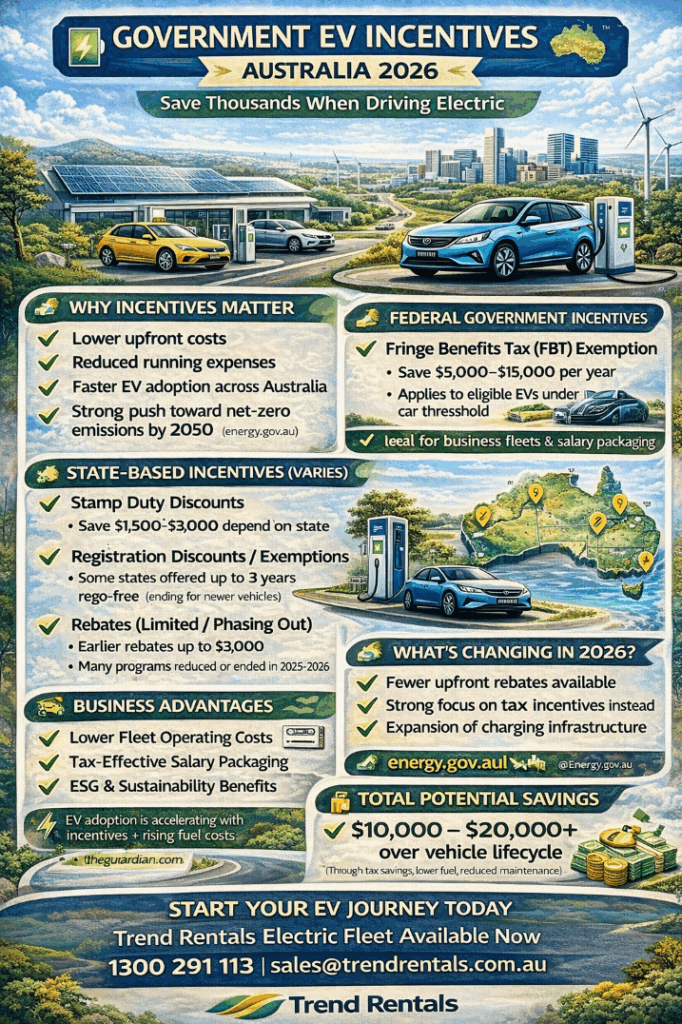
Why EV Incentives Matter in 2026
Australia’s EV adoption rate has surged, but the government is still pushing toward its 2030 emissions targets. Incentives remain a crucial tool to:
- Reduce upfront EV costs
- Encourage cleaner transport
- Support charging infrastructure growth
- Reduce reliance on imported fuel
- Help households transition affordably
With more EV models entering the market — and more Australians considering alternatives to petrol vehicles — 2026 is shaping up to be the most EV‑friendly year yet.
If you want to experience an EV before buying, you can rent an electric vehicle through Trend Rentals.
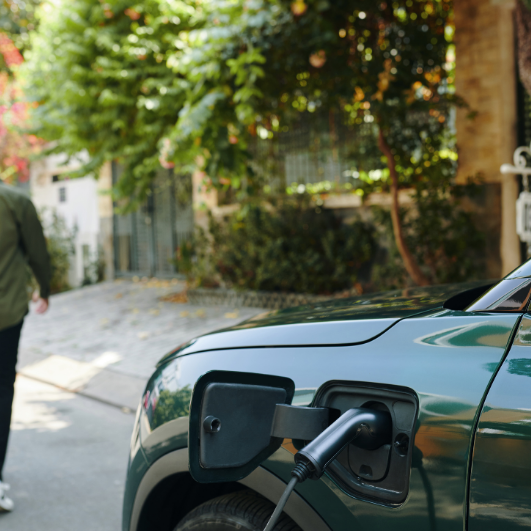
Federal Government EV Incentives (2026)
The Australian Federal Government continues to offer several nationwide incentives that apply regardless of your state or territory.
1. Fringe Benefits Tax (FBT) Exemption for EVs
One of the most significant incentives is the FBT exemption for eligible electric vehicles. This applies when an employer provides an EV to an employee — including through salary packaging or novated leasing.
What This Means for You
- Employees can save $6,000–$12,000 per year through salary sacrifice.
- Employers save on FBT costs.
- EVs become significantly cheaper than petrol vehicles under a novated lease.
Eligibility (2026 rules)
- EV must be battery‑electric, hydrogen fuel‑cell, or plug‑in hybrid (PHEV exemption ends 2027).
- Vehicle must be below the Luxury Car Tax (LCT) threshold for fuel‑efficient vehicles.
- First retail sale must occur after 1 July 2022.
If you’re not ready to commit to a lease, you can rent an EV short‑term to test the experience.

2. Luxury Car Tax (LCT) Threshold for Fuel‑Efficient Vehicles
The LCT threshold for fuel‑efficient vehicles in 2026 is higher than for petrol cars, meaning more EVs avoid the tax.
2026 LCT Thresholds
- Fuel‑efficient vehicles (including EVs): $91,387
- Other vehicles: $76,950
This makes many mid‑range EVs more affordable compared to luxury petrol vehicles.
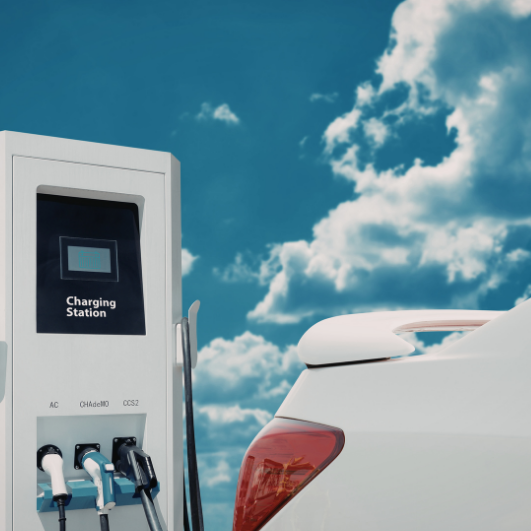
3. Instant Asset Write‑Off for Businesses
Small and medium businesses purchasing EVs for commercial use may be eligible for accelerated depreciation or instant asset write‑off schemes (depending on turnover and vehicle price caps).
Benefits
- Immediate tax deductions
- Lower operating costs
- Reduced fleet emissions
Businesses wanting to trial EVs before purchasing can explore EV fleet rentals
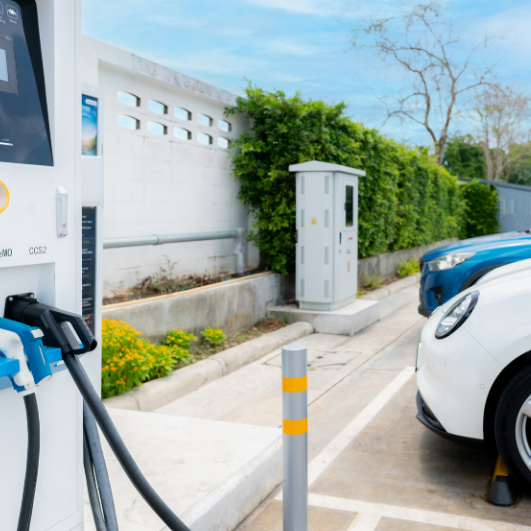
State-by-State EV Incentives in Australia (2026)
Each state and territory offers its own incentives, rebates, and registration discounts. Below is the full 2026 breakdown.
New South Wales (NSW)
NSW remains one of the most EV‑friendly states.
Key Incentives (2026)
- Stamp duty exemption for eligible EVs under the LCT threshold
- Discounted registration fees for EVs
- Expanded public charging infrastructure funding
Although the $3,000 rebate ended in 2023, NSW still offers strong long‑term savings through tax reductions.
Victoria (VIC)
Victoria previously had a road‑user charge for EVs, but it was ruled invalid in 2023. In 2026, VIC has shifted toward more supportive incentives.
Current VIC Incentives
- Registration discounts for EVs
- Government fleet electrification, increasing used EV availability
- Charging infrastructure grants for homes and businesses
Queensland (QLD)
Queensland continues to offer some of the most generous EV rebates in Australia.
2026 QLD Incentives
- Up to $6,000 rebate for eligible EVs under $68,000
- Reduced registration fees
- Discounted stamp duty (as low as $2 per $100 of dutiable value)
QLD’s Clean Energy Plan aims for 100% renewable energy by 2035, making EV adoption a key priority.
South Australia (SA)
South Australia has shifted its focus from rebates to infrastructure and long‑term affordability.
2026 SA Incentives
- Three years of free registration for new EVs
- Subsidies for home EV chargers
- Government‑funded charging network expansion
If you’re in SA (including Adelaide), you can rent an EV locally through Trend Rentals.
Western Australia (WA)
WA continues to offer strong incentives to encourage EV uptake across its vast regional areas.
2026 WA Incentives
- $3,500 EV rebate for vehicles under $70,000
- Reduced registration and stamp duty
- Statewide charging network rollout
Tasmania (TAS)
Tasmania’s clean‑energy leadership makes EV adoption a natural fit.
2026 TAS Incentives
- Two years free registration for new EVs
- Stamp duty exemption
- Government investment in regional charging stations
Australian Capital Territory (ACT)
The ACT remains the most generous region for EV incentives.
2026 ACT Incentives
- Free registration for two years
- Stamp duty exemption
- Zero‑interest loans up to $15,000 for EV purchases
- Strongest per‑capita EV adoption in Australia
Northern Territory (NT)
The NT is expanding its EV support as part of its 2030 emissions strategy.
2026 NT Incentives
- Stamp duty reduction (up to $1,500)
- Registration discount for EVs
- Government investment in remote charging infrastructure
How Much Can You Save in 2026?
Savings vary by state, but here’s a general estimate:
| Incentive Type | Potential Savings |
|---|---|
| Federal FBT Exemption | $6,000–$12,000 per year |
| State Rebates | $3,000–$6,000 |
| Stamp Duty Exemption | $1,000–$3,000 |
| Registration Discounts | $500–$2,000 |
| Charging Incentives | $200–$1,000 |
Total potential savings: $10,000–$20,000+ depending on your state and purchase method.
Should You Buy, Lease, or Rent an EV in 2026?
With incentives at their peak, many Australians are weighing their options.
Buying an EV
Best for long‑term ownership and those wanting to take full advantage of rebates and tax incentives.
Leasing an EV (Novated Lease)
Often the cheapest way to drive an EV thanks to the FBT exemption.
Renting an EV
Perfect for:
- Trying an EV before buying
- Short‑term eco‑friendly transport
- Business travellers
- Rideshare drivers testing EV suitability
Charging Infrastructure Growth in 2026
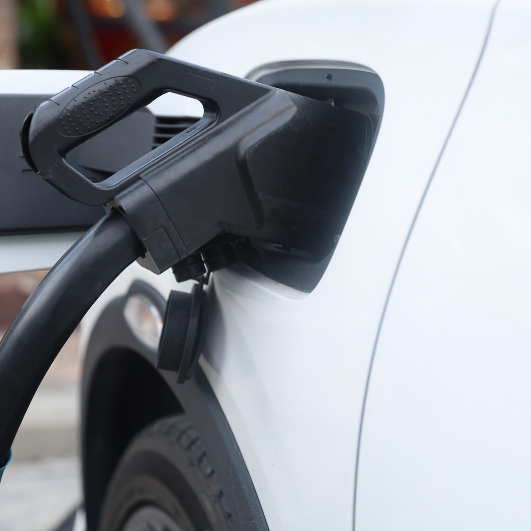
Australia now has over 5,000 public charging stations, with rapid expansion planned through 2027. Government co‑funding programs continue to support:
- Highway fast‑charging corridors
- Regional charging access
- Workplace charging grants
- Home charger rebates
This infrastructure boom makes EV ownership more practical than ever.
Most Popular EV Models in Australia (2026)
Australians now enjoy a wider EV selection than ever before. Top sellers include:
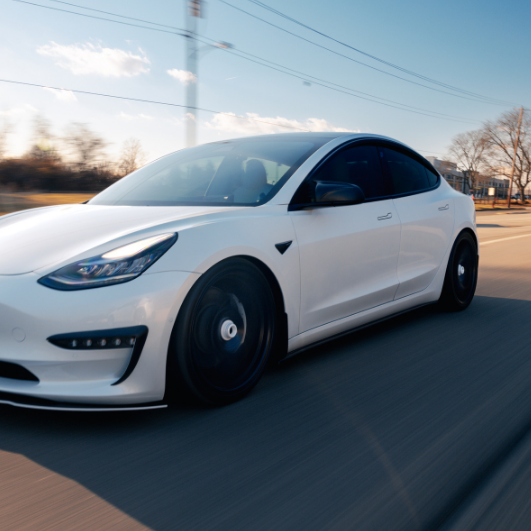
- Tesla Model Y
- BYD Atto 3
- MG4 Electric
- Hyundai IONIQ 5
- Kia EV6
- Polestar 2
Many of these models are available for rent through Trend Rentals, allowing you to test‑drive them in real‑world conditions.
How to Maximise Your EV Incentive Savings
Here are expert‑level strategies to get the most out of 2026 incentives:
1. Use a Novated Lease (if employed)
This remains the single biggest EV tax advantage.
2. Choose a Vehicle Under the LCT Threshold
This ensures you qualify for federal and state incentives.
3. Apply for State Rebates Early
Some states cap their rebate programs.
4. Install a Home Charger with Government Support
Several states offer rebates for home charging equipment.
5. Rent Before You Buy
Avoid costly mistakes by testing an EV first.
The Future of EV Incentives in Australia
While incentives are strong in 2026, several programs are scheduled to phase out by 2027–2028. This makes 2026 one of the best years to transition to an EV.
Expect future incentives to shift toward:
- Charging infrastructure
- Fleet electrification
- Renewable energy integration
- Smart‑charging technology
Final Thoughts: 2026 Is the Best Time to Go Electric
With generous federal tax benefits, strong state incentives, and rapidly expanding charging infrastructure, 2026 offers Australians the most affordable pathway to EV ownership yet.
Whether you’re buying, leasing, or renting, the financial and environmental benefits are undeniable.
If you’re ready to experience an EV today, explore the full range of electric vehicles available at Trend Rentals: