
Choosing the right rental vehicle isn’t as simple as picking what’s available on the lot anymore. With electric vehicles (EVs), hybrids, and traditional petrol cars all widely available across Australia, businesses and individuals now face a more strategic decision.
Whether you’re managing a fleet for a major infrastructure project, organising transport for staff, or simply hiring a vehicle for personal use, understanding the pros and cons of each option can help you save money, reduce risk, and improve efficiency.
In this guide, we break down electric vs hybrid vs petrol vehicles to help you determine which rental option best suits your needs.
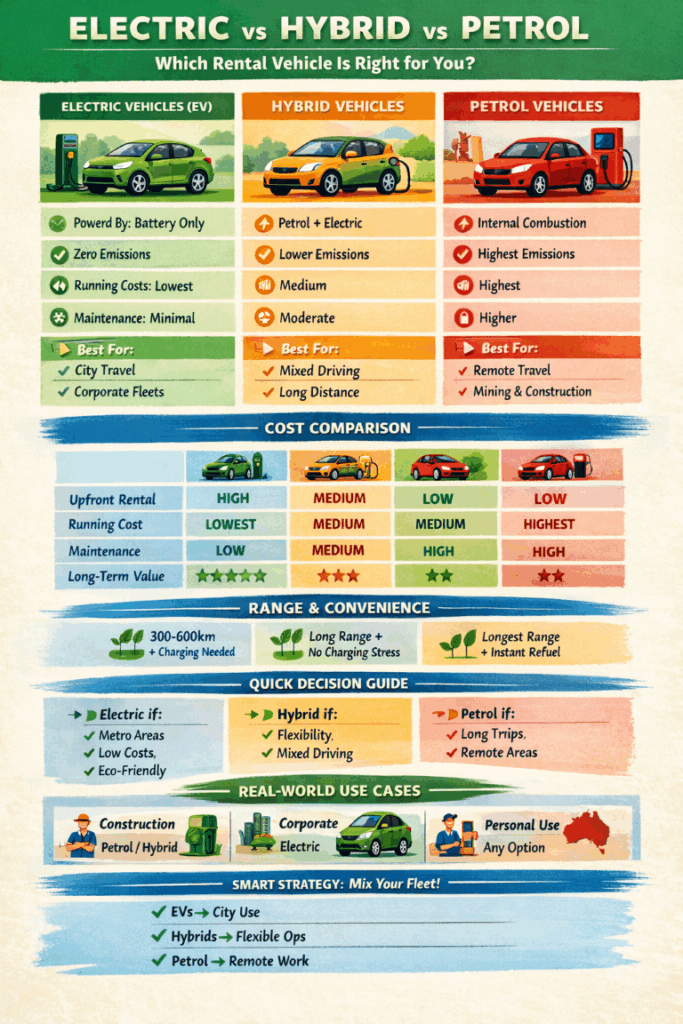
Understanding the Three Vehicle Types
Before diving into comparisons, let’s define what each category actually means.
Electric Vehicles (EVs)
Electric vehicles run entirely on battery power. They produce zero tailpipe emissions and require charging instead of refuelling.
Hybrid Vehicles
Hybrids combine a petrol engine with an electric motor. They automatically switch between power sources to maximise efficiency.
Petrol Vehicles
Traditional petrol vehicles rely solely on internal combustion engines and are still the most common rental option across Australia.

Cost Comparison: Upfront vs Running Costs
When hiring a vehicle, cost is often the first consideration—but it’s not just about the daily rental rate.
Electric Vehicles
- Lower running costs (electricity cheaper than fuel)
- Minimal maintenance requirements
- Potential government incentives depending on usage
For businesses comparing long-term costs, EVs can deliver significant savings. If you’re weighing financial options, check out our guide on rent vs lease vs buy.
Hybrid Vehicles
- Moderate fuel savings compared to petrol
- Slightly higher rental cost than petrol vehicles
- Reduced wear on engine components
Petrol Vehicles
- Lower upfront rental rates
- Higher ongoing fuel costs
- More frequent servicing requirements
Bottom line:
- Short-term hire → Petrol often cheapest
- Medium-term → Hybrid offers balance
- Long-term → EVs can be most cost-effective

Fuel Efficiency and Energy Use
Fuel efficiency is critical for both cost control and environmental impact.
Electric Vehicles
EVs are the most efficient option, converting a higher percentage of energy into movement. Charging costs are typically far lower than fuel expenses.
If you’re operating in South Australia, understanding energy output is key. For example, solar integration can significantly offset charging costs—especially for businesses running multiple vehicles.
Hybrid Vehicles
Hybrids excel in stop-start environments like city driving, where regenerative braking improves efficiency.
Petrol Vehicles
Petrol vehicles are less efficient overall, especially in urban conditions with heavy traffic.

Environmental Impact
Sustainability is becoming a major factor in fleet decisions across Australia.
Electric Vehicles
- Zero emissions during operation
- Ideal for companies aiming to meet ESG targets
- Align with Australia’s growing EV incentives
Learn more about current incentives here.
Hybrid Vehicles
- Lower emissions than petrol
- Good transitional option for businesses not ready for full EV adoption
Petrol Vehicles
- Highest emissions
- Increasing regulatory pressure in some sectors

Range and Convenience
One of the biggest deciding factors is how and where the vehicle will be used.
Electric Vehicles
- Range typically 300–600 km depending on model
- Requires access to charging infrastructure
- Charging time varies (fast vs standard chargers)
EVs are ideal for:
- Metro-based operations
- Predictable daily travel distances
- Businesses with depot charging capability
Hybrid Vehicles
- Extended range due to dual systems
- No reliance on charging infrastructure
- Seamless transition between electric and petrol
Petrol Vehicles
- Longest range
- Fast refuelling
- Best suited for remote or regional travel

Practical Use Cases
Let’s break it down by real-world scenarios.
1. Construction & Infrastructure Projects
For projects requiring reliability and compliance, petrol and hybrid vehicles often remain dominant—especially in remote areas.
If you’re managing site vehicles, you may also want to review:
👉 https://www.trendrentals.com.au/blog/2026/03/17/signs-your-construction-company-should-switch-to-rental-fleet-vehicles/
2. Corporate & Business Travel
EVs are becoming increasingly popular for:
- Executive transport
- Urban travel
- Sustainability-focused companies
3. Mining & Remote Operations
Petrol vehicles are still the most practical choice due to:
- Limited charging infrastructure
- Harsh operating conditions
4. Personal & Short-Term Rentals
- Petrol: easiest and most flexible
- Hybrid: good fuel savings
- EV: great for city users willing to plan charging

Maintenance and Reliability
Maintenance can impact both cost and downtime.
Electric Vehicles
- Fewer moving parts
- Lower maintenance requirements
- Reduced downtime
Hybrid Vehicles
- More complex systems
- Still relatively reliable
Petrol Vehicles
- Higher maintenance needs
- More wear and tear over time

Availability in Rental Fleets
While EV adoption is growing rapidly, availability still varies.
At Trend Rentals, fleets are evolving to include:
- Modern EV options
- Hybrid alternatives
- Reliable petrol vehicles for all conditions
Businesses increasingly choose a mixed fleet strategy, combining all three types based on project needs.
Safety and Compliance Considerations
For industries like construction and mining, compliance is critical.
Petrol and hybrid vehicles are currently more common in:
- Mine-spec configurations
- Heavy-duty applications
For safety guidance, check:
👉 https://www.trendrentals.com.au/blog/2025/09/17/top-safety-checks-before-driving-a-mine-spec-vehicle/

Future Trends: Where the Market Is Heading
The Australian rental market is shifting rapidly:
- EV adoption accelerating due to incentives
- Hybrid demand growing as a transitional solution
- Petrol vehicles gradually declining—but still essential
Businesses that adapt early can benefit from:
- Lower operating costs
- Improved sustainability credentials
- Future-proof fleet strategies
How to Choose the Right Rental Vehicle
Here’s a simple decision framework:
Choose Electric if:
- You operate mainly in metro areas
- You want to reduce fuel costs
- Sustainability is a priority
Choose Hybrid if:
- You want better efficiency without charging concerns
- Your travel includes mixed conditions
Choose Petrol if:
- You need maximum range and flexibility
- You operate in remote areas
- Infrastructure is limited
The Smart Approach: Mix Your Fleet
The best solution isn’t always choosing one—it’s combining all three.
Many Australian businesses now:
- Use EVs for city driving
- Deploy hybrids for flexible operations
- Rely on petrol vehicles for remote work
This hybrid fleet strategy optimises cost, performance, and reliability.
Final Thoughts
There’s no one-size-fits-all answer when it comes to electric vs hybrid vs petrol vehicles. The right choice depends on your specific needs, operating environment, and long-term goals.
Electric vehicles are leading the way in efficiency and sustainability. Hybrids offer a practical middle ground. Petrol vehicles remain essential for flexibility and remote operations.
By understanding these differences, you can make smarter rental decisions that improve your bottom line and keep your operations running smoothly.
If you’re unsure which option is right for your business, the team at Trend Rentals can help you build a tailored fleet solution designed for your exact requirements.