
Quick Summary
Managing daily transport for seasonal workers under the PALM scheme can quickly become expensive and chaotic without a clear system.
Here’s how to optimise your logistics:
- Use minibus hire instead of multiple cars
- Create fixed routes and schedules
- Reduce driver numbers
- Switch to long-term vehicle hire
- Track real transport costs (not just rental rates)
👉 Farms that optimise properly can reduce transport cost Palm scheme expenses by 25–40%.
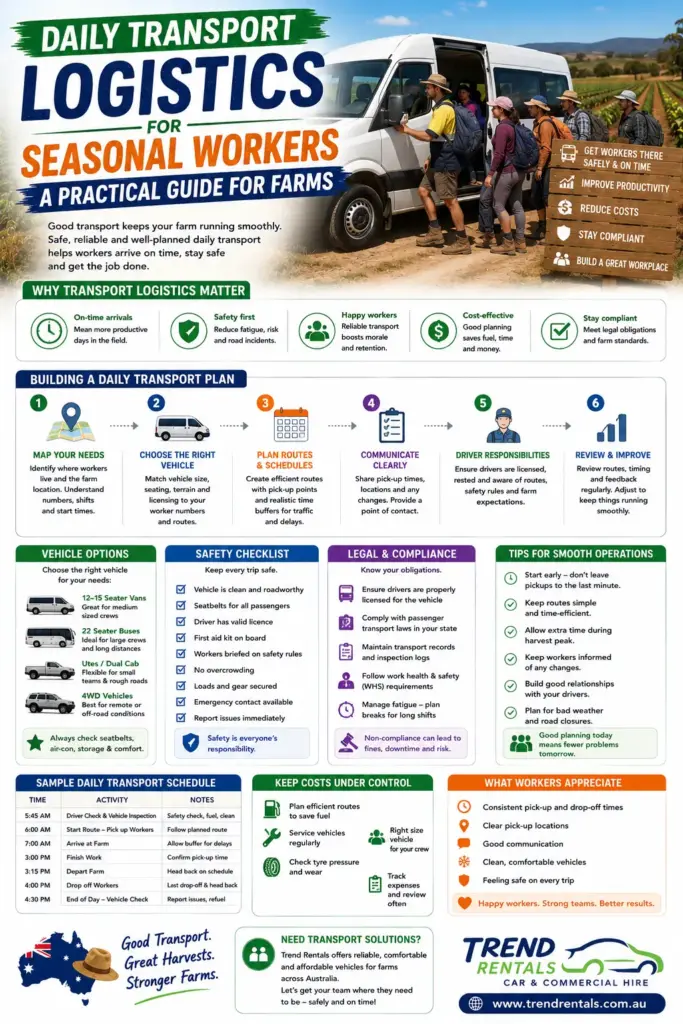
Why Transport Logistics Matter for Farms
For farms using the Palm scheme for farms, transport is not just about moving workers—it directly impacts:
- Productivity
- Labour efficiency
- Compliance
- Worker satisfaction
- Overall profitability
Poor planning leads to:
- Late starts
- Wasted fuel
- Underutilised vehicles
- Increased admin workload

Understanding the True Cost of Transport
Most farms underestimate their daily transport spend.
What’s Included in Transport Cost?
- Vehicle hire
- Fuel
- Insurance
- Maintenance
- Driver wages
- Admin time
👉 This is why understanding the cost of hiring a minibus vs multiple cars is critical.

Minibus vs Multiple Cars: What Works Best?
🚗 Multiple Cars (Common but Inefficient)
Typical setup:
- 3–4 vehicles for 8–10 workers
- Multiple drivers
- Decentralised movement
Downsides:
- Higher fuel usage
- More admin
- Increased coordination issues
- Greater risk of delays

🚐 Minibus (Optimised Solution)
Typical setup:
- 1 vehicle for 8–12 workers
- Centralised transport
Benefits:
- Lower cost per worker
- Reduced admin
- Better scheduling
- Improved reliability
👉 The cost of hiring a minibus is often significantly lower when total expenses are considered.

Daily Transport Logistics: Step-by-Step System
Step 1: Map Your Workforce Movement
Start by identifying:
- Worker accommodation locations
- Farm entry points
- Work zones
Tip:
Create a simple map showing:
- Pickup points
- Drop-off points
- Route distances

Step 2: Create Fixed Transport Routes
Avoid ad-hoc driving.
Best practice:
- Same pickup times daily
- Same route order
- Minimal detours
👉 This improves punctuality and reduces fuel usage.

Step 3: Match Vehicle Type to Workforce Size
Guide:
- 2–4 workers → car
- 5–8 workers → people mover
- 8–12 workers → minibus
👉 Using the wrong vehicle size increases your transport cost Palm scheme significantly.
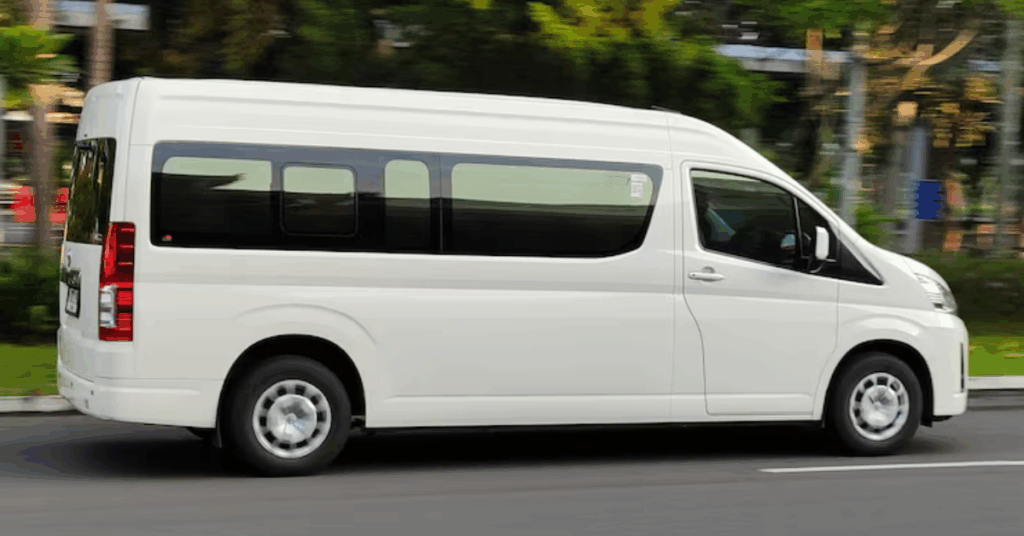
Step 4: Reduce Vehicle Count
Fewer vehicles = lower costs.
Replace:
- 3 cars → 1 minibus
Benefits:
- Lower fuel
- Fewer drivers
- Reduced maintenance
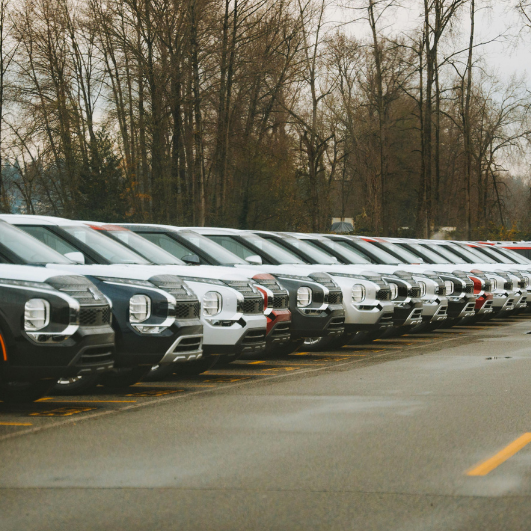
Step 5: Assign a Dedicated Driver System
Avoid rotating drivers randomly.
Instead:
- Assign 1–2 consistent drivers
- Train them on routes and schedules
👉 This reduces delays and improves accountability.

Step 6: Track Daily Transport Metrics
Measure:
- Fuel consumption
- Distance travelled
- Cost per worker
👉 What gets measured gets optimised.
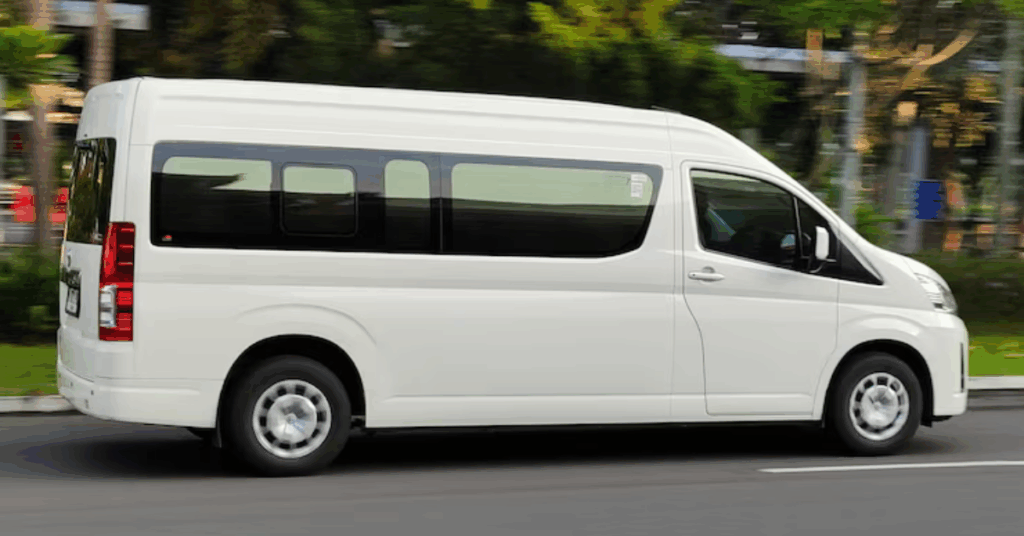
Step 7: Plan for Peak vs Off-Peak Demand
Seasonal demand fluctuates.
Strategy:
- Use short-term hire for spikes
- Switch to long-term hire for steady periods
Real-Life Case Study: Regional Farm Operation
Scenario:
- 12 seasonal workers
- 50km daily travel
- 6-day work week

Before (Unstructured Transport):
- 4 cars
- Multiple drivers
- Daily cost: ~$500
Issues:
- Late arrivals
- High fuel costs
- Complex coordination
After (Optimised System):
- 1 minibus + 1 backup vehicle
- Fixed routes
- Dedicated driver
Results:
- Daily cost reduced to ~$300
- 40% cost reduction
- Improved punctuality
- Lower admin workload
Hidden Costs Farms Often Miss
Even experienced operators overlook:
1. Driver Time Cost
Drivers are paid while transporting workers.
👉 More vehicles = more labour cost.
2. Fuel Inefficiency
Multiple cars increase total fuel usage significantly.
3. Admin Overhead
Managing multiple vehicles means:
- More paperwork
- More coordination
- More errors
4. Downtime Risk
More vehicles = higher chance of breakdowns.
Long-Term vs Short-Term Hire Strategy
Short-Term Hire
- Flexible
- Higher daily cost
Long-Term Hire
- Lower cost
- Predictable expenses
👉 For farms, long-term hire is usually the better option for stable workforce periods.
Best Vehicles for Seasonal Workers
For farms using cars for seasonal workers, the best options are:
🚐 Minibuses
- Most cost-effective for groups
- Ideal for daily transport
🚗 People Movers
- Good for mid-sized teams
🚙 Site-Spec Vehicles
- Required for certain work environments
Practical Tips to Reduce Transport Costs Fast
- Consolidate vehicles wherever possible
- Use GPS or route planning apps
- Avoid empty return trips
- Schedule shifts efficiently
- Regularly review fleet usage
Final Thoughts
Efficient daily transport logistics is one of the most overlooked opportunities to improve farm profitability.
For businesses using the Palm scheme for farms, the difference between:
- Poor transport planning
vs - Optimised logistics
👉 Can mean thousands of dollars saved per season.
The smartest farms are already shifting toward:
- Minibus-based transport
- Structured routes
- Long-term hire strategies
Have a look into our workers transport calculator to find out if renting a minibus is cheaper than 4 utes.
FAQs
1. What is the cost of hiring a minibus in Australia?
Typically between $120–$220 per day, depending on size and hire duration.
2. How can farms reduce transport cost Palm scheme expenses?
- Use minibuses instead of multiple cars
- Optimise routes
- Reduce driver numbers
- Switch to long-term hire
3. What is the best vehicle for seasonal workers?
Minibuses are usually the most cost-effective for groups of 8–12 workers.
4. Is a minibus cheaper than multiple cars?
Yes. In most cases, a minibus reduces total transport costs by 20–40%.
5. How do I manage daily transport efficiently?
Use fixed routes, consistent schedules, and track performance metrics regularly.
✅ Pro Tip:
If you’re running more than 2–3 vehicles daily, there’s a high chance you can cut costs significantly by switching to a consolidated transport model.