
Summary Box
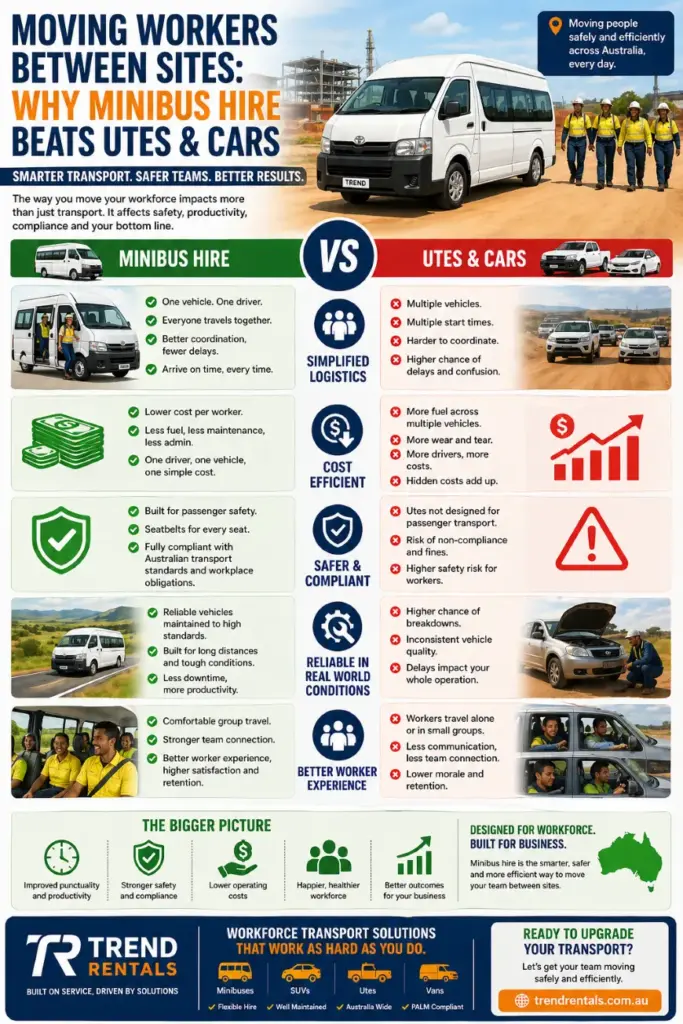
- Minibus hire is significantly cheaper than running multiple cars or utes when transporting seasonal or PALM scheme workers.
- Fewer vehicles = lower fuel, insurance, admin, and labour costs.
- Minibuses improve safety, compliance, and productivity for regional operations.
- Ideal for farms, orchards, vineyards, construction, and labour-hire companies.
- This guide breaks down real cost comparisons, practical examples, and step‑by‑step advice to help you choose the most cost‑effective transport option.
Why Transport Matters More Than Ever for Seasonal & PALM Scheme Workers
If you’re running a farm, orchard, vineyard, or regional labour‑hire operation, you already know that moving workers efficiently is mission‑critical. Whether it’s getting teams from accommodation to farms, between blocks, or across multiple sites, transport affects:
- Daily productivity
- Labour costs
- Compliance and safety
- Worker satisfaction and retention
And with rising fuel prices and tighter margins, the cost of transporting workers has become a major operational pressure point.
That’s why more regional businesses are asking:
“Is it cheaper to hire a minibus or run multiple cars?”
Let’s break it down.
The Real Cost of Hiring a Minibus vs Multiple Cars
The Hidden Costs of Using Multiple Cars or Utes
On the surface, using existing cars or hiring a few small vehicles seems convenient. But the costs add up fast:
- Fuel for multiple vehicles
- Multiple insurance policies
- More drivers required
- Higher admin and logbook workload
- Increased risk of accidents
- More maintenance and downtime
Even if each car is cheap to hire, the combined cost is almost always higher.
Have a look into our workers transport calculator to find out if renting a minibus is cheaper than 4 utes.

Cost Comparison Example (Realistic Scenario)
Let’s compare transporting 12 workers to a farm site daily.
Option A: 3 x Small Cars (5-seaters)
- Hire cost: $70/day × 3 = $210/day
- Fuel: $25/day × 3 = $75/day
- 3 drivers required
- Total: $285/day
Option B: 1 x 12-Seater Minibus
- Hire cost: $160/day
- Fuel: $40/day
- 1 driver required
- Total: $200/day
Savings: $85/day
Over a 30‑day harvest period, that’s $2,550 saved — per crew.
Multiply that across multiple teams and sites, and the savings become massive.
Why Minibus Hire Beats Cars for Worker Transport
1. Lower Transport Costs (Fuel, Hire, Labour)
A single minibus replaces 2–3 cars. That means:
- Less fuel
- Fewer drivers
- Lower insurance
- Lower hire fees
- Less admin
When companies search for the cost of hiring a minibus, they’re often surprised to find it’s cheaper than hiring multiple small vehicles.
2. Better Safety & Compliance
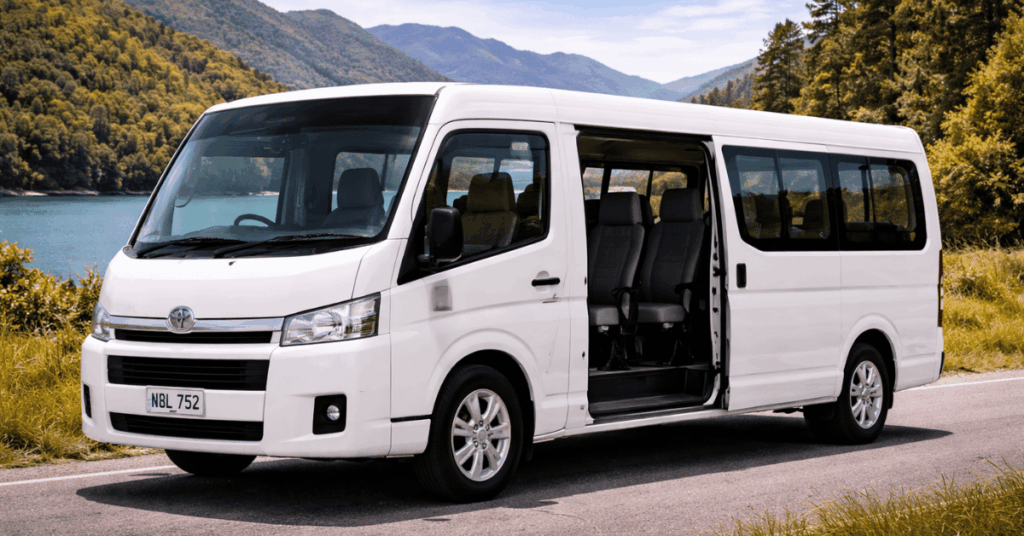
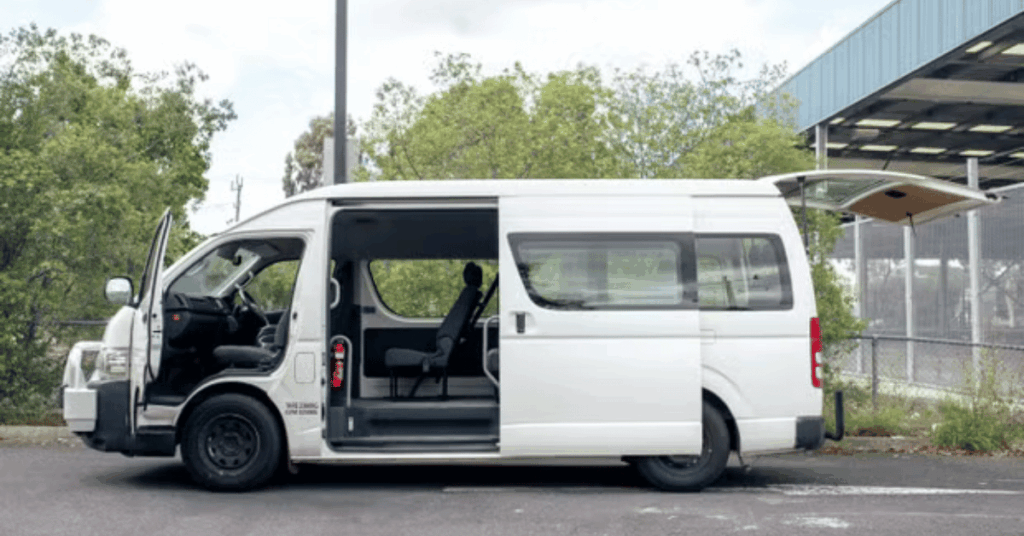
Minibuses are designed for group transport, with:
- Higher safety ratings
- Better visibility
- Professional seating layouts
- Built‑in safety features
- Easier supervision of workers
For PALM scheme workers, where duty of care is essential, minibuses help ensure compliance with:
- WHS transport requirements
- Fatigue management
- Safe vehicle capacity limits
3. Improved Worker Punctuality & Productivity
When everyone travels together:
- No late arrivals
- No lost workers
- No confusion about meeting points
- Faster deployment between sites
A minibus keeps your team coordinated and on schedule, which directly boosts productivity.
4. Fewer Vehicles = Less Admin
Running multiple cars means:
- More logbooks
- More fuel receipts
- More maintenance tracking
- More driver management
A single minibus simplifies everything.
5. Better for Remote & Regional Roads
Regional Australia isn’t always kind to small cars.
Minibuses offer:
- Higher clearance
- Stronger suspension
- Better handling on unsealed roads
- More reliable performance
This reduces breakdowns and downtime — which can be costly during peak harvest.
Case Study: How a Regional Farm Cut Transport Costs by 38%
Location: Riverland, SA Workers: 24 PALM scheme workers Previous Setup: 6 small hire cars New Setup: 2 x 12‑seater minibuses
Before (Cars)
- Hire: $420/day
- Fuel: $150/day
- Total: $570/day
After (Minibuses)
- Hire: $320/day
- Fuel: $80/day
- Total: $400/day
Savings:
- $170/day
- $5,100 per month
- $61,200 per year
The farm also reported:
- Fewer late arrivals
- Better team coordination
- Reduced admin workload
- Happier workers

Step-by-Step Guide: How to Choose the Right Minibus for Worker Transport
Step 1 — Calculate Your Daily Worker Numbers
Ask yourself:
- How many workers need transport daily?
- Do they travel together or in shifts?
- Do you need multiple buses?
This determines whether you need:
- 8‑seater
- 12‑seater
- 14‑seater
- Multiple buses

Step 2 — Compare the Cost of Minibus Hire vs Cars
Use this simple formula:
(Cost of cars × number of cars) + fuel + drivers vs (Cost of minibus × number of buses) + fuel + 1 driver
Minibuses almost always win.
Step 3 — Check Safety & Compliance Features
Look for:
- Reversing camera
- Stability control
- Airbags
- Logbook compliance
- Regular servicing
- Reputable hire provider
Step 4 — Consider Your Road Conditions
If you’re operating on:
- Unsealed roads
- Farm tracks
- Long regional routes
Choose a minibus with:
- Higher clearance
- Diesel engine
- Strong suspension
Step 5 — Book Early (Especially During Harvest)
Minibuses are in high demand during:
- Citrus season
- Grape harvest
- Almond harvest
- Stone fruit season
Booking early ensures availability and better rates.
Additional Benefits of Minibuses for Seasonal Worker Programs
H3: Better Worker Experience
PALM scheme and seasonal workers often travel long distances daily. A minibus provides:
- More comfort
- Better seating
- Air‑conditioning
- Space for bags and tools
Happy workers = better retention.
Easier Supervision
Supervisors can:
- Brief workers during travel
- Check attendance
- Manage PPE
- Coordinate tasks
This is impossible when workers are split across multiple cars.

Environmentally Friendlier
One minibus produces fewer emissions than three cars. This helps companies meet sustainability goals.
When Cars or Utes Do Make Sense
To be fair, cars and utes aren’t always the wrong choice.
They work well when:
- You’re transporting 1–3 workers
- You need a vehicle for supervisors
- You’re moving tools or equipment
- You need flexibility for errands
But for daily worker transport, minibuses win almost every time.
Final Verdict — Minibus Hire Is the Smartest, Cheapest Way to Move Workers
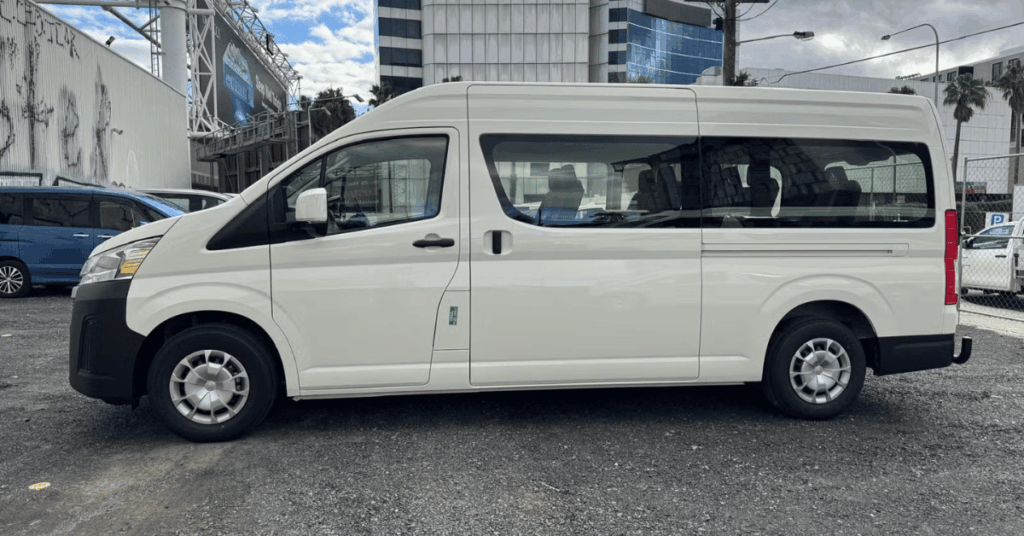
If you’re comparing the cost of hiring a minibus vs multiple cars, the numbers are clear:
- Minibuses are cheaper
- Minibuses are safer
- Minibuses are more efficient
- Minibuses are better for PALM scheme compliance
- Minibuses reduce admin, fuel, and labour costs
For regional Australian businesses, especially those moving seasonal workers, a minibus isn’t just a transport option — it’s a strategic advantage.

FAQ (People Also Ask)
1. Is it cheaper to hire a minibus or multiple cars?
In almost all cases, a minibus is cheaper once you factor in fuel, hire fees, insurance, and the cost of multiple drivers.
2. How many workers can a minibus transport?
Most hire minibuses carry 8–14 passengers, with 12‑seaters being the most common for farm and seasonal worker transport.
3. Are minibuses better for PALM scheme workers?
Yes. They improve safety, compliance, supervision, and punctuality — all essential for PALM scheme obligations.
4. Can minibuses handle regional and farm roads?
Modern minibuses are designed for regional conditions and perform better than small cars on unsealed or uneven roads.
5. What is the average cost of hiring a minibus in regional Australia?
Most 12‑seater minibuses cost $150–$220 per day, depending on location, season, and availability.