
Quick Summary
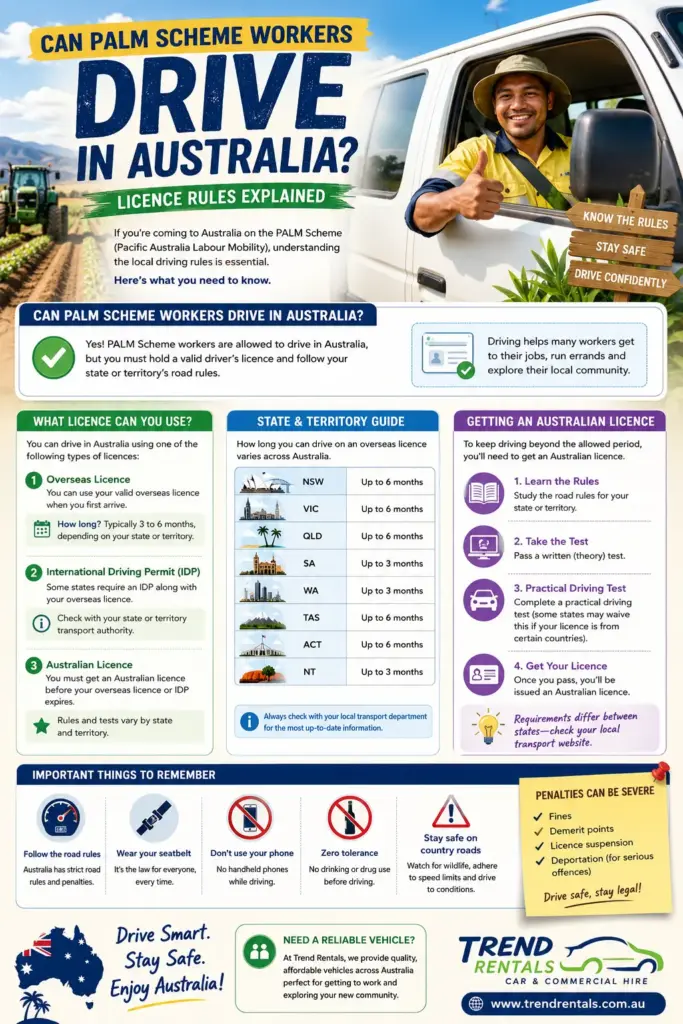
Yes, PALM scheme workers can usually drive in Australia using their overseas licence, but the rules depend on:
- Which Australian state or territory they work in
- Whether the licence is in English
- How long they stay in Australia
- Vehicle type and licence class
Employers should:
- Verify all licences before workers drive
- Check state-specific road laws
- Ensure workers understand Australian road rules
- Consider minibus hire instead of multiple cars to reduce transport costs and risk
For many regional employers, hiring a minibus for seasonal workers is safer and cheaper than operating multiple vehicles.
Why This Matters for PALM Scheme Employers
The Pacific Australia Labour Mobility (PALM) scheme helps regional Australian businesses fill labour shortages in industries like:
- Agriculture
- Meat processing
- Hospitality
- Aged care
- Tourism
But one major challenge remains: transporting workers safely and legally.
Many PALM workers arrive with overseas driving licences and little experience driving on Australian roads. Employers often ask:
- Can PALM workers legally drive here?
- Do they need an Australian licence?
- What happens if there’s an accident?
- Is it better to hire one minibus instead of several cars?
Understanding the rules protects your business from:
- Insurance issues
- Liability claims
- Road safety risks
- Unexpected transport costs

Can PALM Scheme Workers Legally Drive in Australia?
In most cases, yes.
PALM workers can usually drive in Australia using a valid overseas licence. However, the rules vary between states and territories.
General Requirements
Most states require workers to have:
- A current overseas driver licence
- Licence written in English OR an official translation
- Licence matching the vehicle class being driven
- Compliance with Australian road rules
Workers must also carry their licence while driving.

State-by-State Licence Rules
Because PALM workers are often placed in regional areas across Australia, employers must check the rules in their state.
Queensland
Overseas licence holders can generally drive vehicles covered by their licence class while visiting Queensland.
Workers may need to transfer to a Queensland licence if they become permanent residents.
New South Wales
Temporary visa holders can usually continue driving on a valid overseas licence.
An English translation or International Driving Permit (IDP) may be required.
Victoria
Temporary overseas visitors may drive using their overseas licence if:
- It remains valid
- The worker follows licence conditions
- The licence is in English
South Australia
PALM workers in regional SA can typically drive on overseas licences while on temporary visas.
Employers should still verify:
- Licence expiry dates
- Vehicle class permissions
- Insurance coverage
When PALM Workers Need an Australian Licence
A worker may need an Australian licence if:
- Their overseas licence expires
- They become permanent residents
- Their visa status changes
- State laws require conversion after a certain period
For long-term employment arrangements, employers should encourage workers to begin the licence conversion process early.

What If the Licence Is Not in English?
This is extremely common for PALM workers arriving from Pacific nations or Southeast Asia.
Workers must usually carry:
- An official English translation, OR
- An International Driving Permit (IDP)
Without proper documentation, insurance claims can become complicated after accidents.
Employer Tip
Create a simple onboarding checklist that includes:
- Licence photocopy
- Translation verification
- Expiry date tracking
- Vehicle allocation records
This helps reduce compliance risks.

Insurance Risks Employers Often Overlook
One of the biggest mistakes employers make is assuming a valid overseas licence automatically guarantees insurance coverage.
That is not always true.
Some fleet or rental insurance policies may exclude:
- Certain overseas licence types
- Young drivers
- Drivers with limited Australian experience
- Workers driving outside policy conditions
Before Allowing Workers to Drive
Employers should confirm:
- Driver eligibility under insurance
- Age restrictions
- Excess amounts
- Approved vehicle types
- Rural and regional driving coverage

Why Many Employers Prefer Minibus Hire
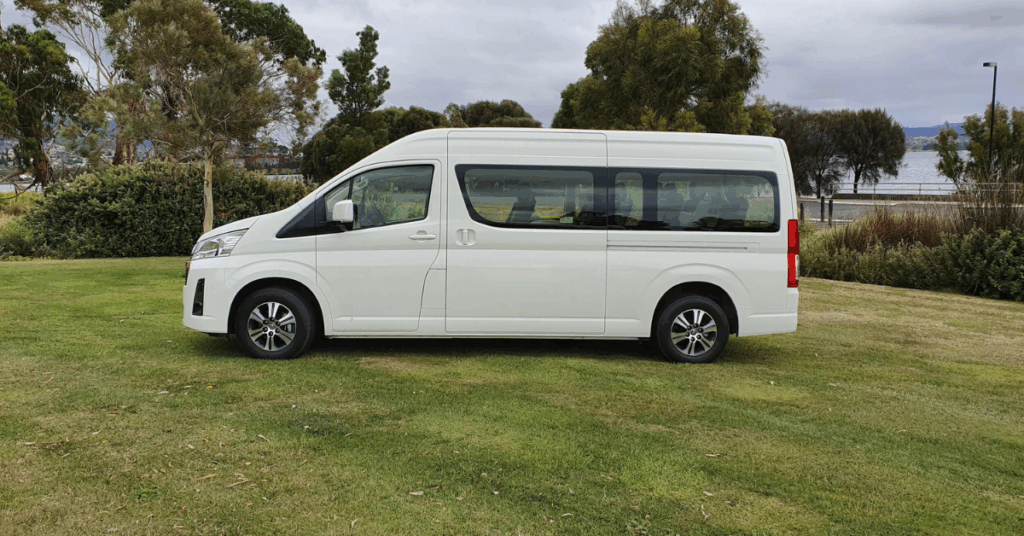
Instead of allowing multiple PALM workers to drive separate vehicles, many businesses now choose minibuses for seasonal workers.
This approach offers several advantages.
Lower Risk
Fewer drivers means:
- Reduced accident exposure
- Easier compliance management
- Better oversight
- Simpler insurance administration
Easier Worker Transport
A single vehicle can transport workers between:
- Farms
- Accommodation
- Packing sheds
- Town centres
- Medical appointments
Lower Fuel Costs
Running one minibus is often cheaper than operating several small cars.
This becomes important when workers travel long regional distances daily.
Cost of Minibus vs Multiple Cars
Let’s compare a hypothetical example.
Scenario: 8 Seasonal Workers
Option 1 — Four Small Cars
| Expense | Weekly Cost |
|---|---|
| 4 vehicle hire fees | $1,200 |
| Fuel | $500 |
| Insurance | $240 |
| Maintenance/admin | $100 |
| Total | $2,040/week |
Option 2 — One 12-Seater Minibus
| Expense | Weekly Cost |
| Minibus hire | $850 |
| Fuel | $300 |
| Insurance | Included/Lower |
| Admin | Minimal |
| Total | $1,150/week |
Estimated Savings
Using one minibus could reduce transport costs by:
- Over $800 per week
- More than $3,000 per month during peak harvest seasons
For employers managing large workforces, this can significantly reduce the transport cost transporting workers across regional areas.

Real-World Example: Regional Farm Transport
A hypothetical citrus farm in regional Queensland employed 20 PALM workers during harvest season.
Initially, management hired:
- 6 compact cars
- Multiple drivers
- Separate fuel reimbursements
Problems quickly emerged:
- Minor accidents
- Confusion over licences
- Higher insurance excesses
- Scheduling delays
The business switched to:
- Two minibuses
- Approved supervisors as drivers
- Centralised transport scheduling
Results included:
- Lower fuel costs
- Fewer incidents
- Easier compliance
- Better punctuality
This is why many employers now compare the cost of hiring a minibus against running several individual vehicles.

Best Practices for PALM Scheme Employers
1. Verify Every Licence
Never assume a licence is valid.
Check:
- Expiry dates
- English translation
- Licence class
- Damage or alterations
2. Provide Road Rules Training
Australian roads can differ dramatically from workers’ home countries.
Cover basics like:
- Driving on the left
- Speed limits
- Roundabouts
- Seatbelt laws
- Mobile phone restrictions
- Rural hazards
3. Limit Driver Numbers
Reducing the number of approved drivers lowers overall risk.
This is another reason why minibus transport works well.
4. Use Suitable Vehicles for Regional Roads
Many farms require vehicles capable of handling:
- Gravel roads
- Long distances
- Heavy passenger loads
Choosing reliable regional vehicle hire solutions is essential.
5. Keep Transport Records
Maintain records of:
- Approved drivers
- Licence checks
- Vehicle servicing
- Incident reports
This improves legal protection and operational management.
Common Mistakes Employers Make
Assuming International Licences Never Expire
Some overseas licences expire quickly or become invalid under changing visa conditions.
Forgetting Insurance Restrictions
Insurance eligibility can differ between providers.
Always confirm policy wording.
Allowing Too Many Drivers
The more drivers you authorise, the greater the accident exposure.
Ignoring Driver Fatigue
Seasonal workers often begin early and finish late.
Fatigue management matters, especially in regional areas.
How Vehicle Hire Companies Can Help
Professional rental providers experienced with PALM scheme transport can assist with:
- Minibus recommendations
- Flexible long-term hire
- Regional delivery
- Fleet maintenance
- Insurance support
- Vehicle replacement during breakdowns
For many employers, outsourcing transport management reduces stress and administrative workload.

Is Minibus Hire Better Than Multiple Cars?
For many PALM employers, the answer is yes.
A minibus often provides:
- Lower operating costs
- Easier compliance
- Better worker coordination
- Reduced accident risk
- Simpler insurance management
When comparing the cost of minibus vs multiple cars, businesses frequently discover significant savings over an entire harvest season.
Final Thoughts
PALM scheme workers can usually drive legally in Australia using valid overseas licences, but employers must carefully manage compliance, insurance, and road safety obligations.
For regional businesses transporting groups of workers daily, relying on multiple cars can quickly become expensive and difficult to manage.
That’s why more employers are choosing:
- Structured transport systems
- Approved drivers
- Centralised vehicle management
- Minibuses for seasonal workers
A proactive transport strategy not only reduces costs — it also improves safety, reliability, and operational efficiency.
Frequently Asked Questions
Can PALM scheme workers use overseas licences in Australia?
Yes, most PALM workers can drive using a valid overseas licence, provided it complies with state laws and is in English or officially translated.
Do PALM workers need an International Driving Permit?
Not always. However, an International Driving Permit is often recommended if the licence is not written in English.
Is minibus hire cheaper than multiple cars?
In many cases, yes. Hiring one minibus can reduce fuel, insurance, maintenance, and administration costs compared with several vehicles.
Can employers be liable for worker driving incidents?
Yes. Employers may face liability issues if workers are uninsured, improperly licensed, or inadequately trained.
What is the safest transport option for seasonal workers?
Many employers find that using approved drivers and minibuses offers the safest and most cost-effective transport solution.