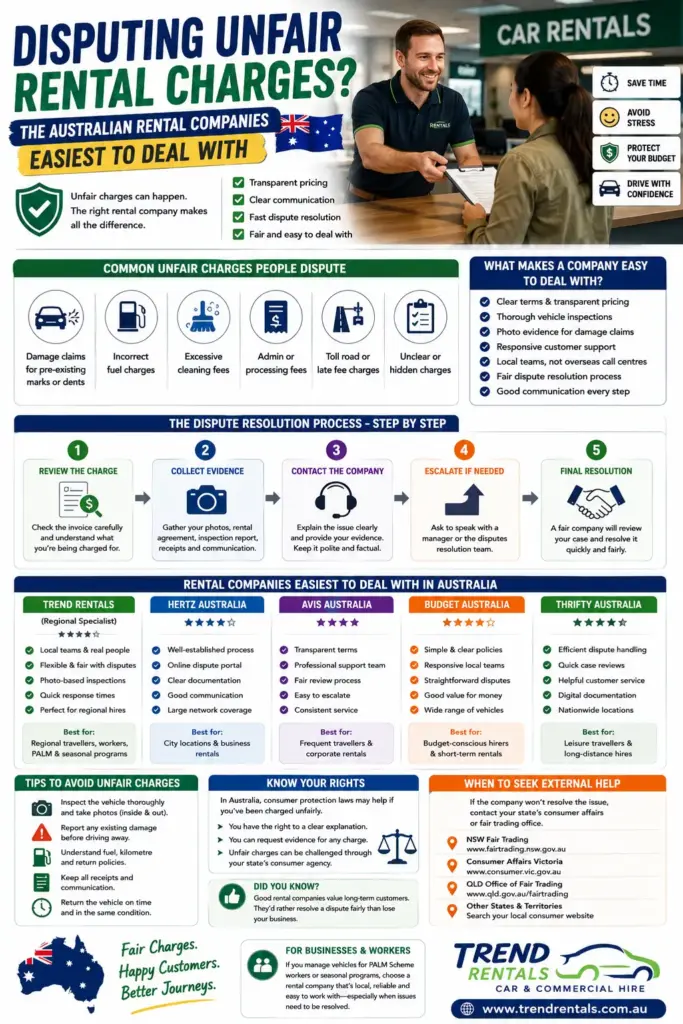
If you’re hiring vehicles for PALM Scheme workers, seasonal workers, or regional staff, choose rental providers that:
Provide clear contracts and pricing
Conduct transparent vehicle inspections
Offer photographic evidence for damage claims
Respond quickly to customer concerns
Have local support teams rather than outsourced call centres
Maintain a documented dispute resolution process
The easiest rental companies to deal with aren’t necessarily the cheapest—they’re the ones that communicate clearly, document everything, and treat customers fairly when issues arise.
Why Rental Charge Disputes Are Becoming More Common
Vehicle rentals have become essential for farms, labour hire companies, PALM Scheme employers, and seasonal worker accommodation providers across Australia.
However, one growing concern among businesses is disputing unfair rental charges after a vehicle is returned.
Common complaints include:
Unexpected damage charges
Excessive cleaning fees
Fuel discrepancies
Administrative fees
Toll charges appearing weeks later
Charges for pre-existing damage
While most rental companies operate professionally, disputes can occur when documentation is incomplete or communication breaks down.
For employers managing multiple vehicles and drivers, even small disputes can create significant administrative headaches.
What Makes a Rental Company Fair During a Dispute?
Many articles focus solely on rental prices.
However, when evaluating providers, dispute handling is often more important than saving a few dollars per day.
The best companies generally share several characteristics.
Transparent Vehicle Inspections
A quality rental provider should:
Conduct documented pre-rental inspections
Record vehicle condition thoroughly
Encourage customers to take photos
Provide copies of inspection reports
This dramatically reduces disagreements later.
Red Flag
Be cautious if a company:
Rushes inspections
Doesn’t provide documentation
Refuses to acknowledge pre-existing damage
These situations often create problems during returns.
Clear Damage Assessment Processes
Fair rental companies typically provide:
Time-stamped photographs
Repair quotations
Detailed explanations
Opportunity for customer review
If damage is claimed, customers should understand exactly:
What damage occurred
When it occurred
How repair costs were calculated
Transparency builds trust.
Local Customer Service
One reason regional rental providers often receive strong reviews is accessibility.
When a dispute arises, speaking directly with local staff can resolve issues much faster than navigating multiple call-centre departments.
This is particularly valuable for:
PALM Scheme employers
Seasonal worker coordinators
Farm managers
Labour hire companies
Time spent chasing unresolved charges is time taken away from operations.
The Types of Rental Charges Most Frequently Disputed
Understanding common dispute categories helps businesses avoid problems before they occur.
1. Damage Claims
The most common dispute involves alleged vehicle damage.
Examples include:
Scratches
Windscreen chips
Wheel damage
Dents
Interior damage
Many disputes occur because customers fail to document vehicle condition before collection.
Best Practice
Always take:
Front photos
Rear photos
Side photos
Wheel photos
Interior photos
before driving away.
2. Fuel Charges
Fuel disputes usually occur when:
Vehicles are returned below the required level
Fuel gauges differ slightly
Incorrect fuel records are maintained
A simple photograph of the fuel gauge during pickup and return can prevent problems.
3. Cleaning Fees
Cleaning charges have become increasingly common.
Typical examples include:
Excessive mud
Farm debris
Food spills
Animal hair
Smoking residue
For employers using vehicles on farms, understanding cleaning requirements before hire is essential.
4. Toll and Traffic Charges
Toll notices may arrive weeks after a rental ends.
Companies often add:
Toll fees
Processing fees
Administrative charges
These fees are generally legitimate when disclosed in the rental agreement.
However, businesses should review statements carefully.
5. Administration Fees
Many customers are surprised by administrative charges.
Examples include:
Fine processing fees
Toll administration fees
Damage claim administration costs
A reputable rental provider will clearly disclose these fees upfront.
How PALM Scheme Employers Can Protect Themselves
Employers often manage vehicles used by multiple workers.
This creates additional risk when disputes arise.
Create a Driver Register
Record:
Driver names
Licence numbers
Dates of use
Vehicle allocation
This provides accountability and simplifies investigations.
Conduct Weekly Vehicle Checks
A simple inspection checklist can identify issues before they become expensive.
Inspect:
Tyres
Windscreens
Lights
Bodywork
Interior cleanliness
Small problems are easier to resolve early.
Photograph Vehicles Regularly
For long-term rentals, take photos:
Weekly
After incidents
During driver changes
This creates a timeline that helps resolve disputes fairly.
Case Study: How One Farm Avoided a $2,400 Damage Claim
Consider this hypothetical example.
A horticulture business rented three 8-seater vehicles for seasonal workers.
At return, the rental company identified a dent and submitted a repair invoice exceeding $2,400.
Fortunately, the farm manager had:
Time-stamped collection photos
Weekly inspection records
Driver logs
The photographs clearly showed the dent existed before collection.
The claim was withdrawn within days.
Without documentation, the business would likely have paid the charge.
The lesson?
Evidence wins disputes.
Step-by-Step Guide to Disputing Unfair Rental Charges
If you believe a charge is unfair, follow this process.
Step 1: Request Full Documentation
Ask for:
Inspection reports
Photographs
Repair quotes
Invoices
Terms and conditions
Avoid arguing before reviewing evidence.
Step 2: Compare Against Your Records
Review:
Collection photos
Return photos
Driver logs
Communication records
Look for inconsistencies.
Step 3: Submit a Written Response
Keep communications professional.
Include:
Relevant evidence
Dates
Vehicle details
Specific concerns
Avoid emotional language.
Facts are more persuasive.
Step 4: Escalate Internally
If initial responses are unsatisfactory, request review by:
Branch manager
Customer relations team
Regional manager
Many disputes are resolved at this stage.
Step 5: Seek External Assistance
If necessary, consumers and businesses may consider assistance through:
State consumer agencies
Small business commissioners
Alternative dispute resolution services
Most disputes never reach this stage when documentation is strong.
Questions to Ask Before Hiring Any Vehicle
One of the easiest ways to avoid rental company disputing unfair charges situations is to ask the right questions upfront.
Before signing a rental agreement, ask:
What damage documentation is provided?
A professional company should immediately explain its process.
Are photos taken before every rental?
This demonstrates transparency.
How are repair costs assessed?
Independent assessments are generally preferable.
What administration fees apply?
Get these in writing.
How long after return can charges be issued?
Knowing the timeline reduces surprises.
Does the Cheapest Rental Always Offer the Best Value?
While pricing matters, dispute handling can have a much larger financial impact.
A slightly higher daily rental rate may be worthwhile if it provides:
Better documentation
Faster support
Clearer communication
Fewer unexpected charges
The true cost of car hire Australia businesses experience includes much more than the advertised daily rate.
It also includes:
Administration time
Vehicle downtime
Dispute management
Staff resources
The cheapest option isn’t always the most economical.
Characteristics of Rental Companies That Handle Disputes Well
Based on customer experiences across Australia, the best providers generally:
Communicate Clearly
Customers understand their obligations from the beginning.
Document Everything
Evidence is available when questions arise.
Respond Quickly
Disputes don’t drag on for weeks.
Empower Local Staff
Issues can often be resolved without multiple escalations.
Focus on Long-Term Relationships
This is especially important for commercial customers and repeat renters.
For employers managing worker transport, these qualities often matter more than vehicle brand or daily pricing.
Final Thoughts
Vehicle rental disputes are frustrating, but many are preventable.
Whether you’re hiring a single vehicle or managing a fleet for seasonal workers, choosing a provider with transparent processes is the best protection against disputing unfair rental charges.
Focus on:
Documentation
Communication
Local support
Transparent policies
The rental companies that are easiest to deal with aren’t necessarily the largest or cheapest.
They’re the ones that make it easy to understand charges, provide evidence when concerns arise, and work collaboratively to resolve issues fairly.
For PALM Scheme employers and seasonal worker programs, those qualities can save significant time, money and stress throughout the season.
Frequently Asked Questions
How do I dispute unfair rental car charges in Australia?
Request all supporting documentation, compare it against your own records, and submit a written response supported by evidence such as photos and inspection reports.
What evidence helps win a rental vehicle dispute?
Time-stamped photos, vehicle inspection reports, driver logs and written communications are usually the strongest forms of evidence.
Can a rental company charge for pre-existing damage?
They should not. If you have evidence showing the damage existed before collection, you can challenge the claim.
What is the average cost car hire Adelaide businesses pay?
Pricing varies based on vehicle type, rental duration, seasonality and insurance requirements. Long-term rentals generally provide better value.
How can employers avoid rental charge disputes with worker vehicles?
Maintain driver records, perform regular inspections, photograph vehicles frequently and choose rental providers with transparent processes.