Quick Summary
- Workforce numbers swing, so your fleet should too. Plan for a base, a shoulder and a peak, not one fixed headcount.
- Match vehicle to task: a 12 seater or mini bus for farm-to-accommodation runs, people movers for small crews, vans for tools and produce-side logistics.
- PALM scheme employers must plan transport formally, but the same thinking helps any regional employer.
- Flexible hire usually beats buying for operations with big seasonal peaks and quiet off-seasons.
- Safety is the real cost. Fatigue, unsealed roads and overloaded vehicles cause more harm than a hire invoice ever will.
Every grower knows the feeling. Pickers are arriving next week, accommodation is sorted, and then someone asks the question nobody planned for: how is everyone getting to the block at 5:30 am?
In regional Australia, transport is not a side issue. Farms, packing sheds and accommodation sit kilometres apart, public transport is rare, and worker numbers can double in a fortnight.
This guide shows how regional employers can build year-round employee transport solutions. It covers horticulture, agriculture, labour-hire and PALM scheme businesses, and goes well beyond harvest.
Why Regional Workforce Transport Is the Hidden Bottleneck
Most employers plan labour carefully and transport casually. That gap shows up fast.
- Late arrivals cost picking hours when fruit is ready and weather is closing in.
- Overloaded cars and utes create serious safety and insurance exposure.
- Too many small vehicles burn fuel, driver time and wages.
- Owning a fleet for peak demand leaves expensive vehicles idle for months.
Good regional workforce transport in Australia is about matching capacity to demand, week by week. That is a planning problem, and it is very solvable.
PALM Scheme Transport Obligations: What Employers Need to Know
If you employ workers through the Pacific Australia Labour Mobility (PALM) scheme, transport is a formal obligation, not a favour. Approved Employers must arrange and provide transport and document it in a Transport Plan that includes a cost breakdown. Workers may choose to arrange their own.
There is also a financial safety net. For short-term seasonal agriculture placements, employers must cover accommodation and transport costs in any week where a worker is offered 20 hours or less. Those costs cannot be turned into a debt.
That makes wasted transport capacity expensive. Running half-empty vehicles in a slow week costs you directly. Always check the latest PALM scheme Approved Employer Guidelines (palmscheme.gov.au) and your own deed, because settings are updated.
The takeaway for every regional employer, PALM or not: write your transport plan down, cost it, and build in flexibility.
Map Your Workforce Curve Before You Choose Vehicles
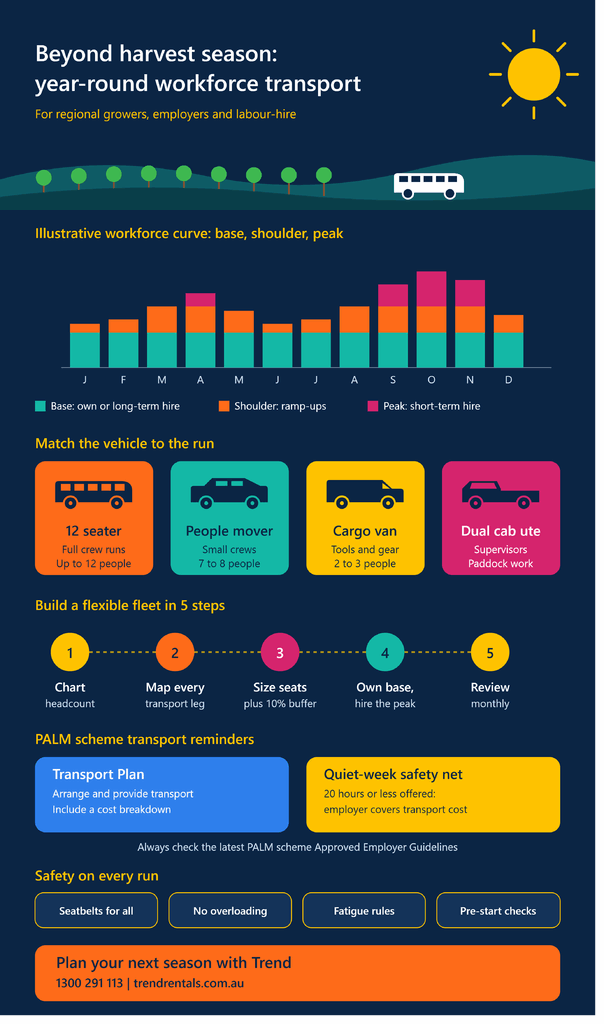
Fleet planning starts with people, not vehicles. Sketch your year in three layers.
1. Base Workforce
Permanent and long-term staff who work all year: machinery operators, packers, supervisors. This is your most predictable transport need.
2. Shoulder Workforce
Pruning, thinning, planting and packing ramp-ups. Numbers rise for weeks or months, then drop again.
3. Peak Workforce
Harvest. This is when seasonal worker vehicle hire matters most, because demand can outstrip anything you could sensibly own.
Tip: chart headcount by week for the last two seasons, then add known changes such as new plantings or a second packing shift. That chart becomes your fleet brief.
Choosing the Right Vehicle: Mini Bus, Vans and 12 Seaters
| Vehicle | Typical capacity | Best for |
|---|---|---|
| 12 seater mini bus | Up to 12 people | Farm-to-accommodation runs, shift changeovers, town trips |
| 7 to 8 seater people mover | 7 to 8 people | Small crews, supervisors, split shifts |
| Cargo van | 2 to 3 people plus load | Tools, PPE, consumables, produce-side logistics |
| Dual cab ute | 4 to 5 people plus tray | Supervisors, paddock work, mixed loads |
Why 12 Seaters Are the Workhorse
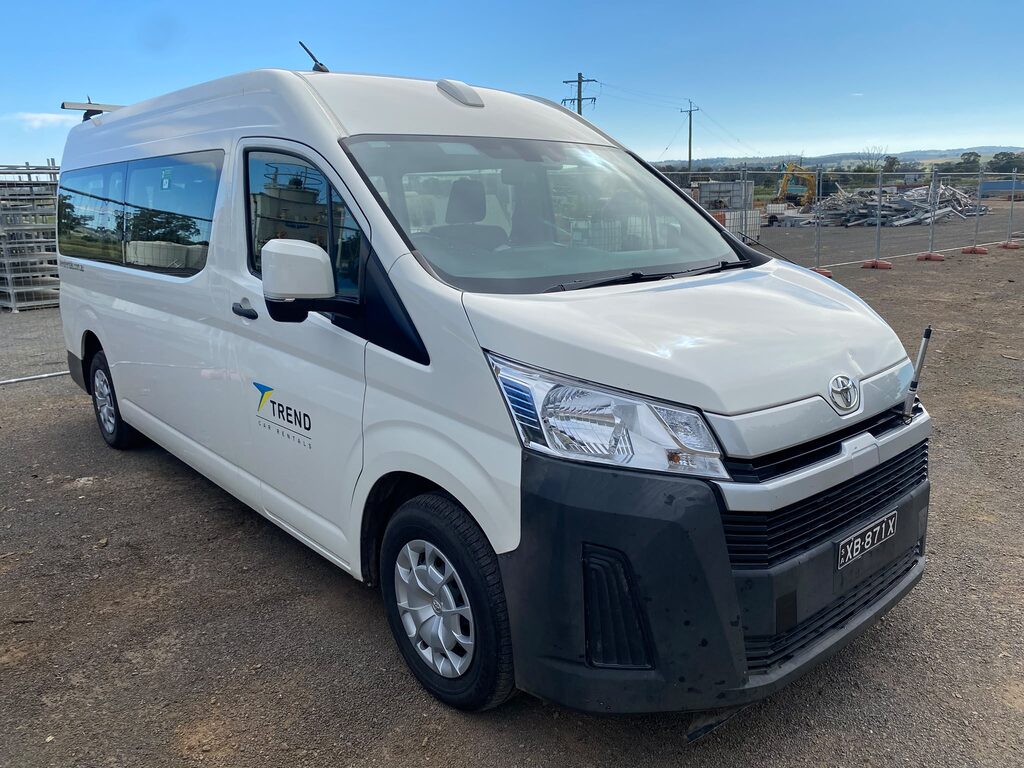
A 12 seater moves a full crew in one trip with one driver. Compared with four cars, that means fewer drivers, lower fuel use and far simpler headcounts.
In many Australian states, vehicles seating up to 12 adults including the driver can be driven on a standard car licence. Rules vary, so confirm requirements for your state and for any larger vehicle.
When Vans and People Movers Win
Not every run needs a bus. A 7 or 8 seater people mover suits smaller crews or farms spread across several properties. Vans keep tools and gear off the passenger seats, which improves both safety and comfort.
The smartest fleets mix sizes. A couple of mini buses cover the daily crew runs, while vans and people movers handle everything in between.

Staff Accommodation Transport: Getting the Daily Run Right
The accommodation-to-farm run is the backbone of seasonal operations. It happens twice a day, every day, so small inefficiencies add up quickly.
- Consolidate pick-ups. One 12 seater on a fixed loop beats several cars leaving at different times.
- Publish a timetable. Workers should know exactly when and where to board.
- Assign and train drivers. Name approved drivers, check licences and brief them on local roads.
- Plan for multiple sites. If workers move between blocks or farms, build those legs into the schedule.
- Include town runs. Shopping, medical and banking trips support wellbeing and reduce unsafe private driving.
Reliable transport also helps retention. Workers who feel safe and well looked after are more likely to return next season.
Step by Step: Build a Flexible Fleet Plan
- Chart headcount by week. Use two seasons of data plus known growth.
- Map every transport leg. Accommodation to site, site to site, airport or depot transfers, town runs.
- Calculate seats needed per run. Round up, then add a 10 percent buffer for absences and breakdowns.
- Choose a base fleet. Own or long-term hire what you use all year.
- Hire for the shoulder and peak. Short-term minibus hire for businesses covers the gap without capital outlay.
- Confirm driver authorisation and licensing. Keep a register of approved drivers.
- Agree service and replacement terms. A breakdown during harvest needs a same-day fix, not a next-week promise.
- Review monthly. Adjust vehicle numbers as crews grow or shrink.
Hire, Buy or Subscribe? The Cost Question
Seasonal demand makes ownership awkward. A bus you need for eight weeks but pay for all year is capital doing nothing.
- Short-term hire: ideal for peaks, one-off events and trial seasons.
- Long-term hire or subscription: suits your base fleet, with servicing and replacement handled for you.
- Buying: can work for vehicles used heavily and consistently, but ties up cash and adds resale and maintenance risk.
Compare total cost, not daily rates. Include servicing, insurance, downtime, driver time and what the vehicle costs while parked.
Real-World Scenarios (Hypothetical Case Studies)
Case Study 1: A Berry Grower With a Three-Month Peak
A mid-sized berry farm runs about 15 permanent staff for most of the year. At peak, it adds 45 seasonal workers, many housed 20 minutes from the farm.
Instead of buying more vehicles, the grower keeps one people mover and one van year-round. For the peak, it hires three 12 seater mini buses on a fixed morning and afternoon loop. A fourth is on standby for breakdowns.
The result: fewer vehicles on the road, predictable start times, and no capital sitting idle after harvest.
Case Study 2: A Labour-Hire Provider Servicing Several Farms
A labour-hire company places crews across five properties, and demand shifts weekly as different crops come on. Fixed vehicles never quite fit.
They adopt a flexible hire arrangement with a base of long-term 12 seaters, topped up with short-term people movers and vans as placements change. Each week they review crew sizes and adjust.
The result: vehicle numbers follow contracts, not guesswork, and transport costs stay tied to revenue.
Safety and Compliance Checklist
Transport is where many workforce incidents happen. Build safety into the plan, not onto it afterwards.
- Seatbelts for every passenger, every trip, with no exceptions.
- No overloading. Never carry more people than there are seats.
- Driver fatigue rules. Avoid giving long field shifts and long drives to the same person.
- Pre-start checks. Tyres, lights, fuel and cleanliness before each shift.
- Unsealed road awareness. Brief drivers on dust, corrugations, wet-weather closures and wildlife at dawn and dusk.
- Insurance clarity. Confirm who can drive, driver age rules and what your cover includes.
- Plain-English induction. Make sure workers understand transport rules in a language and format they can follow.
What to Look for in a Workforce Transport Partner
Not every rental company understands agriculture. Ask these questions before you sign anything:
- Can you supply 12 seaters, people movers and vans from one provider?
- Can you scale the fleet up and down as numbers change mid-season?
- Do you offer delivery to regional locations?
- What is your replacement process if a vehicle fails during harvest?
- Is pricing upfront and transparent, with no surprise fees?
A partner who asks about your crop calendar, crew sizes and accommodation locations before quoting is one who understands the work.
Final Thoughts: Plan for the Whole Year, Not Just Harvest
Seasonal peaks will always be part of regional Australian agriculture. Last-minute transport scrambles do not have to be.
Map your workforce curve, match mini buses, vans and 12 seaters to each run, and keep your fleet flexible. Do that, and your crews arrive safely, your costs track demand, and your best workers want to come back.
Planning your next season? Talk to the Trend Car Rentals team about flexible fleet options built around your workforce.
Frequently Asked Questions
What is the best vehicle for transporting seasonal workers?
A 12 seater mini bus is usually the most efficient choice for crews travelling between accommodation and the farm. It carries a full team with one driver. Smaller crews or multi-site work may suit a 7 to 8 seater people mover.
Do PALM scheme employers have to provide worker transport?
Approved Employers must arrange and provide transport and document it in a Transport Plan, although workers can choose to arrange their own. Check the current PALM scheme Approved Employer Guidelines for the exact requirements that apply to your placement.
Do I need a special licence to drive a 12 seater mini bus?
In many Australian states, a standard car licence covers vehicles that seat up to 12 adults including the driver. Requirements differ by state and by vehicle, so confirm with your state road authority before assigning drivers.
Is it cheaper to hire or buy a mini bus for seasonal work?
For short peaks, hiring is usually cheaper because you avoid purchase cost, servicing and idle months. If you need a vehicle most of the year, long-term hire or ownership can make more sense. Compare total annual cost, not just the daily rate.
How early should I book vehicles for harvest season?
As early as your recruitment plan allows, ideally several weeks before workers arrive. Regional delivery takes time, and availability tightens when multiple growers ramp up together.