
As fuel prices remain volatile and sustainability targets tighten across Australia, more businesses are making the shift toward electric vehicle (EV) fleets. From construction companies and infrastructure contractors to corporate fleets and delivery services, the transition to EVs is no longer just a trend—it’s a strategic move.
But what are the real benefits of switching your business fleet to electric vehicles?
In this guide, we break down the top 10 benefits of EV fleet adoption, backed by real-world insights, cost advantages, and operational efficiencies—especially for Australian businesses.
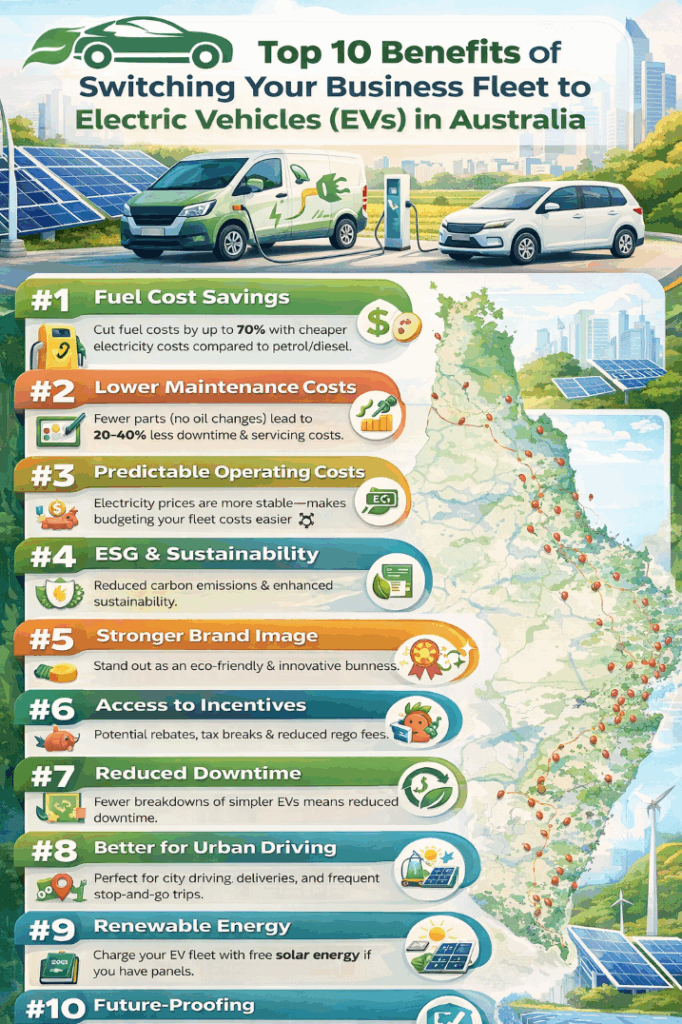
1. Significant Fuel Cost Savings
One of the biggest advantages of electric vehicles is the dramatic reduction in fuel costs.
Traditional petrol or diesel vehicles can cost:
- $12–$18 per 100 km in fuel
Electric vehicles, by comparison:
- $4–$8 per 100 km when charged efficiently
- Even lower when paired with solar energy
👉 This translates to up to 70% savings on fuel costs.
For businesses running multiple vehicles daily, this can result in thousands of dollars saved annually per vehicle.
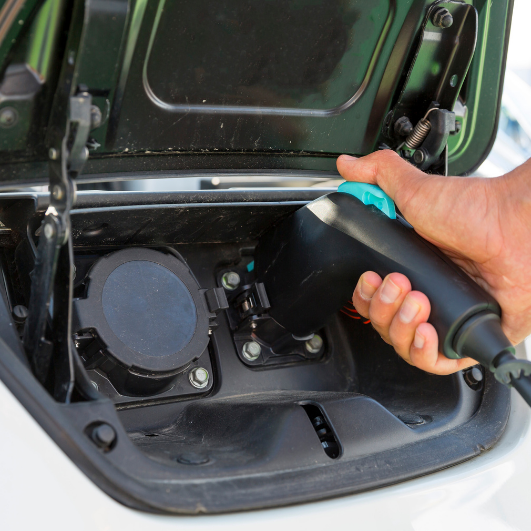
2. Lower Maintenance Costs
Electric vehicles have fewer moving parts than internal combustion engine (ICE) vehicles.
No:
- Oil changes
- Spark plugs
- Exhaust systems
- Complex transmissions
This means:
- Fewer breakdowns
- Lower servicing costs
- Reduced downtime
👉 EV fleets typically see 20–40% lower maintenance costs compared to petrol fleets.

3. Predictable Operating Costs
Fuel price fluctuations can significantly impact business budgets.
With EVs:
- Electricity costs are more stable
- Charging costs are predictable
- No exposure to petrol price spikes
This allows businesses to:
- Forecast expenses accurately
- Improve financial planning
- Reduce operational uncertainty

4. ESG and Sustainability Compliance
Environmental, Social, and Governance (ESG) requirements are becoming increasingly important across industries.
Switching to EVs helps businesses:
- Reduce carbon emissions
- Meet sustainability targets
- Improve environmental reporting
This is particularly valuable for companies working on:
- Government contracts
- Infrastructure projects
- Corporate partnerships
👉 EV fleets can significantly strengthen your ESG profile.

5. Strong Brand Image and Competitive Advantage
Customers and clients are increasingly choosing environmentally responsible companies.
By adopting an EV fleet, your business:
- Demonstrates leadership in sustainability
- Enhances brand perception
- Differentiates from competitors
👉 This can directly influence client acquisition and retention.
6. Access to Government Incentives
Across Australia, businesses can benefit from:
- Rebates on EV purchases
- Tax incentives
- Reduced registration fees
These incentives help offset upfront costs and improve return on investment.
👉 In some cases, incentives can reduce total fleet costs by thousands per vehicle.
7. Reduced Downtime and Improved Reliability
EVs are known for their reliability due to simpler mechanical systems.
Benefits include:
- Fewer mechanical failures
- Less time in the workshop
- Increased vehicle availability
For businesses, this means:
👉 More uptime = more productivity = more revenue
8. Ideal for Urban and Short-Distance Operations
Electric vehicles are particularly well-suited for:
- City driving
- Short-distance travel
- Frequent stop-start operations
This makes them perfect for:
- Service technicians
- Delivery fleets
- Sales teams
👉 EVs perform efficiently in exactly the environments most business fleets operate in.

9. Integration with Renewable Energy (Solar)
Businesses with solar installations can charge EVs using renewable energy.
This creates:
- Ultra-low operating costs
- Reduced reliance on the grid
- Greater energy independence
👉 In some cases, businesses can operate EV fleets at near-zero fuel cost.

Related Insight
Learn more about EV charging costs in Australia:
👉 https://www.trendrentals.com.au/blog/2026/04/16/ev-charging-costs-explained-home-vs-public-vs-fast-charging-in-australia-2026-guide/
10. Future-Proofing Your Fleet
The automotive industry is rapidly moving toward electrification.
Governments, manufacturers, and infrastructure providers are all investing heavily in EV technology.
By switching now, businesses:
- Stay ahead of regulatory changes
- Avoid future compliance costs
- Position themselves for long-term success
👉 Early adopters gain a strategic advantage.

EV Fleet vs Petrol Fleet: Cost Comparison
| Category | Petrol Fleet | EV Fleet |
|---|---|---|
| Fuel Cost | High | Low |
| Maintenance | High | Low |
| Emissions | High | Zero tailpipe |
| Running Cost Stability | Low | High |
| Long-Term ROI | Moderate | Strong |
Real-World Example: Fleet Savings
Consider a business with 5 vehicles:
- Average distance: 20,000 km/year per vehicle
Petrol Fleet:
- Fuel cost: ~$3,000/year per vehicle
👉 Total: $15,000/year
EV Fleet:
- Charging cost: ~$1,200/year per vehicle
👉 Total: $6,000/year
👉 Annual savings: ~$9,000

Why More Australian Businesses Are Switching
Several key trends are accelerating EV adoption:
- Rising fuel costs
- Expanding charging infrastructure
- Increasing availability of EV models
- Corporate sustainability pressures
This shift is especially visible in sectors such as:
- Construction
- Mining support services
- Infrastructure projects
- Corporate fleets

Related Blog
Common Concerns (and Why They’re Overstated)
Range Anxiety
Modern EVs offer:
- 300–500 km per charge
More than enough for most business use cases.
Charging Infrastructure
Australia’s charging network is expanding rapidly, especially in urban areas and major highways.
Upfront Costs
While EVs may have higher initial costs, lower operating expenses often result in:
👉 Lower total cost of ownership over time
Is Your Business Ready to Switch?
You should consider switching to an EV fleet if:
- Your vehicles operate primarily in urban areas
- You want to reduce operating costs
- Sustainability is a priority
- You want predictable fleet expenses

The Role of EV Rentals in Fleet Transition
Switching your entire fleet at once isn’t always practical.
That’s where EV rentals come in.
Businesses can:
- Trial EVs before committing
- Scale fleets based on project needs
- Avoid large upfront investments
Final Thoughts
Switching your business fleet to electric vehicles is no longer just an environmental decision—it’s a financial and strategic one.
From lower operating costs and reduced maintenance to stronger brand positioning and future-proofing, the benefits are clear.
As Australia continues its transition toward cleaner transport, businesses that adopt EV fleets early will be best positioned to thrive in the years ahead.