
For employers operating under Australia’s Pacific Australia Labour Mobility (PALM) scheme, transport isn’t just a logistical consideration—it’s a core part of compliance, workforce management, and operational efficiency. Moving workers between accommodation, farms, and worksites requires vehicles that are reliable, scalable, and cost-effective. But one question consistently comes up:
Is short-term vehicle hire or long-term vehicle hire cheaper?
The answer isn’t as simple as comparing daily rates. It depends on how your workforce operates, how long you need vehicles, and how predictable your demand is. When you step back and look at the full picture—costs, flexibility, compliance, and operational impact—the difference between short-term and long-term hire becomes much clearer.
Understanding the Nature of PALM Scheme Transport
PALM scheme employers operate in a unique environment. Workforce numbers fluctuate, seasons dictate demand, and compliance requirements are strict. Workers must be transported safely, reliably, and in a way that meets Australian workplace standards.
Unlike traditional businesses with stable staffing levels, PALM employers often deal with:
- Seasonal peaks during harvest or project phases
- Variable workforce sizes
- Remote or regional operating environments
- Strict duty-of-care obligations
This creates a transport challenge that is both dynamic and ongoing. Vehicles are not just needed occasionally—they are often required daily for extended periods.
That’s why the choice between short-term and long-term vehicle hire is so critical. It directly affects not only your costs, but also how smoothly your operations run.
What Short-Term Vehicle Hire Really Offers
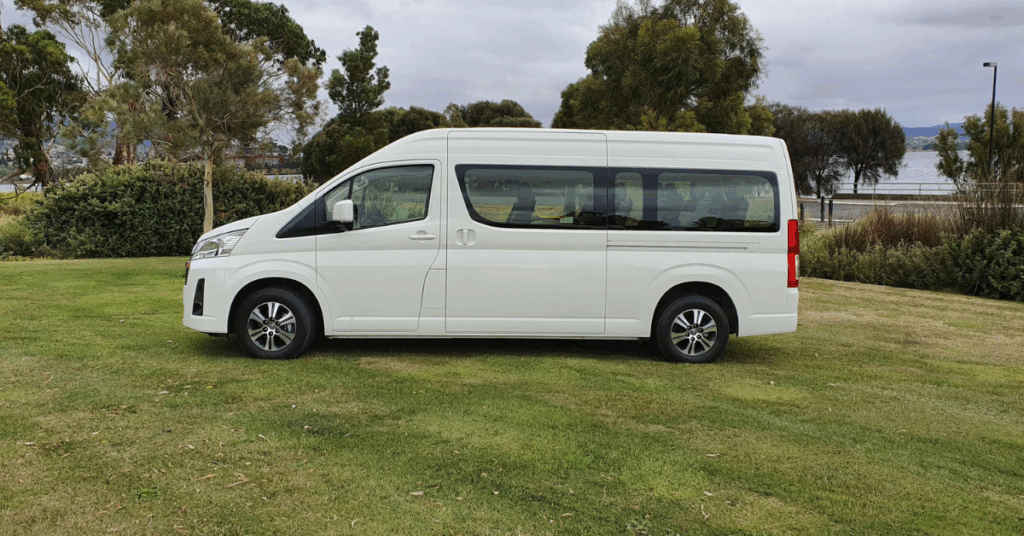
Short-term vehicle hire is designed for flexibility. Typically ranging from a single day to several weeks, it allows businesses to access vehicles quickly without committing to long contracts.
For PALM scheme employers, this can be incredibly useful during periods of uncertainty. When workforce numbers increase suddenly or when a new contract begins, short-term hire provides immediate access to vehicles without delay.
There’s a certain appeal to this model. You only pay for what you use, and there’s no long-term obligation. If your needs change, you simply return the vehicle.
This makes short-term hire particularly valuable in situations such as:
- Sudden workforce increases during peak harvest
- Temporary project expansions
- Emergency vehicle replacement
- Trialling different vehicle types
In these scenarios, the higher daily cost of short-term hire is offset by the fact that you’re not paying for unused time.
However, this flexibility comes at a price. Daily rental rates are significantly higher than long-term equivalents, and when vehicles are needed consistently, those costs add up quickly.

The Cost Reality of Short-Term Hire
At first glance, short-term hire seems manageable. A daily rate might appear reasonable, especially when viewed in isolation. But when vehicles are required every day for weeks or months, the cumulative cost becomes substantial.
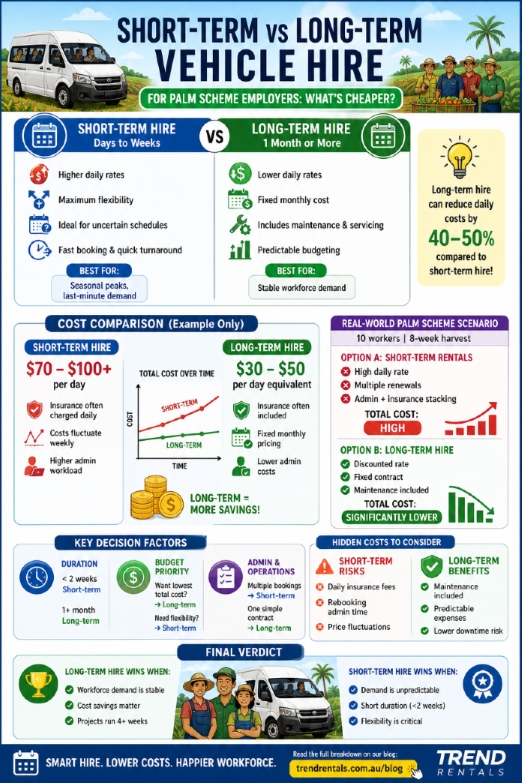
Industry comparisons show that short-term rental rates typically sit around $80–$100 per day, depending on the vehicle type.
For a PALM employer running a small fleet of minibuses or vans, this can quickly escalate:
- One vehicle for 30 days: ~$2,400–$3,000
- Three vehicles for 3 months: $21,000+
What initially felt like a flexible solution starts to become a significant expense. And because PALM scheme operations often require continuous transport, short-term hire can become the most expensive option over time.
Long-Term Vehicle Hire: Built for Ongoing Operations
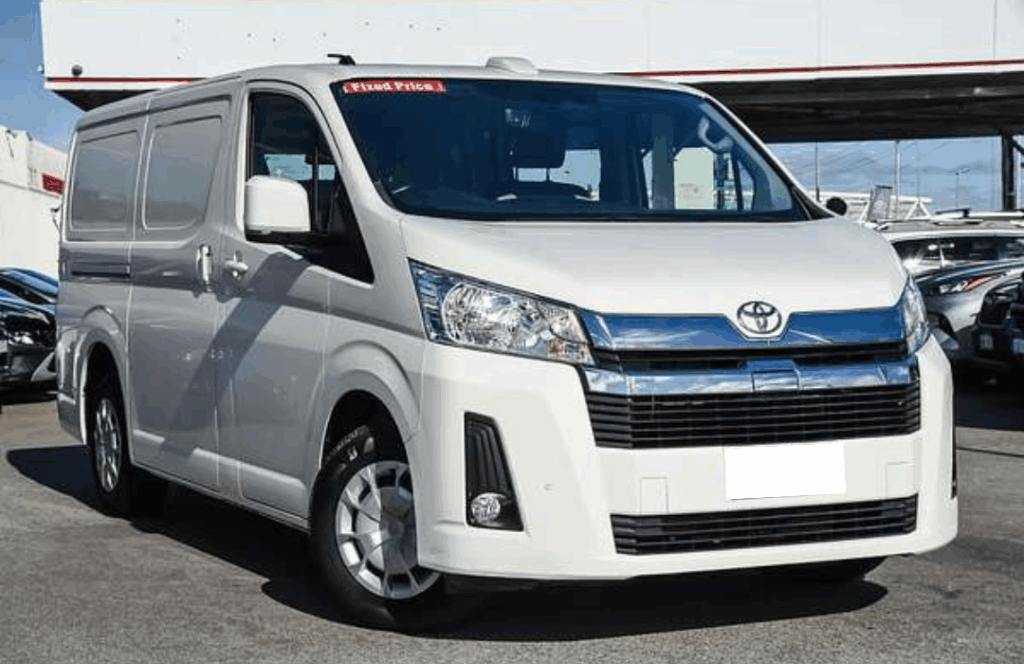
Long-term vehicle hire takes a different approach. Instead of paying high daily rates, businesses commit to using a vehicle for a longer period—typically one month or more—in exchange for significantly reduced pricing.
This model is particularly well suited to PALM scheme employers because it aligns with the reality of seasonal work. While workforce numbers may fluctuate, the need for transport rarely disappears entirely.
Long-term hire provides:
- Lower daily equivalent rates
- Predictable monthly costs
- Ongoing vehicle availability
- Reduced administrative effort
Instead of constantly booking and returning vehicles, employers gain access to a stable fleet that supports their operations day in and day out.
For businesses looking to streamline their transport strategy, exploring options through vehicle hire solutions can provide both cost savings and operational stability.

The Financial Advantage of Long-Term Hire
The most compelling argument for long-term hire is cost efficiency. Rental providers reward longer commitments with discounted rates, often reducing the daily equivalent cost by more than half.
Typical pricing comparisons show:
- Short-term hire: $80–$100 per day
- Long-term hire: $30–$50 per day equivalent
Over time, this difference becomes substantial.
Consider a PALM employer needing vehicles for a six-month harvest season:
- Short-term hire (daily rates): ~$14,400 per vehicle
- Long-term hire: ~$5,400–$9,000 per vehicle
Multiply that across a fleet, and the savings quickly reach tens of thousands of dollars.
But the financial benefits go beyond just rental rates.

Eliminating Hidden Costs and Financial Risk
One of the most overlooked aspects of vehicle hire is the hidden cost structure. Owning or frequently rotating short-term rentals introduces variables that are difficult to predict.
Long-term hire simplifies this.
With most long-term agreements, the following are included:
- Servicing and maintenance
- Repairs
- Registration
- Insurance
- Roadside assistance
This creates a predictable cost structure that is easier to manage and budget for.
For PALM employers, this predictability is crucial. Labour costs, accommodation, and compliance expenses are already complex—vehicle costs shouldn’t add another layer of uncertainty.

Matching Hire Strategy to Workforce Patterns
The real question isn’t just which option is cheaper—it’s which option matches your operational pattern.
Short-term hire works best when vehicle demand is irregular. If you only need vehicles occasionally or for very short bursts, it can be the most cost-effective choice.
But PALM scheme operations rarely follow that pattern.
Transport is usually required:
- Daily
- Across multiple months
- With consistent workforce movement
In these conditions, long-term hire becomes the more economical and practical solution.
This is why many businesses are shifting towards structured fleet strategies rather than ad-hoc vehicle bookings. Insights from commercial vehicle hire comparisons show that companies using vehicles consistently benefit most from long-term arrangements.

Operational Efficiency Beyond Cost
While cost is a major factor, it’s not the only one. The choice between short-term and long-term hire also affects how efficiently your business operates.
Short-term hire introduces constant change:
- Vehicles come and go
- Drivers adjust to different vehicles
- Booking and coordination take time
Long-term hire creates consistency.
The same vehicles are used daily. Drivers become familiar with them. Routes are standardised. Operations run more smoothly.
For PALM employers managing large groups of workers, this consistency translates into:
- Better punctuality
- Reduced coordination effort
- Fewer disruptions
Over time, these operational improvements can be just as valuable as the direct cost savings.
Compliance and Peace of Mind
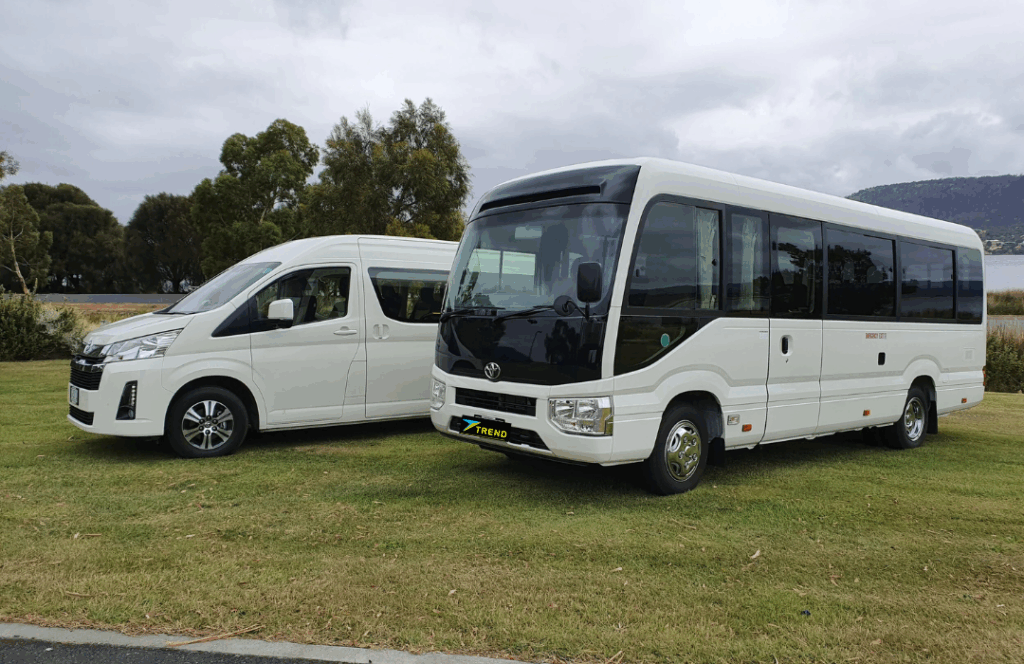
PALM scheme employers carry a high level of responsibility when it comes to worker transport. Vehicles must meet safety standards, and transport arrangements must comply with workplace regulations.
Using short-term hire can sometimes create gaps in consistency, especially if different vehicles are used frequently.
Long-term hire provides a more stable compliance framework. Vehicles remain consistent, documentation is easier to manage, and there is less risk of oversight.
For businesses navigating compliance requirements, resources like this PALM vehicle compliance guide highlight how important it is to maintain proper transport standards.

Flexibility Still Exists with Long-Term Hire
One of the biggest misconceptions about long-term hire is that it lacks flexibility. In reality, modern rental agreements are designed to adapt to changing needs.
Extensions are typically straightforward, allowing businesses to continue using vehicles if projects run longer than expected. Additional vehicles can also be added to the fleet as demand increases.
This creates a hybrid advantage:
- Lower cost of long-term hire
- Flexibility similar to short-term arrangements
For PALM employers, this balance is ideal. It supports both predictable operations and unexpected changes.
When Short-Term Hire Still Makes Sense
Despite the advantages of long-term hire, short-term rental still plays an important role.
There are situations where it remains the better choice:
- Short-term workforce spikes
- Trial periods before committing to a fleet
- Emergency replacements
- Temporary projects lasting only weeks
In these cases, the higher daily cost is justified by the flexibility it provides.
Many businesses use a combination of both strategies—long-term hire for core operations and short-term hire for peak demand.
The Bigger Financial Picture
When comparing short-term and long-term hire, it’s important to look beyond immediate costs and consider the broader financial impact.
Long-term hire offers:
- Lower daily rates
- Predictable monthly expenses
- No upfront capital investment
- Reduced financial risk
Short-term hire offers:
- Maximum flexibility
- No long-term commitment
- Immediate availability
For PALM scheme employers, the tipping point usually comes down to duration. Once vehicles are needed for more than a few weeks, long-term hire almost always becomes the cheaper option.
Have a look into our workers transport calculator to find out if renting a minibus is cheaper than 4 utes.
Final Verdict: What’s Cheaper?
For PALM scheme employers, the answer is clear:
- Short-term hire is cheaper for short, unpredictable needs
- Long-term hire is significantly cheaper for ongoing operations
Given that most PALM operations require consistent transport over months, long-term vehicle hire is typically the more cost-effective solution.
It not only reduces costs but also improves operational efficiency, simplifies compliance, and provides a more stable transport system.
Conclusion: Choosing the Right Strategy
Transport is one of the most important yet overlooked aspects of running a PALM workforce. The vehicles you choose—and how you hire them—can have a major impact on your costs and efficiency.
Short-term hire offers flexibility, but at a premium. Long-term hire offers savings, stability, and scalability.
For most PALM employers, the smartest approach is to treat vehicle hire as a strategic decision rather than a short-term fix. By aligning your hire model with your workforce patterns, you can reduce costs, improve operations, and create a more sustainable transport solution.