Quick Summary
- Count bags, not just people. The number of seats tells you who fits. Boot space tells you what fits.
- Hatchbacks suit couples with light luggage. Sedans and medium SUVs suit most small families. People movers suit big groups with big bags.
- The 7-seater trap: with all three rows in use, many 7-seat SUVs have very little boot left.
- Plan with a simple rule: one large suitcase plus one cabin bag per adult, then add prams, golf bags or sports gear.
- When in doubt, size up one category. The extra daily cost is usually smaller than the cost of a second vehicle or a stressful airport swap.
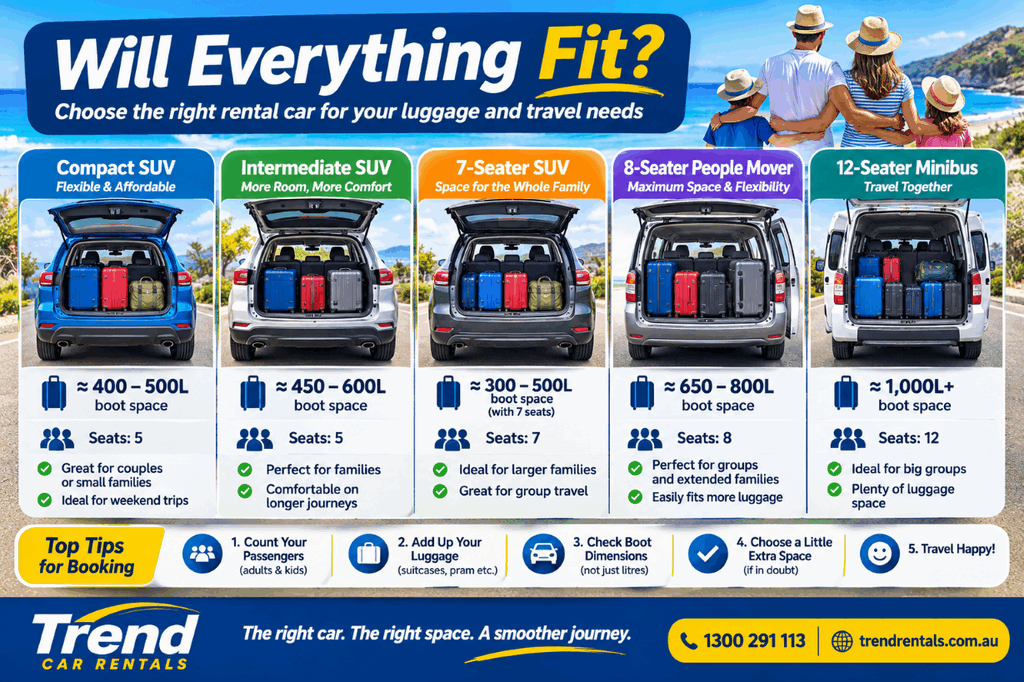
You land after a long flight, the family is tired, and the kids are asking for snacks. Then you reach the rental car and realise the suitcases will not fit.
It is one of the most common car hire frustrations, and it is completely avoidable. This guide shows you how to choose among rental cars with large boot space, compare hatchbacks, sedans, SUVs, 7-seaters and people movers, and book the right vehicle first time.
Why Boot Space Is the Most Overlooked Part of Car Hire
Most people book by seat count and price. Boot space gets a glance at best, even though it decides whether your trip starts smoothly.
Australia makes this harder. Distances are long, trips often mix airports, regional roads and holiday accommodation, and families travel with prams, beach gear and sports equipment. A car that works for a weekday commute can fall over on a family holiday.
The good news is that the maths is simple once you know how to read the numbers.
How to Read Boot Space: Litres vs Real-World Fit
Boot capacity is usually quoted in litres, measured with the rear seats up. It is a helpful starting point, but it is not the whole story.
What a Litre Figure Does Not Tell You
- Shape: a deep, narrow boot can hold fewer suitcases than a wide, square one with the same litres.
- Load height: a high boot floor or a sloping rear window limits stacking.
- Spare wheel: some cars hide a space saver under the floor, which affects usable depth.
- Seat configuration: folding rear seats can double capacity, but only if the passengers are not sitting there.
- Third row position: in a 7-seater, the quoted boot figure may be with the third row folded flat.
A Handy Bag-Size Cheat Sheet
As a rough guide, these are the approximate volumes to plan with:
- Large checked suitcase (around 23 kg): roughly 90 to 120 litres
- Cabin bag: roughly 35 to 45 litres
- Backpack: roughly 25 to 40 litres
- Foldable pram: roughly the same footprint as a large suitcase
These are estimates, because suitcase shapes vary. Treat them as a way to compare vehicles, not a guarantee.
Rental Car Types Compared: Seats, Boot Space and Best Use
| Vehicle type | Seats | Typical boot (seats up) | Realistic luggage |
|---|---|---|---|
| Compact hatchback | 5 | About 220 to 430 L | 1 large case plus cabin bags, or 2 to 3 soft bags |
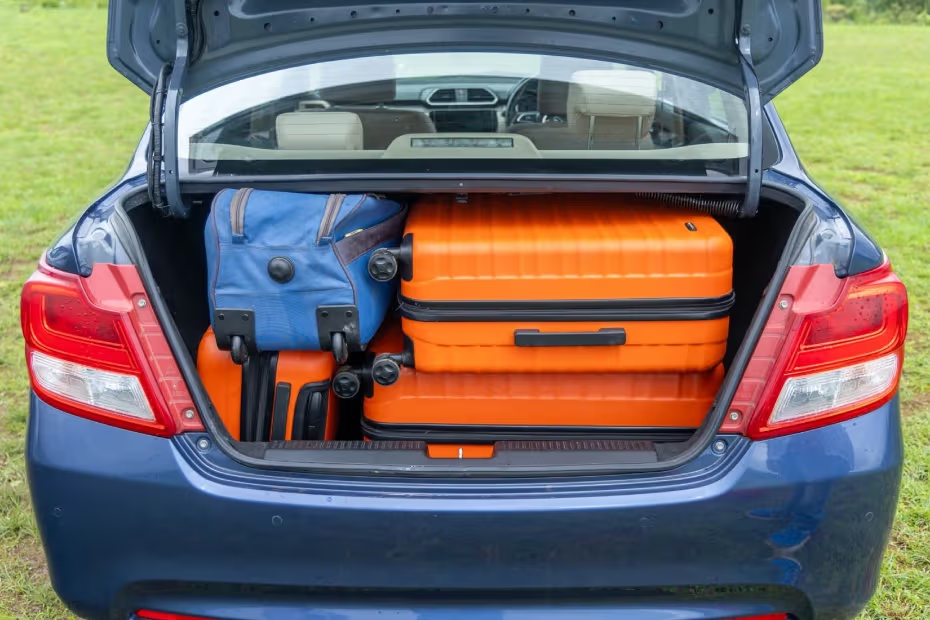
| Sedan | 5 | About 450 to 530 L | 2 large cases plus 2 cabin bags |
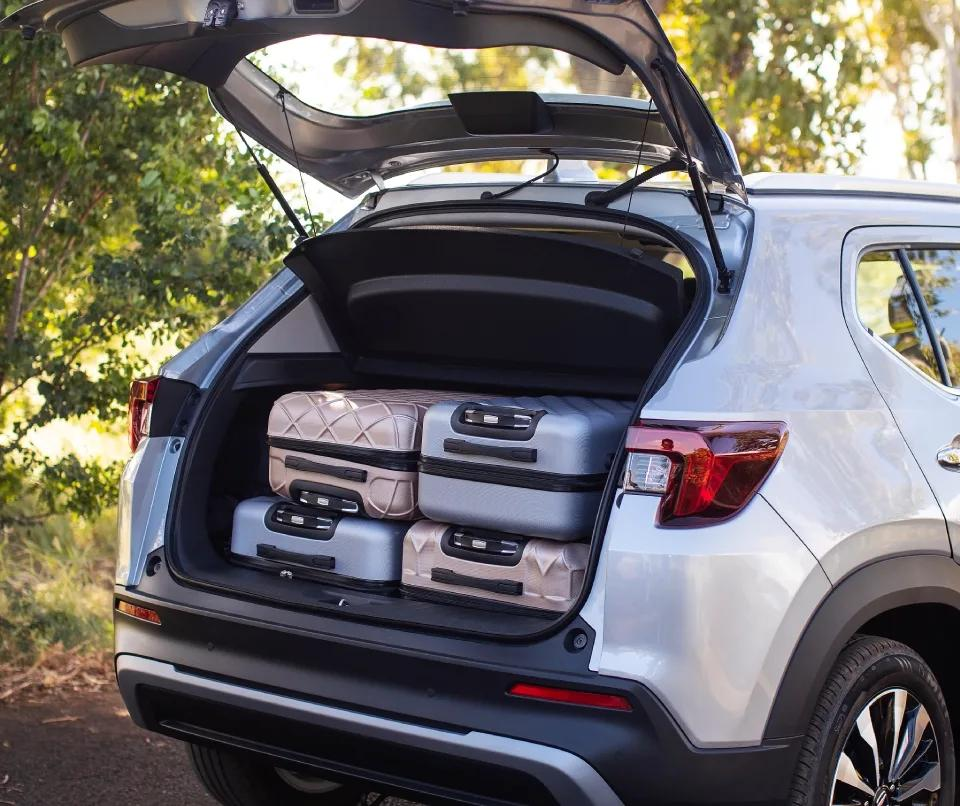
| Medium SUV | 5 | About 440 to 620 L | 2 to 3 large cases plus cabin bags |
| 7-seater SUV (3rd row up) | 7 | Often under 250 L | A few soft bags or cabin bags only |
| 7-seater SUV (3rd row folded) | 5 plus load | Often 500 L or more | 3 or more large cases |
| People mover | 7 to 8 | About 600 L or more behind the third row | 3 to 4 large cases plus extras |
Figures vary by model, variant and year. Always check the specifications on your booking page, and compare the quoted boot size with how many seats you plan to use.
Hatchbacks: Great for Cities, Tight for Holidays
Hatchbacks are cheap, easy to park and efficient. They also have the smallest boots, and some hybrid hatchbacks give up cargo space to fit the battery.
Best for: one or two travellers, carry-on luggage, business trips and city stays.
Avoid if: you have more than one large suitcase per two people, or you are carrying a pram.
Sedans: The Underrated Luggage Carrier
Sedans often beat small SUVs on boot volume. Popular mid-size sedans offer roughly 490 to 520 litres, and even small sedans commonly exceed 450 litres.
The catch is the opening. A sedan boot has a narrower lid and a lower roofline, so tall or awkward items such as prams and boxes can be tricky.
Best for: couples, small families with standard suitcases, airport transfers.
SUVs: The Sweet Spot for SUV Luggage Capacity
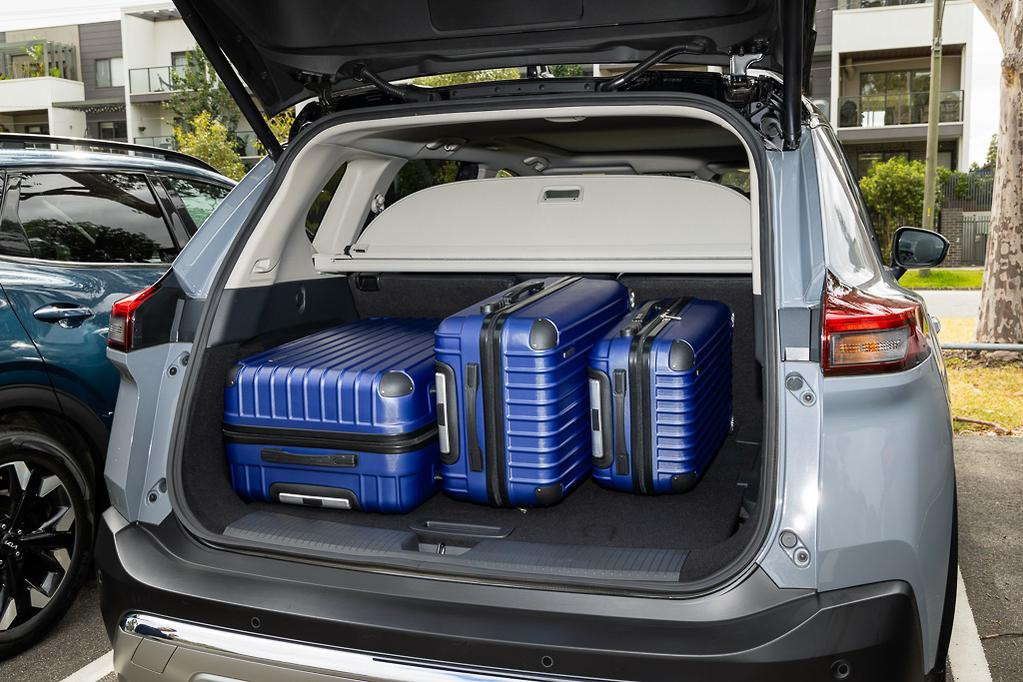
For most families, a medium SUV is the safest choice. SUV luggage capacity in this class commonly sits between about 450 and 620 litres, and popular models such as the Toyota RAV4 offer around 580 litres with the rear seats up.
Taller loading space, wide tailgates and flexible seat folding make SUVs better for prams, sports bags and mixed loads. You also get a higher driving position, which many people prefer on unfamiliar regional roads.
Best for: families of four, road trips, mixed luggage.
7-Seater SUVs: Check the Third-Row Trade-Off
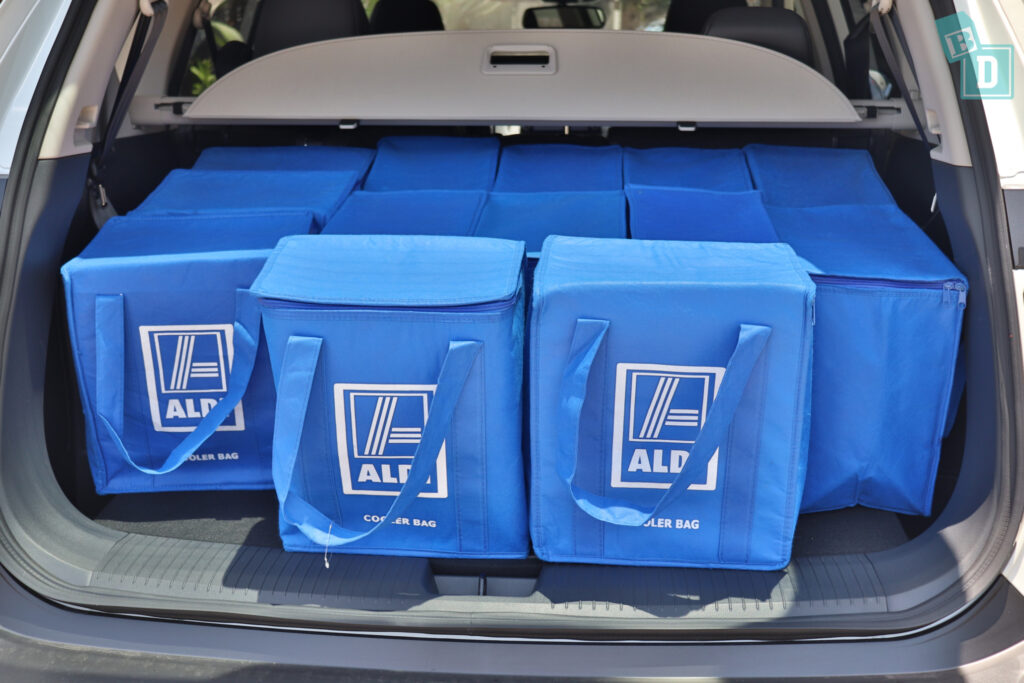
Seven seats sound like the obvious answer for a larger group. The problem is that the third row eats most of the boot.
With all seven seats in use, many 7-seater SUVs have room for little more than cabin bags and backpacks. Fold the third row and you gain a proper boot, but you are back to five seats.
Best for: carrying six or seven people on short trips with light luggage, or five people with plenty of luggage.
People Movers: The Best Rental Cars for Luggage When the Group Is Large
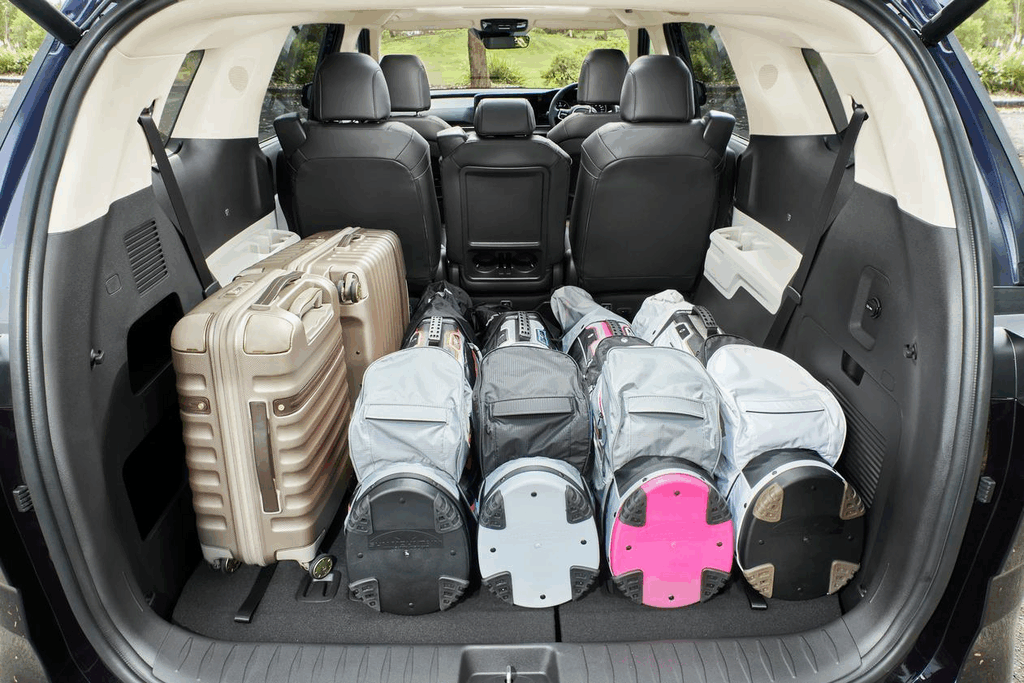
If you need both seats and space, people movers are built for it. Many have deep boots even with all rows in use, and models such as the Kia Carnival list a minimum boot capacity of around 627 litres.
Sliding rear doors are a bonus. They make loading kids and gear easier in tight car parks and at crowded airport pick-up areas.
Best for: large families, multi-generational trips, groups of six to eight with checked bags. This is where family car hire in Australia is most often won or lost.
Which Car for Which Group? A Quick Matching Guide
- Couple, two cabin bags: compact hatchback is fine.
- Couple, two large suitcases: sedan or small SUV.
- Family of four with a pram: medium SUV or large sedan.
- Family of five, checked bags: medium or large SUV, or a people mover.
- Group of six or seven, checked bags: people mover.
- Group of eight or more: consider a 12 seater mini bus or two vehicles.
Step by Step: How to Avoid Booking a Car That Is Too Small
- List every item. Count large cases, cabin bags, backpacks, prams, car seats and sports gear.
- Convert it to litres. Use the cheat sheet above, then add 15 to 20 percent for awkward shapes.
- Decide how many seats you will actually use. This matters most for 7-seaters.
- Compare to boot size with seats up. Ignore the seats-down figure unless nobody will sit in those seats.
- Check the vehicle class on the booking page. Rental categories list “or similar” models, so base your decision on the class capacity, not one example.
- Account for child seats. Fitting two or three child seats can use most of the back row and affect who else can sit there.
- Size up if you are close. If the maths is borderline, choose the next category.
- Ask before you book. If you are unsure, contact the rental team with your bag count and group size.
Real-World Scenarios (Hypothetical Case Studies)
Case Study 1: The Family of Five at the Airport
A family of five lands in Adelaide with three large suitcases, two cabin bags and a foldable pram. They book a 7-seater SUV because “seven seats is plenty.”
With the third row up, the boot is too shallow for the suitcases. Folding the third row solves it, since only five people are travelling. They would have been just as comfortable, and cheaper, in a medium SUV with a larger boot.
Lesson: count the seats you will use, then match the boot to your bags.
Case Study 2: Two Couples on a Wine Region Road Trip
Four adults travel with four large suitcases and a case of wine they plan to buy along the way. A sedan looks tempting on price, but four large cases plus purchases exceed what the boot can handle.
A people mover swallows the lot, gives everyone elbow room and leaves space for souvenirs.
Lesson: leave room for what you will buy, not just what you are bringing.
Case Study 3: The Business Traveller With Samples
A sales rep needs to carry a hard case of product samples, a laptop bag and an overnight bag across regional towns. A compact hatchback has the seats but not the shape, because the hard case will not clear the boot opening.
A medium SUV or a station-wagon-style vehicle with a wide, square load area is the better pick.
Lesson: boot shape and opening size matter as much as litres.
Common Luggage Mistakes When Hiring a Car
- Booking on seat count alone and ignoring boot space.
- Forgetting the return trip. You will usually carry more home than you brought.
- Assuming “or similar” means identical. Plan around the class, not a single model.
- Piling luggage on the back seat. Loose bags can block rear vision and become hazards in a sudden stop.
- Ignoring child seats and prams, which take more room than people expect.
- Choosing the cheapest option and then paying for an upgrade or second vehicle at the counter.
Smart Packing Tips to Make Any Boot Work Harder
- Choose soft bags where possible. Duffels squeeze into gaps that hard suitcases cannot.
- Load heavy and large first, then fill gaps with smaller items.
- Use the parcel shelf and underfloor space for light items and valuables you want out of sight.
- Keep the rear window clear so the driver retains good vision.
- Never exceed the vehicle’s load rating or carry unsecured items in the cabin.
Final Thoughts: Book for Your Bags, Not Just Your Group
The best rental car is the one where everyone has a seat and everything has a place. Hatchbacks suit light travellers, sedans and medium SUVs handle most small families, and people movers are the answer when the group and the luggage both grow.
Take two minutes to count your bags, check the boot size and choose one size up if you are borderline. It is the cheapest insurance against a stressful start to your trip.
Not sure what will fit? Tell our team your group size and luggage list and we will recommend the right vehicle for your trip.
Frequently Asked Questions
What size car do I need for a family of four with luggage?
A medium SUV or large sedan suits most families of four. Aim for a boot of around 450 litres or more if you have two large suitcases and cabin bags. Add a pram or sports gear and a bigger SUV or people mover is safer.
How many suitcases fit in an SUV?
A medium SUV with a boot of roughly 450 to 600 litres typically fits two to three large suitcases plus a couple of cabin bags. Shape, spare wheel placement and how you pack all affect the final number.
Do 7-seater cars have enough boot space?
Often not, when all seven seats are in use. Many 7-seater SUVs have very limited boot space with the third row up. If you need seven seats and real luggage room, a people mover is usually the better choice.
Which has more boot space, a sedan or an SUV?
It depends on the models. Some mid-size sedans have boots comparable to medium SUVs, but SUVs are more flexible for tall, bulky or awkward items because of their higher roofline and wider tailgate.
Can I request a specific model for more luggage space?
Rental vehicles are usually booked by class, with an “or similar” model. If luggage space is critical, book a larger class and contact the rental team with your requirements before you travel.